We're loading the full news article for you. This includes the article content, images, author information, and related articles.
The Media Council of Kenya has mandated a 7-second delay for all live broadcasts to curb hate speech, forcing a major technical shift in the industry.
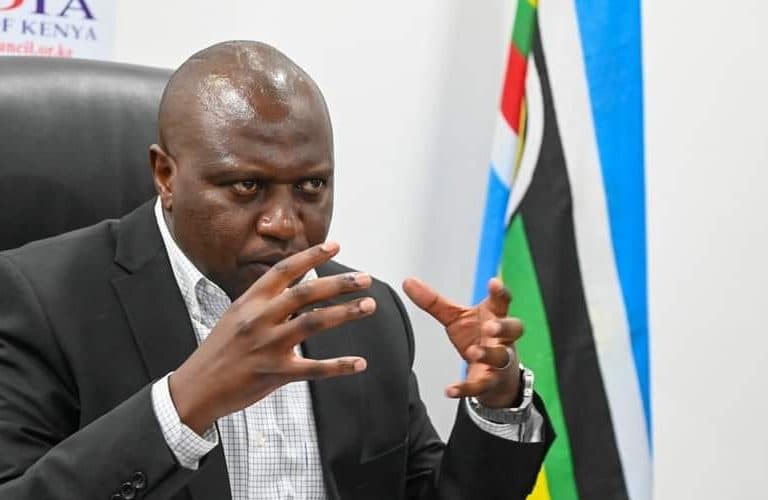
The red studio light in Nairobi broadcast hubs has long signaled a moment of unfiltered, real-time connection with the public. That era of instantaneous transmission is ending. The Media Council of Kenya has issued an urgent directive mandating a seven-second delay on all live broadcasts, a regulatory shift designed to serve as a digital circuit breaker against hate speech and inflammatory rhetoric.
This sweeping policy, effective immediately, places the burden of editorial control squarely on the shoulders of broadcast producers and media owners. At stake is the delicate balance between the constitutional protection of free press and the government's mandate to maintain social cohesion during a period of heightened political sensitivity. With millions of Kenyans relying on live radio call-in shows and television debates as their primary source of real-time information, the implementation of this delay will fundamentally alter the cadence of public discourse in the country.
The concept of a seven-second delay—often referred to in engineering terms as a broadcast profanity delay—is not new to the global media landscape, though its mandatory application across an entire national media sector is unprecedented in Kenya. Technologically, the process requires an audio and video buffer system that captures the live feed, holds it in temporary digital storage, and then releases it to the transmitter after a seven-second interval. During this gap, a producer or monitor must be stationed at the console with a "dump" or "kill" button, capable of silencing the broadcast if hate speech, incitement to violence, or defamatory remarks are detected.
For major media houses with sophisticated digital infrastructure, this is an operational adjustment. However, for smaller community radio stations and regional broadcasters, the directive represents a significant technical and financial hurdle. Integrating hardware-based delay units into legacy analog or hybrid workflows requires capital investment, specialized training, and a recalibration of live production teams. The Media Council of Kenya argues that this cost is secondary to the existential threat posed by unchecked inflammatory language, which has historically fueled post-election volatility.
Industry analysts and media owners have expressed concerns regarding the broader implications of this regulation. The operational friction introduced by a seven-second delay changes the psychology of live interaction. It effectively terminates the spontaneity that defines talk radio and interactive television. When a caller knows there is a buffer, the immediate sense of engagement is diluted. Furthermore, the reliance on human judgment to decide what constitutes "hate speech" in a split second creates a massive vulnerability for editorial bias.
These figures demonstrate that the directive is not merely a software update it is an infrastructure overhaul. For a local radio station in Kisumu or a television channel in Eldoret, the overhead required to maintain a full-time delay monitor for sixteen hours of daily live programming is a substantial drain on constrained budgets.
Kenya is not the first nation to grapple with the tension between live broadcast utility and regulatory control. In the United States, the Federal Communications Commission (FCC) enforces strict regulations on "obscene, indecent, and profane" broadcasts, often leading networks to implement automated or manual delays for live events. Similarly, various European nations have experimented with "near-live" broadcast models during times of national crisis or threat, typically under the guidance of state media regulators.
However, the Kenyan context remains unique. The reliance on call-in shows as a primary outlet for political grievance means that any restriction on this channel could inadvertently stifle legitimate political expression. Critics argue that the "chilling effect"—where producers, fearful of penalties, choose to censor controversial but non-violent political dissent—is a far greater danger than the potential for hate speech. By creating a system where every word is scrutinized for potential litigation, the media may retreat from its role as the country's democratic watchdog.
Behind the control panels of Nairobi’s major media houses, the atmosphere has shifted from collaborative creativity to defensive vigilance. Journalists and producers, many of whom have spent years mastering the art of the live interview, are now tasked with the role of a digital censor. The pressure is compounded by the legal weight of the new directive. A single missed slur by a guest, if not caught by the producer during the seven-second window, could now invite regulatory scrutiny that threatens the station’s very existence.
As media houses scramble to comply with the Media Council of Kenya’s timeline, the focus remains on whether this technical solution will actually address the root causes of inflammatory rhetoric. Political analysts suggest that hate speech is a symptom of deeper societal divisions, not a technical problem that can be solved with a seven-second delay. The question remains: when the broadcast is delayed, will the anger that drives inflammatory speech disappear, or will it simply find more dangerous, less regulated platforms?
As the industry moves toward this new era of controlled airwaves, the true test will be the transparency of enforcement. If the seven-second delay becomes a tool for protecting political incumbents from scrutiny, the integrity of Kenya’s media landscape will face its most significant crisis in a decade. The red light will stay on, but the voices reaching the listener will be filtered through a screen that, for better or worse, has forever changed the sound of Kenyan democracy.
Keep the conversation in one place—threads here stay linked to the story and in the forums.
Sign in to start a discussion
Start a conversation about this story and keep it linked here.
Other hot threads
E-sports and Gaming Community in Kenya
Active 10 months ago
The Role of Technology in Modern Agriculture (AgriTech)
Active 10 months ago
Popular Recreational Activities Across Counties
Active 10 months ago
Investing in Youth Sports Development Programs
Active 10 months ago



