We're loading the full news article for you. This includes the article content, images, author information, and related articles.
Gunmen massacre dozens in Nigerian villages in a brazen attack that coincides with the confirmation of a US military deployment to the troubled region.
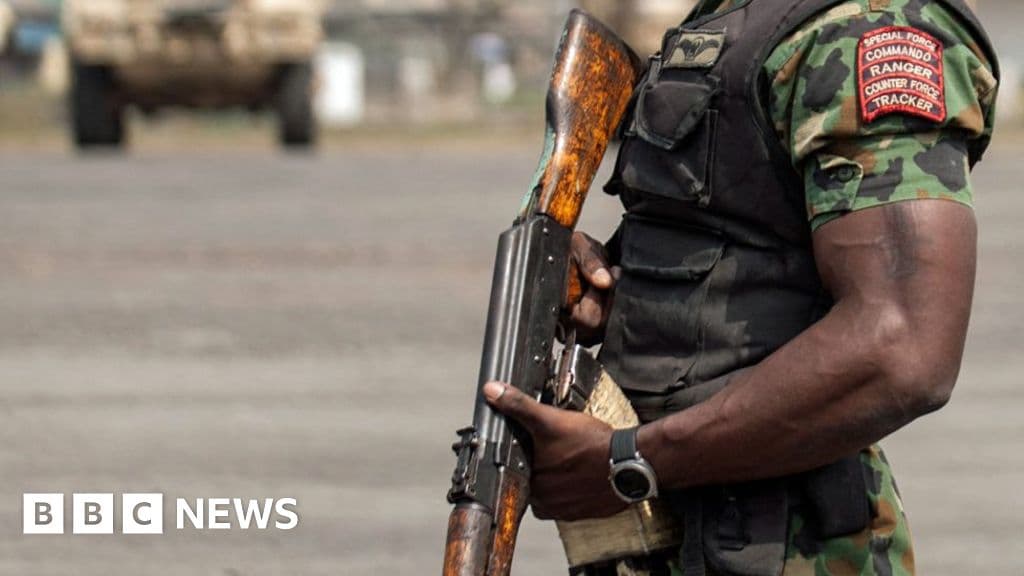
Dozens are slaughtered in a brutal attack on Nigerian villages just as the US military confirms a new deployment. The timing raises urgent questions about the effectiveness of foreign intervention in a nation bleeding from a thousand cuts.
The village of Kwara, usually a quiet speck on the map of western Nigeria, has become the latest graveyard in a country besieged by terror. In a ferocious attack that lasted hours, gunmen descended on the communities of Nuku and Woro, leaving a trail of death and ash. The official toll stands at 35, but rights groups and local witnesses say the number is far higher, with reports of over 160 dead. Bodies were left in the streets, shops were torched, and the residence of the traditional leader was reduced to ruins.
This massacre occurred against a backdrop of high-level geopolitical maneuvering. Just hours before the attack, Nigerian officials confirmed the presence of US troops in the country, deployed to assist with intelligence and training. The juxtaposition is jarring: the world’s most powerful military arrives to help, and simultaneously, innocent villagers are butchered with impunity. It is a grim reminder of the limitations of military might in the face of asymmetric warfare.
The identity of the attackers remains a subject of bitter debate. President Bola Tinubu was quick to point the finger at Boko Haram, the jihadist group that has terrorized the region for over a decade. However, local lawmakers suggest a new player: Lakurawa, an armed group affiliated with the Islamic State. The confusion underscores the complexity of Nigeria’s security crisis, where lines between jihadists, bandits, and separatists are often blurred.
Governor AbdulRahman AbdulRazaq described the event as a "massacre in cold blood," a phrase that has become tragically common in the Nigerian lexicon. The deployment of an army battalion to the area after the fact offers little comfort to the families burying their dead. The "stunning absence of security" cited by Amnesty International is not a bug in the system; it is the feature that allows these groups to operate.
Nigeria is fighting a war on multiple fronts, and it is losing on many. The arrival of American boots on the ground changes the stakes but not the reality for the villager in Kwara. Whether killed by a bandit or a jihadist, the result is the same: a life cut short, a family destroyed, and a government that offers condolences instead of protection.
"They came, they killed, and they left," a survivor told the press. "Where was the army then?" It is a question that echoes across the country, unanswered.
Keep the conversation in one place—threads here stay linked to the story and in the forums.
Sign in to start a discussion
Start a conversation about this story and keep it linked here.
Other hot threads
E-sports and Gaming Community in Kenya
Active 9 months ago
The Role of Technology in Modern Agriculture (AgriTech)
Active 9 months ago
Popular Recreational Activities Across Counties
Active 9 months ago
Investing in Youth Sports Development Programs
Active 9 months ago