We're loading the full news article for you. This includes the article content, images, author information, and related articles.
Parents across London will be able to buy second-hand school uniforms as part of a new scheme to reduce waste. The School Uniform Reuse Network (SURN) is described as a "cross-borough initiative designed to help schools and families reduce uniform waste, save money, and support a more sustainable approach to children's
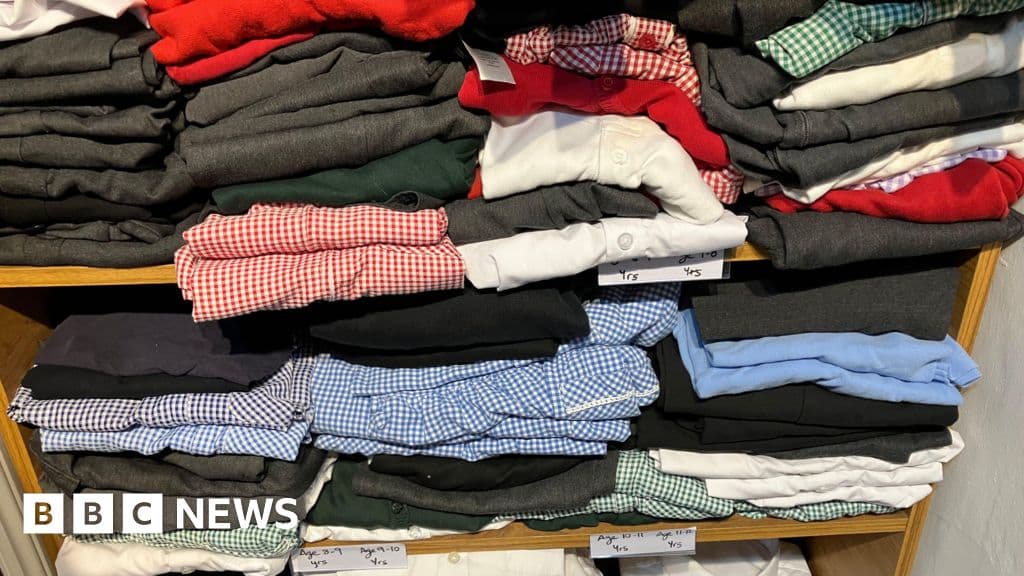
A crumpled blazer, a worn collar, a missing button—these are not just symbols of wear and tear, but markers of an accelerating financial crisis for families across the United Kingdom. As the cost of living continues to exert unprecedented pressure on household budgets, the burden of mandatory school attire has become a flashpoint for inequality. In response, a transformative, city-wide intervention is taking root in the capital: the School Uniform Reuse Network.
This initiative, spearheaded by London Councils, represents a systemic attempt to reengineer how thousands of families interact with the primary, secondary, and tertiary requirements of education. By establishing a formalized, cross-borough framework for the collection, cleaning, and redistribution of used uniforms, the city is betting that it can dismantle the financial barriers of the classroom and, simultaneously, slash the environmental footprint of the fast-fashion cycle. The stakes are significant: for a single household, the cost of new uniforms can run into hundreds of pounds—equivalent to tens of thousands of shillings—placing a heavy weight on low-income earners.
In the United Kingdom, the cost of school uniforms has consistently outpaced inflation, driven in part by a monopolistic approach where schools mandate specific suppliers. While the London Councils initiative does not dissolve these supplier monopolies, it provides an essential escape valve. According to data provided by the Child Poverty Action Group in the UK, parents face annual uniform costs that can exceed 300 pounds—approximately 54,000 Kenya Shillings—per child. For a family with multiple children, this is a prohibitive expense that often forces parents to choose between educational materials and basic necessities.
The School Uniform Reuse Network aims to normalize the second-hand market within school settings. By treating pre-owned garments not as cast-offs, but as high-quality, sustainable alternatives, the program challenges the social stigma that has historically acted as a barrier to the adoption of used clothing. Rezina Chowdhury, vice chairwoman of the London Councils transport and environment committee, frames this as a necessary shift in consumption habits. She argues that uniforms frequently possess a shorter lifespan than their structural integrity allows, meaning perfectly functional items are discarded simply because a child has moved to a new academic year.
Beyond the ledger books of struggling households, the SURN initiative addresses a massive, invisible environmental crisis: the sheer volume of textile waste generated by the school sector. Industrial data from the UK Department for Environment, Food and Rural Affairs indicates that millions of tonnes of clothing are diverted to landfills annually. A significant portion of this waste consists of synthetic fiber-heavy school blazers, trousers, and skirts that are designed for durability but discarded for fashion cycles.
The challenges facing London families mirror the complexities of the Kenyan education system, albeit with different local dynamics. In Nairobi, the cost of school uniforms is also a substantial financial barrier. While the vibrant, informal "mitumba" or second-hand clothing market is a cornerstone of the Kenyan economy, its integration into the formal school system is inconsistent. Many public and private schools in Kenya require uniforms to be purchased from specific, authorized vendors, effectively locking parents into a high-cost procurement loop that prevents the use of the very efficient circular market that exists just outside the school gates.
For Kenyan policymakers and educators, the London model offers a blueprint for formalizing a circular economy within the school environment. The key difference lies in the "institutional stamp of approval." In London, the local government is providing the infrastructure to make "used" synonymous with "reused" rather than "worn out." Nairobi has the logistics of a thriving resale market it lacks the institutional framework to allow that market to serve as a safety net for parents within the school structure. By creating formal "Uniform Swap" days or school-governed exchange hubs, Kenyan institutions could emulate this model, significantly reducing the financial burden on low-income families while supporting local sustainability goals.
The success of the School Uniform Reuse Network rests on its ability to shift perception. Historically, second-hand clothing has been associated with poverty—a narrative that deters parents from accessing cheaper options even when they are available. London Councils is explicitly working to flip this script. By rebranding the reuse of uniforms as an act of environmental stewardship and community solidarity, they are positioning the school blazer as an object that gains value through circulation rather than losing it through wear.
The initiative requires active participation from school boards, parent-teacher associations, and, crucially, students themselves. If the cultural shift holds, it could turn the school uniform from a symbol of exclusivity into a badge of community resilience. The question remains whether this will remain a supplementary program or if it will evolve into a foundational component of how urban school systems support their most vulnerable families in an increasingly expensive world. For now, the experiment in London provides a compelling case study on how cities can pivot from consumption to conservation, with the potential to rewrite the social contract between schools and the families they serve.
As the initiative rolls out across the 32 boroughs, the eyes of urban planners worldwide will be fixed on the participation rates. If London can make the second-hand blazer the standard, it proves that even the most deeply entrenched consumer habits can be disrupted when the incentives align for both the family wallet and the planet.
Keep the conversation in one place—threads here stay linked to the story and in the forums.
Sign in to start a discussion
Start a conversation about this story and keep it linked here.
Other hot threads
E-sports and Gaming Community in Kenya
Active 10 months ago
The Role of Technology in Modern Agriculture (AgriTech)
Active 10 months ago
Popular Recreational Activities Across Counties
Active 10 months ago
Investing in Youth Sports Development Programs
Active 10 months ago