We're loading the full news article for you. This includes the article content, images, author information, and related articles.
Parliament begins vetting NLC nominees, a crucial step to ending land commission paralysis and unlocking stalled national infrastructure projects.
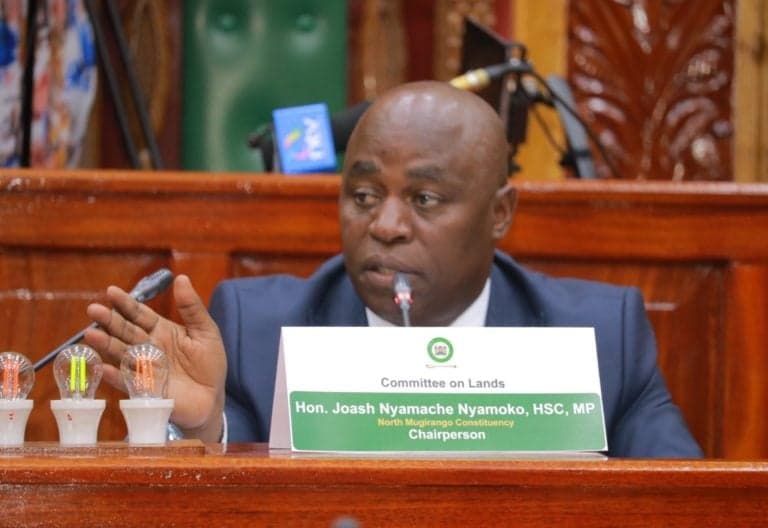
The National Assembly has officially commenced the high-stakes vetting process for the nominees of the National Land Commission (NLC), a pivotal step aimed at ending the administrative paralysis that has gripped one of Kenya's most essential constitutional bodies.
For weeks, the corridors of power and the dusty plains where infrastructure projects lie stalled have been waiting for this moment. As the vetting committee opens its doors, the focus is not merely on the credentials of the individuals before them, but on the restoration of faith in an institution tasked with the monumental responsibility of managing public land, settling historical injustices, and facilitating the government's ambitious development agenda.
The National Land Commission is more than a bureaucratic office; it is the constitutional arbiter of the country's most contested resource: land. With the tenure of the previous cohort having expired in November 2025, the commission was left without the requisite quorum to make legally binding decisions. This vacuum has been felt acutely across the nation. Major government capital projects—ranging from the Rironi–Mau Summit road to the LAPSSET Development Authority's land requirements—have faced significant delays, threatening the realization of President William Ruto's infrastructure and housing manifestos.
The nominees, including Dr. Abdillahi Saggaf Alawy as the proposed Chairperson, along with commissioners Susan Oyatsi, Daniel Murithi, Kigen Vincent Cheruiyot, Dr. Julie Ouma Oseko, Mohamed Abdi Haji, and Mary Yiane Seneta, face an arduous task. The committee must interrogate their capability to balance the competing interests of national development and local land rights, a tightrope walk that has defined the NLC’s history.
The vetting process is guided by strict constitutional and statutory provisions. The committee is not looking for mere competence; they are hunting for resilience and integrity. The NLC has historically been a theater of conflict, often finding itself at the center of litigation regarding compulsory land acquisition, historical injustice claims, and the often-fraught relationship between national and county governments.
The committee is expected to probe the nominees on how they intend to streamline the land valuation process, which is often blamed for inflating project costs by millions of shillings. Furthermore, there is the lingering issue of digitizing land records—a mammoth task that requires a tech-savvy commission capable of resisting the traditional corruption networks that have long plagued land registries.
As the vetting concludes, the stakes remain incredibly high. The incoming commissioners will inherit a backlog of thousands of unresolved land disputes and a public that is increasingly skeptical of bureaucratic efficiency. If the NLC fails to function effectively, it will not just be a failure of personnel; it will be a failure of the state's ability to deliver on the most basic socio-economic promises.
The successful candidates will need to hit the ground running. Their first hundred days will be scrutinized for how quickly they can reconstitute the commission's operations, unblock delayed infrastructure financing, and demonstrate an independence that the NLC has struggled to project in the past. Parliament's decision this week will effectively determine whether Kenya's land governance can finally turn a page, or if it will remain shackled by the ghosts of past inefficiencies.
Ultimately, the vetting process is a test of the legislature's resolve to hold the executive accountable for the appointments it makes. A robust NLC is not a luxury; it is the bedrock of the country's economic and social stability. As the nominees take their seats before the committee, the nation watches, hoping for a return to functional, fair, and transparent land administration.
Keep the conversation in one place—threads here stay linked to the story and in the forums.
Sign in to start a discussion
Start a conversation about this story and keep it linked here.
Other hot threads
E-sports and Gaming Community in Kenya
Active 9 months ago
The Role of Technology in Modern Agriculture (AgriTech)
Active 9 months ago
Popular Recreational Activities Across Counties
Active 9 months ago
Investing in Youth Sports Development Programs
Active 9 months ago
Key figures and persons of interest featured in this article