We're loading the full news article for you. This includes the article content, images, author information, and related articles.
Renewed violence in southern Lebanon one year after a US-brokered truce threatens wider Middle East instability, with potential economic and security implications for Kenya.
BEIRUT, LEBANON – A ceasefire agreement intended to end more than a year of intense conflict between Israel and Hezbollah officially marked its one-year anniversary on Thursday, 27 November 2025, but offers little cause for celebration. Southern Lebanon remains gripped by fear amid near-daily Israeli airstrikes and persistent violations of the truce, raising concerns of a slide back into full-scale war with significant regional and global consequences.
The accord, brokered by the United States and France, took effect at 4:00 AM EAT on 27 November 2024. It mandated a cessation of hostilities, the withdrawal of Hezbollah forces north of the Litani River, and a phased withdrawal of Israeli troops from southern Lebanon over 60 days, to be replaced by the Lebanese Armed Forces (LAF) and the United Nations Interim Force in Lebanon (UNIFIL).
One year on, the agreement is largely unfulfilled. Israel continues to occupy at least five hilltop positions in southern Lebanon, according to UN monitors and Lebanese officials. The Israeli military has also conducted thousands of air and ground operations in Lebanon. According to Lebanon's Ministry of Public Health, over 340 people have been killed and more than 650 wounded in Lebanon by Israeli military operations since the ceasefire began. On Tuesday, 25 November 2025, the UN Human Rights Office stated it had verified at least 127 civilian deaths in that period and called for an impartial investigation into possible violations of international law.
A major escalation occurred on Sunday, 23 November 2025, when an Israeli airstrike in Beirut's southern suburbs killed Haytham Ali Tabatabai, Hezbollah's military chief of staff, along with four other militants. The Israeli government acknowledged the targeted killing, stating that Tabatabai was leading Hezbollah's efforts to rebuild its military capabilities in violation of the ceasefire.
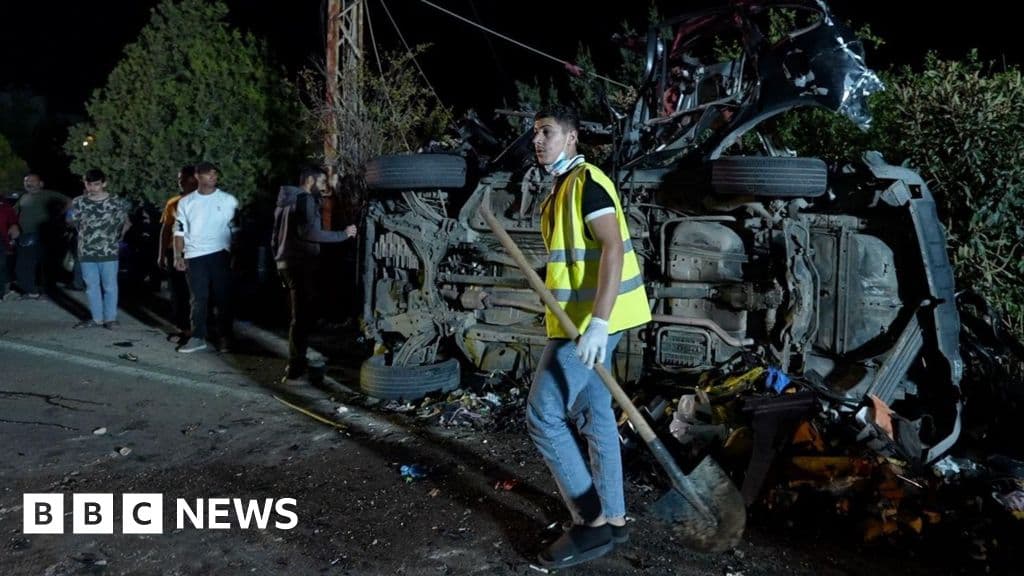
The human cost of the fragile peace is evident in villages like Froun. Last Friday, an Israeli strike on a car shattered the evening calm, leaving one person dead whom the Israeli military later described as a Hezbollah operative. Residents are caught in the crossfire, expressing deep despondency. "I just want to live in peace," one resident told international media while cleaning debris from his veranda.
The conflict, which began on 8 October 2023, a day after the Hamas-led attacks on Israel, has inflicted a devastating toll. Prior to the November 2024 ceasefire, fighting had killed over 4,000 people in Lebanon and displaced more than a million. The World Bank estimates the cost of reconstruction in Lebanon at around $11 billion.
While the conflict is geographically distant, its potential to destabilize the Middle East carries significant economic and security implications for Kenya. Escalating hostilities threaten key shipping lanes like the Red Sea and the Strait of Hormuz, through which a substantial portion of global oil passes. Any disruption could lead to a spike in global fuel prices, directly impacting transport and commodity costs in Kenya, which is a net importer of oil.
Furthermore, the conflict risks disrupting Kenya's trade with the region. Iran is a key destination for Kenyan tea, with exports valued at KSh 5.98 billion in 2023. The Iranian ambassador to Kenya confirmed in June 2025 that trade, including meat exports from Kenya, has already been negatively impacted by logistical disruptions caused by the wider regional instability.
On the diplomatic front, Kenya officially maintains a policy supporting a two-state solution to the Israeli-Palestinian conflict. Prime Cabinet Secretary Musalia Mudavadi confirmed in July 2025 that this position is now enshrined in law. However, Kenya's voting patterns at the UN have shown inconsistencies, at times abstaining on resolutions critical of Israel, leading some analysts to suggest a more “transactional” foreign policy approach under the current administration.
Kenya also contributes to regional stability through peacekeeping. According to UNIFIL data from 20 November 2025, Kenya has three peacekeepers serving in the mission in Lebanon, part of a long history of contributing to UN peace operations.
The international community, including France, has urged restraint and adherence to the ceasefire framework. However, with Israel vowing to prevent Hezbollah from re-arming and Hezbollah refusing to disarm while Israeli forces remain on Lebanese soil, the path to a stable peace appears blocked. The UN Security Council continues to monitor the fragile situation, but with thousands of documented violations, the November 2024 agreement exists more on paper than in practice, leaving the region on a knife's edge.
Keep the conversation in one place—threads here stay linked to the story and in the forums.
Sign in to start a discussion
Start a conversation about this story and keep it linked here.
Other hot threads
E-sports and Gaming Community in Kenya
Active 9 months ago
The Role of Technology in Modern Agriculture (AgriTech)
Active 9 months ago
Popular Recreational Activities Across Counties
Active 9 months ago
Investing in Youth Sports Development Programs
Active 9 months ago



