We're loading the full news article for you. This includes the article content, images, author information, and related articles.
Xavi Hernandez reveals that Joan Laporta blocked Lionel Messi’s 2023 return to Barcelona to avoid a power struggle, contradicting claims of financial constraints.

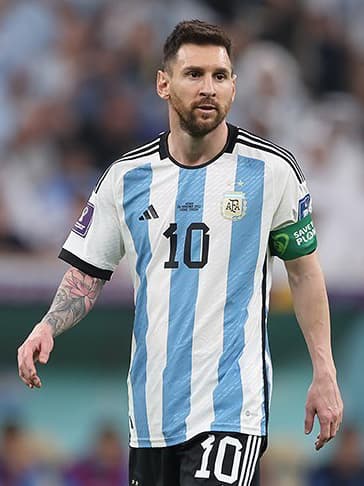
Former Barcelona coach Xavi Hernandez has stripped back the administrative curtain at the Camp Nou, revealing that the dream return of Lionel Messi was thwarted not by finances, but by internal boardroom anxiety.
The revelation, detailed in a candid interview with La Vanguardia, has sent shockwaves through the footballing world. Xavi asserts that the club president, Joan Laporta, deliberately vetoed the 2023 reunion with the eight-time Ballon d'Or winner. Contrary to the official narrative—which cited La Liga’s stringent salary caps and financial fair play constraints—Xavi claims the veto was personal, rooted in a fear of a potential power struggle that could have destabilized the president's authority.
For the millions of Barcelona fans in Kenya and across East Africa, where the club’s "Mes que un club" ethos resonates deeply, this news is a bitter pill. It reframes a period of perceived financial tragedy as one of political maneuvering. The "So What?" of this revelation is profound: it exposes the fragility of governance at elite football clubs, where legacy and sporting logic are often sacrificed at the altar of administrative ego.
Xavi describes a period in early 2023 when the return of Messi was not only possible but imminent. According to the former manager, the deal was agreed upon, the financial structure was prepared—including a plan to play at the Olympic Stadium (Montjuïc) during the Camp Nou renovations—and the player himself was eager to participate in a "Last Dance" for his boyhood club.
The narrative Xavi paints is one of betrayal by the executive office:
This disclosure places Joan Laporta in an uncomfortable position, particularly as he navigates the high-pressure environment of leading a club that is constantly under the microscope. The tension between the "Barcelona DNA"—represented by Xavi and Messi—and the cold, structural realities of modern club management has clearly reached a breaking point. For the average fan, the question remains: if the money was available and the player was willing, does the club president have the right to veto a sporting decision based on personal politics?
Xavi’s comments underscore a deeper malaise at the club. When coaches and players feel that their best sporting interests are being undermined by boardroom politics, the competitive edge is lost. The incident damaged the personal relationship between Xavi and Messi, with the player initially believing his former teammate was part of the "scheme" to keep him out. While they have since reconciled, the damage to the club’s institutional integrity is likely permanent.
As Barcelona continues to rebuild, the "Messi chapter" remains an open wound. Xavi’s testimony ensures that the debate over what might have been will linger long after he has left the technical area. Ultimately, it serves as a stark warning to all top-tier clubs: when the boardroom ceases to support the pitch, the decline is not just possible—it is inevitable.
Keep the conversation in one place—threads here stay linked to the story and in the forums.
Sign in to start a discussion
Start a conversation about this story and keep it linked here.
Other hot threads
E-sports and Gaming Community in Kenya
Active 9 months ago
The Role of Technology in Modern Agriculture (AgriTech)
Active 9 months ago
Popular Recreational Activities Across Counties
Active 9 months ago
Investing in Youth Sports Development Programs
Active 9 months ago
Key figures and persons of interest featured in this article