We're loading the full news article for you. This includes the article content, images, author information, and related articles.
Lamu County has announced 21 vacancies on two-year contracts, reflecting a wider Kenyan trend of moving away from permanent civil service roles.

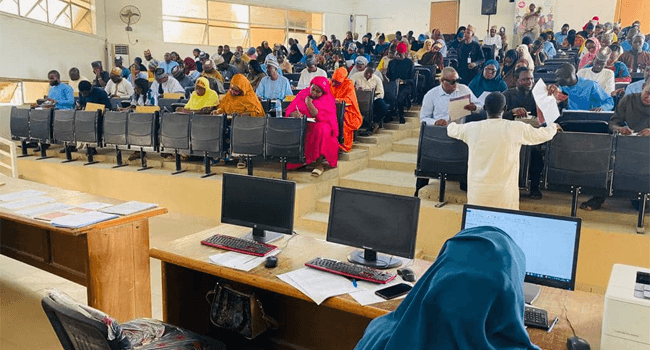
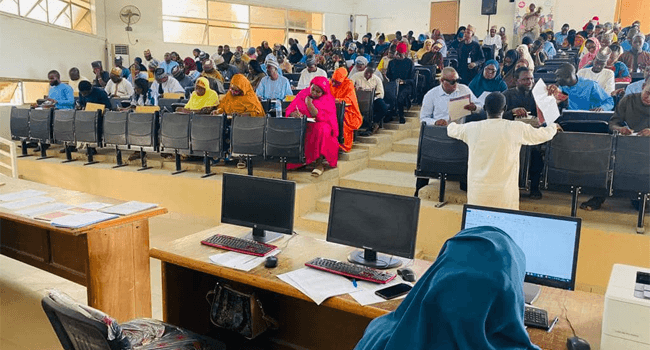
The Lamu County Public Service Board has officially opened applications for 21 new positions across five administrative departments, sparking fresh debate regarding the increasing trend of fixed-term employment within Kenya’s devolved units. The vacancies, which were publicly advertised on March 19, 2026, explicitly offer two-year contracts, a departure from the traditional permanent and pensionable terms that once defined civil service stability.
This development is not an isolated incident but rather a microcosm of a broader, more profound transformation reshaping Kenya’s public sector. As county governments grapple with narrowing fiscal space, high wage bills, and increased pressure from the national exchequer to decentralize service delivery, the move toward contract-based hiring has become the preferred mechanism for managing human capital. For the thousands of job seekers currently scouring portals for opportunities, this shift presents a precarious paradox: employment is available, but the foundational security of a government career is rapidly eroding.
The Lamu County recruitment drive targets roles ranging from technical specialists to community development officers. According to the official advertisement, the positions are spread across critical sectors including education, technology, gender, youth affairs, sports, and social services. While the immediate focus is on filling these functional gaps to meet urgent service delivery mandates, the specific constraint of a two-year tenure raises significant questions about institutional memory and long-term planning.
By defining these roles as short-term, the county government effectively insulates itself against the long-term liabilities associated with pension contributions, gratuities, and the complex legal protections afforded to permanent civil servants. This strategy, while financially prudent in the short term, fundamentally alters the nature of the employer-employee relationship in the public sector.
Economists and labor relations experts warn that the normalization of contract work at the county level could have unintended consequences for service quality. In a permanent role, an employee has a vested interest in the long-term success of the institution, fostering a culture of mentorship and institutional continuity. In a two-year contract model, employees are often forced to treat their tenure as a transition phase, constantly looking for the next opportunity as their contract expiry nears.
Professor John Odhiambo, a labor market analyst at a leading Nairobi-based institute, argues that the "casualization" of the civil service risks hollowing out the expertise needed to run devolved government effectively. According to his analysis, civil servants require years to master the complexities of procurement, public finance management, and localized policy implementation. When these roles are cycled every 24 months, the public sector risks becoming a revolving door that prioritizes short-term execution over sustainable development.
The decision to pivot to contract labor is inextricably linked to the fiscal constraints facing Kenya’s 47 counties. In the 2025/2026 financial year, the national government has intensified its oversight of county wage bills, incentivizing local administrations to reduce fixed personnel costs. For a county like Lamu, balancing the mandate to hire essential staff with the strict expenditure ceilings imposed by the Commission on Revenue Allocation requires a surgical approach to human resource management.
Data from the Treasury suggests that county wage bills consume a significant portion of equitable share allocations, often leaving limited room for development projects. By hiring on two-year contracts, counties can present a leaner, more flexible budget. However, this shift places the burden of insecurity on the workers themselves, who must navigate a high-cost living environment without the benefit of the job security that traditionally attracted professionals to the public sector.
For a young professional in Lamu, the promise of a job is a welcome relief, even with the caveats attached. "At this point, any opportunity to contribute to the county’s development is worth taking," says one applicant who requested anonymity. "But there is an underlying anxiety. You are not building a career you are building a two-year resume. We see the older generation with their pension schemes and stable tenures, and that feels like a world away."
This sentiment is echoed across the country. In counties like Makueni and Kakamega, similar recruitment models have triggered discussions at the Employment and Labour Relations Court. Legal precedents established in recent years have repeatedly addressed the thin line between legitimate fixed-term contracts and the exploitation of workers through continuous renewal. As counties refine their human resource policies, they must navigate the delicate balance between the flexibility they demand and the legal protections workers are entitled to.
As the Lamu County Public Service Board processes these applications, the broader implications remain clear. Kenya’s devolution experiment is maturing, and with it, the administration of its workforce. If the two-year contract becomes the standard for the Kenyan civil service, the country may witness a shift from a public sector defined by life-long commitment to one characterized by transient expertise. While this may solve immediate budget deficits, it poses a critical challenge for the future: can a government that operates on a temporary basis build the permanent, resilient institutions that citizens demand?
The current recruitment drive in Lamu is a reminder that the path toward efficient government is not merely about headcount—it is about the stability of the people tasked with delivering services to the public. Until a structural solution to the county wage bill is found, these short-term solutions will likely continue to dominate the labor market, leaving both the employer and the employee in a state of perpetual, if predictable, transition.
Keep the conversation in one place—threads here stay linked to the story and in the forums.
Sign in to start a discussion
Start a conversation about this story and keep it linked here.
Other hot threads
E-sports and Gaming Community in Kenya
Active 10 months ago
The Role of Technology in Modern Agriculture (AgriTech)
Active 10 months ago
Popular Recreational Activities Across Counties
Active 10 months ago
Investing in Youth Sports Development Programs
Active 10 months ago