We're loading the full news article for you. This includes the article content, images, author information, and related articles.
Breakthrough in bioengineering offers a potential cure for infants born with missing food pipes, moving from animal trials to long-term clinical hope.
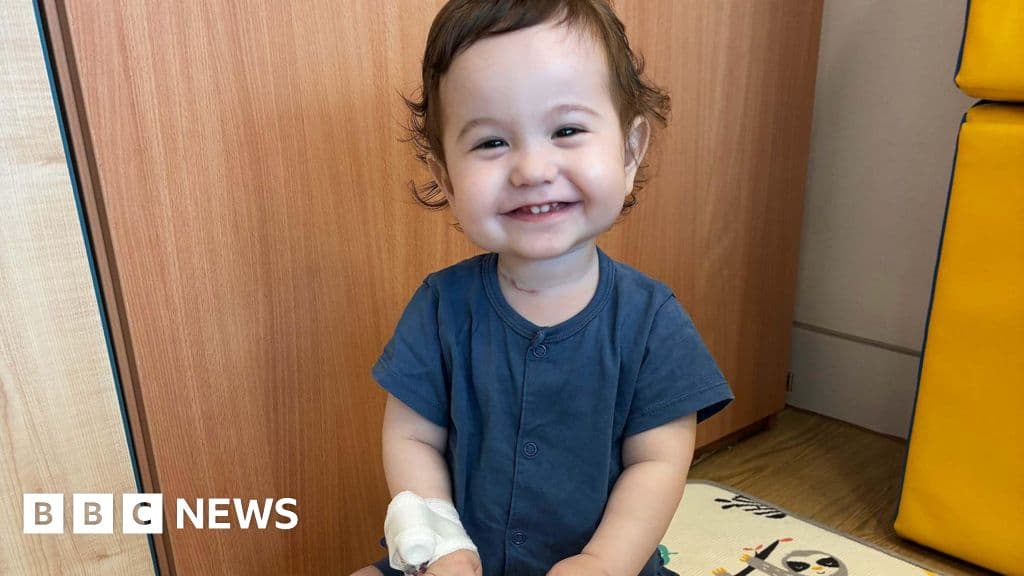
Two-year-old Casey Mcintyre knows the rhythm of a hospital heart monitor better than the sound of a playground. Born with an 11-centimeter gap where his food pipe should have been, his childhood has been defined not by play, but by the sterile geometry of operating theatres and the intrusion of feeding tubes. While he is currently a patient at a leading facility in the United Kingdom, his struggle is echoed by thousands of families worldwide who face the devastating reality of esophageal atresia.
A revolutionary development in regenerative medicine may soon render the current standard of care—a traumatic and life-altering gastric pull-up surgery—obsolete. Researchers, publishing their findings this week in the journal Nature Biotechnology, have successfully engineered fully functional food pipes in a laboratory setting and transplanted them into animal models. The study, which achieved long-term survival and function in mini pigs, marks a critical pivot from theoretical bioengineering to a viable clinical pathway for infants born with congenital esophageal defects.
The challenge of replacing an esophagus has long baffled surgeons. Unlike a kidney or a heart, the esophagus is a dynamic, muscular tube that must transport food via rhythmic contractions, withstand acidic reflux, and remain flexible enough to accommodate the movements of the neck and chest. Previous attempts to use synthetic grafts often resulted in scarring, leakage, or immune rejection.
The current study overcomes these hurdles by utilizing a scaffold-based approach. The researchers decellularized donor tissue, stripping it of its cellular components to leave behind a pristine collagen matrix—a biological skeleton. This scaffold was then reseeded with the subject’s own stem cells, effectively creating an organ that the recipient’s immune system would not recognize as foreign. Once implanted, the graft integrated seamlessly into the existing anatomy, regrowing the necessary muscle layers and nervous tissue required for swallowing.
For parents like Silviya and Sean Mcintyre, the implications of this research are profound. Current interventions for esophageal atresia often involve relocating the stomach upward to bridge the gap in the esophagus. It is an intensive procedure that requires significant post-operative recovery and often leaves children with long-term complications, including vocal cord damage and chronic gastrointestinal distress.
The emotional and financial toll is immense. In high-income countries, the cost of specialized neonatal care and multiple follow-up surgeries can easily exceed £150,000 (approximately KES 25.5 million). For families in the Global South, where such specialized pediatric surgery is often concentrated in a few central facilities like Kenyatta National Hospital or AIC Kijabe in Kenya, the hurdle is even higher. Access to surgeons with sub-specialty training in neonatal reconstruction is limited, and the lack of advanced post-operative care can lead to poor outcomes for infants born with these complex defects.
While the study originated in the United Kingdom, the potential applications for emerging healthcare systems are significant. Decentralized bio-manufacturing, if perfected, could one day allow regional surgical centers to treat complex congenital conditions without relying on extensive and costly external reconstruction. For Kenyan families, the goal is not just the surgery itself, but the reduction of the prolonged hospitalization and the life-long dependency on feeding tubes that currently dictates the quality of life for survivors of esophageal atresia.
Experts in pediatric surgery at the University of Nairobi note that while the technology is still in the preclinical phase, the ability to "grow" replacement tissue locally would be a paradigm shift. Currently, infants born with esophageal atresia in Kenya face a difficult prognosis, often requiring prolonged stays in intensive care units and multiple surgeries to attempt esophageal elongation. The prospect of an off-the-shelf or patient-specific engineered graft could theoretically reduce the burden on public health infrastructure, which is currently stretched thin by the sheer volume of neonatal cases.
Despite the optimism, the transition from mini pigs to human clinical trials is a formidable challenge. Regulatory bodies, including the UK’s Medicines and Healthcare products Regulatory Agency and similar global health watchdogs, will require years of safety data. Concerns regarding the long-term stability of the bio-engineered grafts, the potential for cell mutations, and the scalability of the manufacturing process remain at the forefront of the academic discourse.
Moreover, the ethics of introducing such high-tech interventions into global health landscapes must be managed carefully. If this technology remains locked behind high costs in Western nations, it will exacerbate existing health inequalities. The scientific community is currently debating frameworks for global access, ensuring that if a "cure" for esophageal atresia is realized, it becomes accessible to a child in Nairobi as easily as one in London.
As Casey Mcintyre continues his recovery, his parents cling to the hope that their son’s journey might serve as a prelude to a future where such gaps are mended before a child even leaves the delivery room. The science is moving, the scaffolding is holding, and for families who have lived in the shadow of the surgical theater, a new dawn may finally be within reach.
Keep the conversation in one place—threads here stay linked to the story and in the forums.
Sign in to start a discussion
Start a conversation about this story and keep it linked here.
Other hot threads
E-sports and Gaming Community in Kenya
Active 10 months ago
The Role of Technology in Modern Agriculture (AgriTech)
Active 10 months ago
Popular Recreational Activities Across Counties
Active 10 months ago
Investing in Youth Sports Development Programs
Active 10 months ago