We're loading the full news article for you. This includes the article content, images, author information, and related articles.
The Kremlin claims a massive swarm of 91 drones targeted the Russian President’s residence, a move Zelensky dismisses as a fabrication designed to sabotage fragile diplomatic efforts.
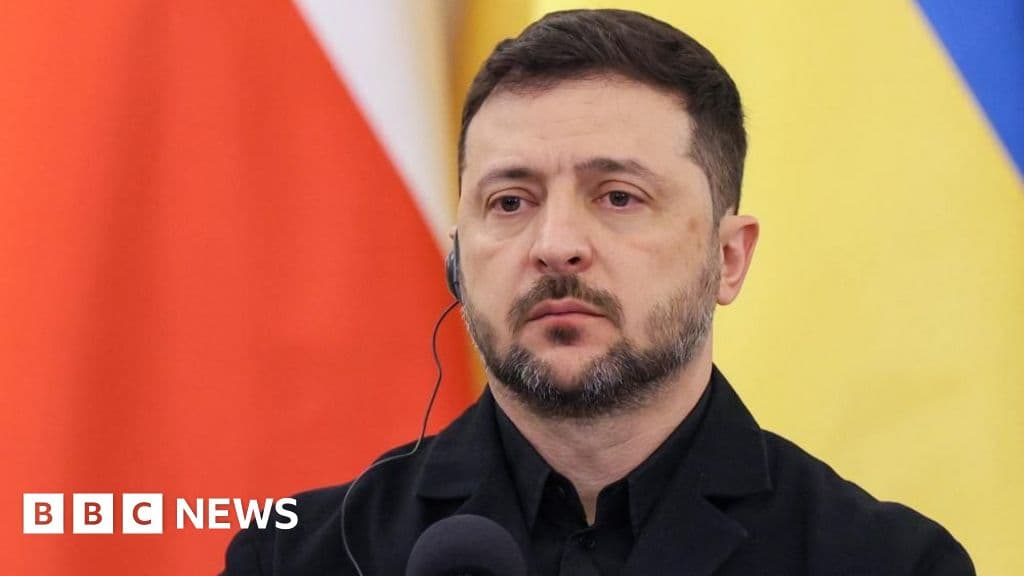
Tensions in Eastern Europe reached a boiling point on Monday after Russia accused Ukraine of launching a massive, coordinated assassination attempt against President Vladimir Putin using a swarm of long-range drones.
The accusation, which Kyiv has vehemently rejected, threatens to shatter the fragile framework of ongoing peace negotiations. For Kenyans watching from afar, the potential collapse of these talks signals more than just diplomatic failure; it risks prolonging the global economic instability that has kept fuel and fertilizer prices—critical to our agricultural backbone—unpredictably high.
Russian Foreign Minister Sergei Lavrov issued a stern statement claiming that Ukraine launched 91 unmanned aerial vehicles (UAVs) overnight, targeting President Putin’s state residence in the northwestern Novgorod region. Lavrov asserted that Russian air defense systems successfully intercepted and destroyed all incoming threats.
"There were no reports of casualties or damage as a result of the attack," Lavrov stated via Telegram, though he warned that Moscow would now "review its position" regarding peace negotiations. It remains unclear if President Putin was at the residence during the alleged incident.
Ukrainian President Volodymyr Zelensky wasted no time in dismissing the allegations, characterizing them as "typical Russian lies." Speaking from Kyiv, he argued that the narrative was a calculated move by the Kremlin to manufacture a pretext for further escalation.
"It is critical that the world doesn't stay silent now," Zelensky posted on X (formerly Twitter). "We cannot allow Russia to undermine the work on achieving a lasting peace."
The Ukrainian leader further noted that:
The timing of this dispute is precarious. International analysts have long warned that false flag operations—attacks staged to justify aggression—are a staple of modern hybrid warfare. If Moscow withdraws from peace talks, the conflict enters a new, more volatile phase.
For Kenya, a prolonged conflict in the Black Sea region continues to strain supply chains. While the shilling has stabilized recently, any major escalation that disrupts global oil flows or grain shipments could see pump prices in Nairobi creep upward again, putting pressure on the cost of living.
"We are watching a high-stakes poker game where the chips are human lives and global stability," noted a Nairobi-based geopolitical analyst. "If the talks fail, the economic shockwaves will travel fast."
Keep the conversation in one place—threads here stay linked to the story and in the forums.
Sign in to start a discussion
Start a conversation about this story and keep it linked here.
Other hot threads
E-sports and Gaming Community in Kenya
Active 9 months ago
The Role of Technology in Modern Agriculture (AgriTech)
Active 9 months ago
Popular Recreational Activities Across Counties
Active 9 months ago
Investing in Youth Sports Development Programs
Active 9 months ago



