We're loading the full news article for you. This includes the article content, images, author information, and related articles.
The nationalist Vetevendosje party secures over 50% of the vote, handing Prime Minister Albin Kurti a decisive mandate just months after Kenya formally recognized the Balkan state.
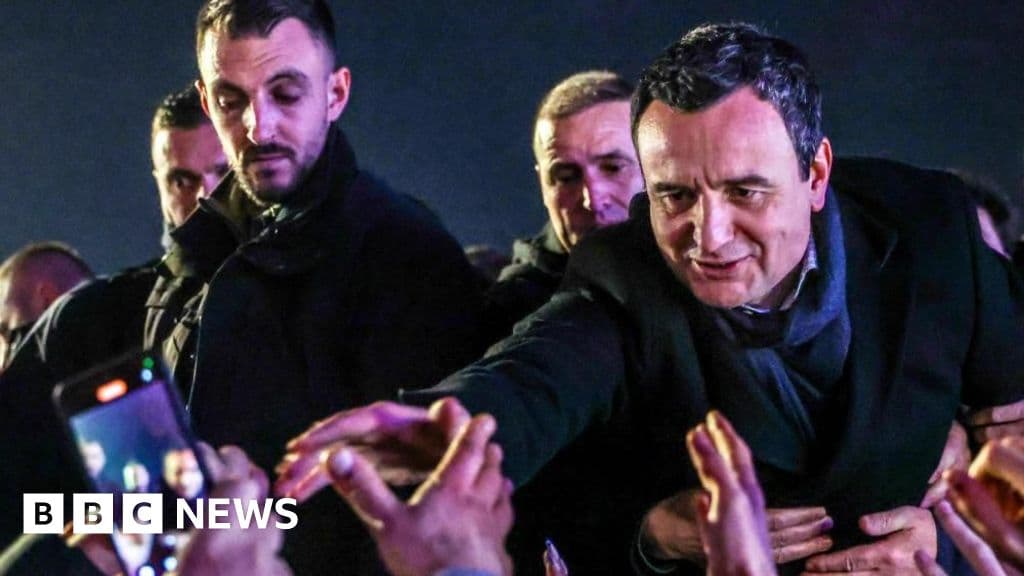
Albin Kurti has done what few politicians dare to do: he bet against the deadlock, and he won. In a decisive snap election that signals a new era of stability for the Balkans, Kurti’s Vetevendosje (Self-Determination) party has swept to victory with 50.8% of the vote, according to preliminary results released Monday.
For the Kenyan observer, this distant political drama in Southeast Europe carries a fresh resonance. Just months after Nairobi formally recognized Kosovo’s independence—a major pivot in President William Ruto’s foreign policy—the young nation has finally shaken off the parliamentary paralysis that has gripped it since February.
The results, with 90% of ballots counted, paint a picture of a frustrated electorate seeking decisive leadership. The opposition, which had blocked Kurti’s attempts to form a government earlier this year, was left trailing significantly.
“The voters have punished the obstructionism of the past six months,” noted a Balkan political analyst speaking to global news agencies. “This is not just a win; it is a vindication of Kurti’s refusal to compromise his platform.”
Despite the landslide, the complexities of Kosovo’s constitution mean Kurti may still need partners. The National Assembly comprises 120 seats, with 20 strictly reserved for ethnic minorities—10 for the Serb community and 10 for other groups including Bosniaks, Turks, and Roma.
While Vetevendosje is on the cusp of a standalone majority, analysts predict Kurti will easily secure the backing of the non-Serb minority MPs to cross the threshold. This contrasts sharply with the deadlock following the February 9 polls, where a fragmented opposition made governance impossible, forcing this second vote.
The stability of Kosovo is no longer an abstract concept for Kenya. In March 2025, Kenya became one of the latest nations to officially recognize Kosovo’s sovereignty, breaking from a long-standing policy of non-alignment on the issue. This move was seen as part of Nairobi's broader strategy to deepen ties with the West and European institutions.
A stable government in Pristina means the diplomatic channels opened by President Ruto’s administration can now function effectively. For Kenya, which champions the principle of self-determination while balancing territorial integrity debates at the African Union, Kurti’s ability to govern a multi-ethnic state without external deadlock will be a key test to watch.
As the dust settles in Pristina, the message to the opposition is clear: the electorate has chosen the path of 'Self-Determination' over stagnation.
Keep the conversation in one place—threads here stay linked to the story and in the forums.
Sign in to start a discussion
Start a conversation about this story and keep it linked here.
Other hot threads
E-sports and Gaming Community in Kenya
Active 9 months ago
The Role of Technology in Modern Agriculture (AgriTech)
Active 9 months ago
Popular Recreational Activities Across Counties
Active 9 months ago
Investing in Youth Sports Development Programs
Active 9 months ago



