We're loading the full news article for you. This includes the article content, images, author information, and related articles.
A brief withdrawal by a private club has peeled back the layers of dysfunction, financial instability, and regulatory chaos plaguing the NPFL.
A brief withdrawal by a private club has peeled back the layers of dysfunction, financial instability, and regulatory chaos plaguing the NPFL.
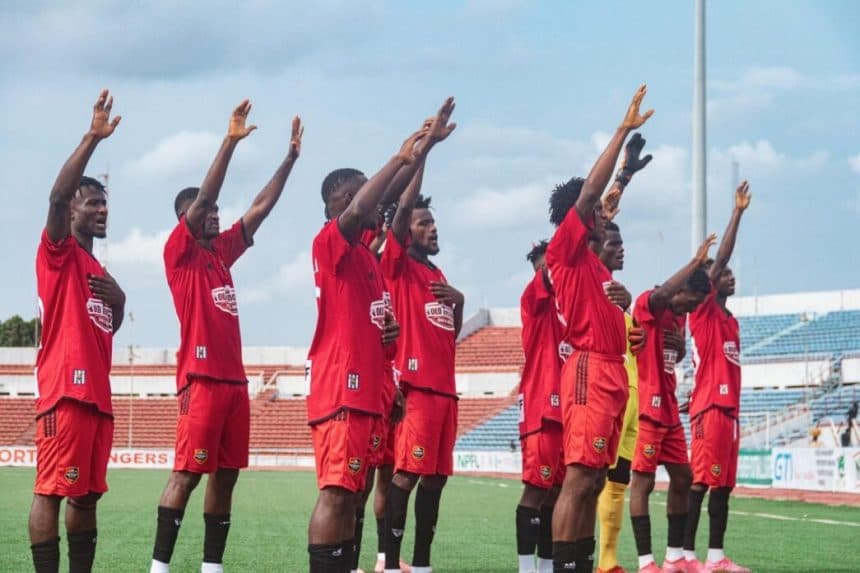
The saga of Kun Khalifat FC began with a missed fixture and ended with a U-turn, but the shockwaves it sent through the Nigeria Premier Football League (NPFL) will not settle so easily. For 24 hours, one of the league’s private entities threatened to walk away entirely, citing a "travesty of justice" after being slapped with heavy sanctions for failing to honor a match against El-Kanemi Warriors. Although the club has since returned to the fold—securing a 2-0 win over Shooting Stars—the incident has exposed the deep structural rot within Nigerian football.
The crisis erupted when Kun Khalifat missed their Matchday 24 fixture, citing logistical challenges. The NPFL’s response was swift and draconian: a forfeiture of three points, three goals, and a fine of N10 million. The club’s initial reaction was to withdraw, describing the league’s management as biased and lacking transparency. "We cannot continue to be part of a system that disregards the well-being of its member clubs," owner Michael Amaefula stated in a fiery press release.
While the withdrawal was rescinded after "fruitful" talks, the episode mirrors the dark days of Ocean Boys and Giwa FC, clubs that were expelled under similar clouds of financial distress and administrative standoff. "It follows an old script," observed Enitan Obadina, a veteran sports editor. "The league demands professionalism without providing the structure to support it."
The Kun Khalifat debacle highlights the grim reality for privately owned clubs in the NPFL. Unlike their government-backed rivals, who enjoy state subventions, private teams like Ikorodu City and Kun Khalifat operate on a shoestring budget, relying on erratic player sales and personal fortunes. "We get next to nothing from the NPFL," admitted Olawale Quadri, director of Ikorodu City FC. "Running a private club in this league is financially extremely challenging."
Kun Khalifat may have returned, but the fundamental issues remain unaddressed. The league is operating on a zero-revenue model for its participants, enforcing first-world regulations in a third-world infrastructure reality. Unless the NPFL can find a way to financially support its constituent clubs, Kun Khalifat’s near-exit serves not as an anomaly, but as a prophecy of the collapse to come.
Keep the conversation in one place—threads here stay linked to the story and in the forums.
Sign in to start a discussion
Start a conversation about this story and keep it linked here.
Other hot threads
E-sports and Gaming Community in Kenya
Active 9 months ago
The Role of Technology in Modern Agriculture (AgriTech)
Active 9 months ago
Popular Recreational Activities Across Counties
Active 9 months ago
Investing in Youth Sports Development Programs
Active 9 months ago