We're loading the full news article for you. This includes the article content, images, author information, and related articles.
The rubber-stamp Workers' Party Congress has seamlessly extended Kim Jong Un's iron-fisted rule, validating a strategic doctrine that prioritizes advanced ballistic missile development over economic integration, sending fresh geopolitical tremors across emerging global markets.
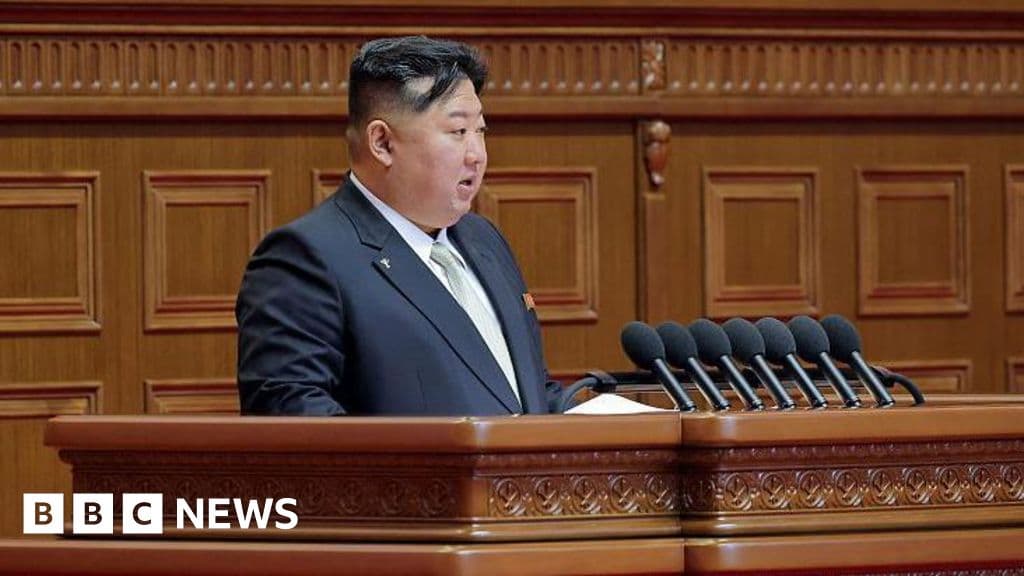
Beneath the cavernous ceilings of Pyongyang's political halls, five thousand party delegates delivered a unanimous, unshakeable verdict. Kim Jong Un, the forty-two-year-old architect of North Korea's nuclear resurgence, was reinstated as General Secretary.
This meticulously choreographed political theatre signals a dangerous doubling-down on nuclear deterrence. For distant economies like Kenya, the resulting international sanctions and elevated global risk premiums threaten to further destabilize the delicate supply chains upon which East Africa relies.
The proceedings of the Ninth Party Congress, held over the weekend in the isolated capital, offered a rare, highly curated glimpse into the opaque mechanics of the North Korean state. State media declared that Kim had been overwhelmingly re-elected to the apex of the ruling Workers' Party of Korea. The announcement, arriving on the fourth day of the secretive conclave, formalizes his continued absolute dominion over a nation his family has ruled with an iron grip since the late 1940s.
Since assuming power following his father's death in 2011, Kim has methodically consolidated his authority, systematically purging rivals and restructuring the party apparatus. His official title has evolved alongside his geopolitical ambitions—from First Secretary in 2012, to Chairman in 2016, and ultimately to the resurrected title of General Secretary during the 2021 and current 2026 congresses.
The party resolution heaped effusive praise on the autocrat, explicitly crediting him with radically improving the nation's "war deterrence." Delegates lauded his steadfast commitment to expanding the military's nuclear capabilities, positioning the armed forces to effectively counter alleged existential threats from the United States and its regional allies.
The re-election serves as a definitive endorsement of Kim's "Byungjin" line—a theoretical dual-track policy promising simultaneous economic development and nuclear armament. However, the reality on the ground tells a vastly different story. The regime has aggressively prioritized its military-industrial complex, sacrificing economic prosperity and civilian welfare to fund intercontinental ballistic missiles and tactical nuclear warheads.
During the congress, Kim is expected to outline the next aggressive five-year phase of weapons development. Analysts anticipate directives aimed at miniaturizing nuclear warheads, developing hypersonic glide vehicles, and advancing military reconnaissance satellite programs.
While the Korean Peninsula lies thousands of miles from the East African coastline, the economic fallout of Pyongyang's belligerence lands squarely on the doorsteps of emerging markets like Kenya. The international community's response to North Korea's nuclear breakout involves heavily fortified economic sanctions and an aggressive realignment of global trade routes.
When geopolitical tensions escalate in the Asia-Pacific region—a vital artery for global manufacturing and shipping—risk premiums on international freight surge. This instability directly contributes to inflationary pressures in heavily import-dependent nations. For the Kenyan consumer, a nuclear standoff in the Sea of Japan translates into increased costs for imported electronics, refined petroleum products, and vital agricultural inputs.
Furthermore, the diversion of global diplomatic attention and financial resources toward containing the North Korean threat often marginalizes vital development assistance and climate adaptation funding earmarked for the African continent. The interconnected nature of modern geopolitics ensures that Kim's nuclear ambitions extract a hidden tax from the developing world.
As the Ninth Party Congress concludes its reshuffling of the powerful executive presidium, the international community is left bracing for a renewed era of confrontation. The regime has unequivocally stated that its nuclear status is non-negotiable, permanently embedded into the fabric of the state's constitution.
The continuation of Kim Jong Un's reign guarantees that the Korean Peninsula will remain one of the world's most volatile flashpoints, requiring constant vigilance from global markets and diplomatic corps alike.
“The war deterrence of the country, with the nuclear forces as its pivot, has been radically improved under his unshakeable will,” the state media proclaimed, a chilling promise of the arms race yet to come.
Keep the conversation in one place—threads here stay linked to the story and in the forums.
Sign in to start a discussion
Start a conversation about this story and keep it linked here.
Other hot threads
E-sports and Gaming Community in Kenya
Active 9 months ago
The Role of Technology in Modern Agriculture (AgriTech)
Active 9 months ago
Popular Recreational Activities Across Counties
Active 9 months ago
Investing in Youth Sports Development Programs
Active 9 months ago



