We're loading the full news article for you. This includes the article content, images, author information, and related articles.
Foreign Minister Olivier Nduhungirehe claims global powers are ignoring government-led airstrikes on civilians while M23 forces reportedly enter Uvira, threatening to shatter the region’s fragile new peace deal.
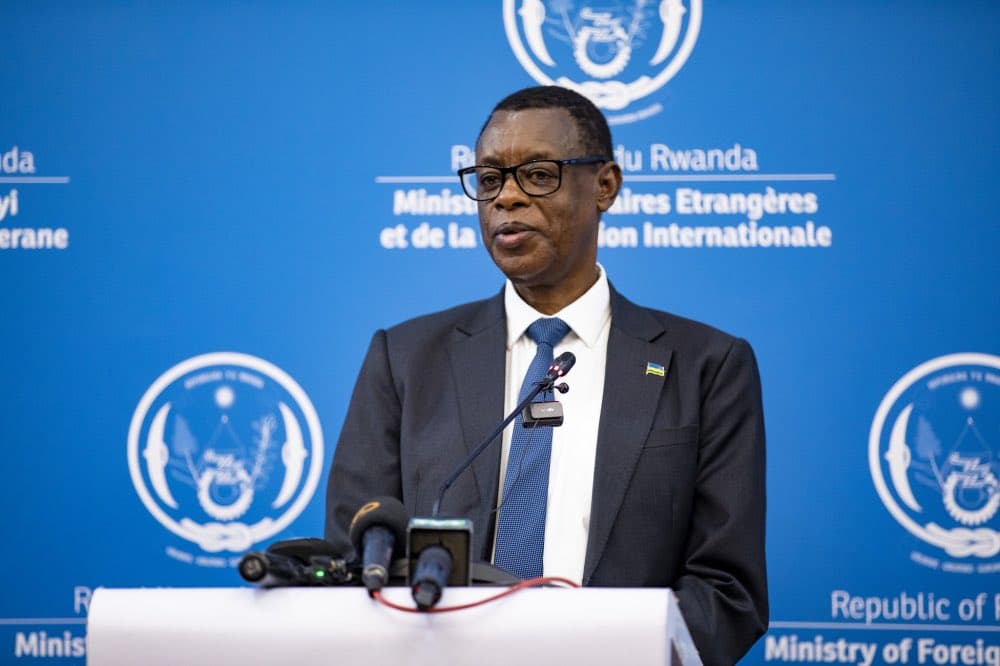
NAIROBI — Kigali has launched a blistering diplomatic offensive against Western powers, accusing them of "selective blindness" as the security crisis in Eastern Democratic Republic of Congo (DRC) reaches a terrifying new crescendo.
With rebel forces reportedly breaching Uvira—the government’s last major stronghold in South Kivu—the diplomatic row threatens to derail the recently signed Washington Accord. For Nairobi, the stakes are existential: a full-scale implosion next door risks triggering a massive refugee crisis and choking off a trade market that has become a lifeline for Kenyan manufacturers.
In a sharp rebuke issued Sunday, Rwanda’s Minister of Foreign Affairs, Olivier Nduhungirehe, tore into what he described as a hypocritical international response to the violence. While Western capitals have been quick to condemn the M23 rebel advance, Nduhungirehe argues they have remained silent on provocations by the Congolese armed forces (FARDC).
“The same pattern, over and over again,” Nduhungirehe stated. “You will never hear the West condemning these blatant violations of the ceasefire by the FARDC.”
Central to Kigali’s grievance are allegations of sustained aerial bombardments targeting the Banyamulenge, a Tutsi community in South Kivu often caught in the crossfire. Nduhungirehe claimed these attacks have been “going on for several months now,” with the DRC government “bragging about them” rather than seeking de-escalation.
“Western countries suddenly wake up only when the AFC/M23 retaliates,” he added, suggesting that the rebel offensive is a direct response to existential threats against minority communities.
The diplomatic war of words coincides with a dramatic shift on the battlefield. Reports from the ground indicate that M23 rebels have entered Uvira, a strategic city on the shores of Lake Tanganyika. If confirmed, the fall of Uvira would effectively sever the government’s control over South Kivu, following the capture of Bukavu earlier this year.
The humanitarian fallout is immediate and staggering. The United Nations estimates that over 200,000 people have been displaced in the last week alone, with thousands streaming across the border into Burundi.
For the average Kenyan, the chaos in Congo is not a distant tragedy—it is an economic shockwave. The DRC has rapidly become one of Kenya’s most important export markets, with goods worth approximately KES 8.6 billion (approx. $66 million) shipped in the first quarter of 2024 alone.
Kenyan manufacturers, particularly in the wheat and packaging sectors, rely on the Congolese market to keep factories running and workers paid. A prolonged conflict that shuts down the border or destroys infrastructure in cities like Uvira and Goma will directly impact jobs in Nairobi and Mombasa.
Furthermore, Kenya’s diplomatic credibility is on the line. As a key architect of the Nairobi Process, President William Ruto’s administration has invested heavily in stabilizing the region. The collapse of the ceasefire suggests that regional mechanisms are struggling to contain the fire.
As the West ramps up pressure on Kigali to halt the M23 advance, the region holds its breath. Without a genuine enforceability mechanism for the ceasefire—one that addresses both rebel advances and government airstrikes—the Great Lakes region risks sliding into a war that no border can contain.
Keep the conversation in one place—threads here stay linked to the story and in the forums.
Sign in to start a discussion
Start a conversation about this story and keep it linked here.
Other hot threads
E-sports and Gaming Community in Kenya
Active 9 months ago
The Role of Technology in Modern Agriculture (AgriTech)
Active 9 months ago
Popular Recreational Activities Across Counties
Active 9 months ago
Investing in Youth Sports Development Programs
Active 9 months ago



