We're loading the full news article for you. This includes the article content, images, author information, and related articles.
Kiambu Senator Karungo Thang’wa has launched a scathing attack on the Kenya Kwanza administration, accusing President William Ruto’s government of lacking the political will to end enforced disappearances.
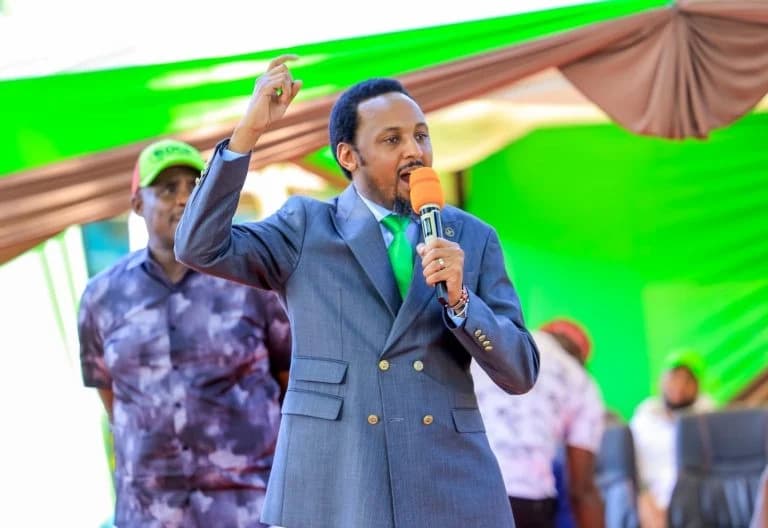
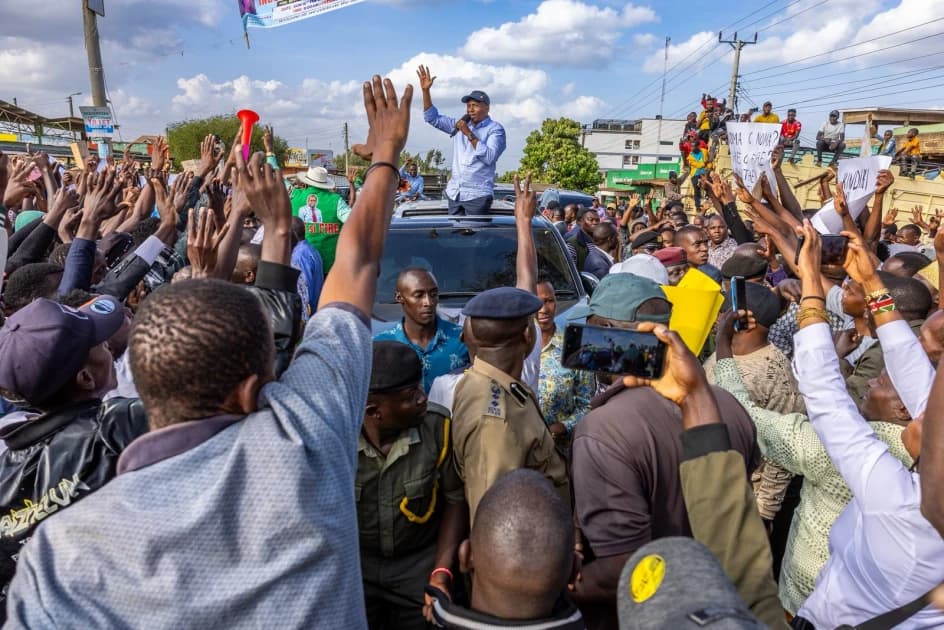
Kiambu Senator Karungo Thang’wa has launched a scathing attack on the Kenya Kwanza administration, accusing President William Ruto’s government of lacking the political will to end enforced disappearances and police brutality, signaling a deepening rift within the ruling coalition’s Mount Kenya stronghold.
In a move that has sent shockwaves through the United Democratic Alliance (UDA), Kiambu Senator Karungo Thang’wa has broken rank with the government’s official narrative, directly accusing the state of complacency in the face of escalating human rights violations. Speaking to a charged crowd in Kiambu, the Senator did not mince his words, painting a grim picture of a regime that—despite its populist "Hustler" origins—is increasingly viewed as detached from the sanctity of life and the rule of law.
The Senator’s remarks come at a volatile time for the administration, which is already grappling with the fallout from the youth-led "Gen Z" protests that rocked the nation earlier this year. For a key legislator from the President’s own political backyard to publicly question the government’s commitment to human rights is not merely dissent; it is a political earthquake that suggests the ground in the populous Mount Kenya region is shifting dangerously.
Senator Thang’wa’s critique focused heavily on the unresolved cases of abductions and extrajudicial killings that have marred the country’s security sector reputation. He argued that the administration has failed to operationalize the necessary reforms to rein in rogue elements within the National Police Service. "It is not a lack of capacity," Thang’wa declared, his voice rising above the murmurs of the crowd. "It is a lack of willingness. We cannot purport to lead a democracy while our children disappear in the night, only to be found in rivers or mortuaries weeks later."
This narrative strikes a chord with many Kenyans who feel that the promises of the 2022 campaigns have been betrayed. The Senator referenced the "Githurai Massacre" and other incidents during the anti-Finance Bill protests, where excessive force was allegedly used against unarmed demonstrators. By bringing these issues to the fore, Thang’wa is effectively aligning himself with the growing public sentiment that the government prioritizes regime stability over citizen safety.
Political analysts view this outburst as symptomatic of a broader malaise within the Kenya Kwanza coalition. The Mount Kenya region, which voted overwhelmingly for President Ruto, has seen a growing number of its leaders express frustration over what they perceive as marginalization and broken promises. Thang’wa’s bold stance may be a calculated move to distance himself from the administration’s baggage ahead of the 2027 electoral cycle.
Furthermore, the timing is suspect. With Deputy President Kithure Kindiki consolidating his influence in the region, local leaders are jostling for relevance. Thang’wa’s pivot to human rights advocacy could be an attempt to carve out a niche as the "voice of the people," distinct from the sycophancy that often characterizes ruling party politics. It challenges the President to respond not with rhetoric, but with tangible action against perpetrators of state violence.
For observers across East Africa, the situation in Kenya is a bellwether for democratic health in the region. Kenya has long been regarded as a sanctuary of relative freedom compared to its neighbors. However, the resurgence of "Nyayo-era" tactics—abductions, secret detentions, and surveillance—threatens to erode this hard-won status. Civil society groups, including the Kenya Human Rights Commission (KHRC), have consistently warned that the normalization of police brutality poses an existential threat to the 2010 Constitution.
If the government fails to heed these warnings—now echoed by its own Senators—it risks facing a crisis of legitimacy. The international community is also watching closely, with Western envoys reportedly pressuring State House to ensure accountability for recent violations. Thang’wa’s comments serve as domestic amplification of this international pressure.
The ball is now squarely in President Ruto’s court. Dismissing Thang’wa as a lone wolf would be a strategic miscalculation. The Senator articulates a grievance that is silent but widespread. To regain the trust of the electorate, particularly the youth demographic that feels targeted by security agencies, the President must move beyond the formation of task forces and inquiries.
There must be prosecutions. There must be a visible purge of rogue commanders. As the Senator concluded, "Power is transient, but justice is eternal." It is a warning that the administration would be wise to heed before the whispers of discontent turn into a roar of defiance.
Keep the conversation in one place—threads here stay linked to the story and in the forums.
Sign in to start a discussion
Start a conversation about this story and keep it linked here.
Other hot threads
E-sports and Gaming Community in Kenya
Active 9 months ago
The Role of Technology in Modern Agriculture (AgriTech)
Active 9 months ago
Popular Recreational Activities Across Counties
Active 9 months ago
Investing in Youth Sports Development Programs
Active 9 months ago