We're loading the full news article for you. This includes the article content, images, author information, and related articles.
The High Court in Kerugoya has issued a new compliance roadmap in the duty-free rice dispute—ordering a nationwide mop-up from farmers within 30 days and allowing importation of the balance in three phased tranches
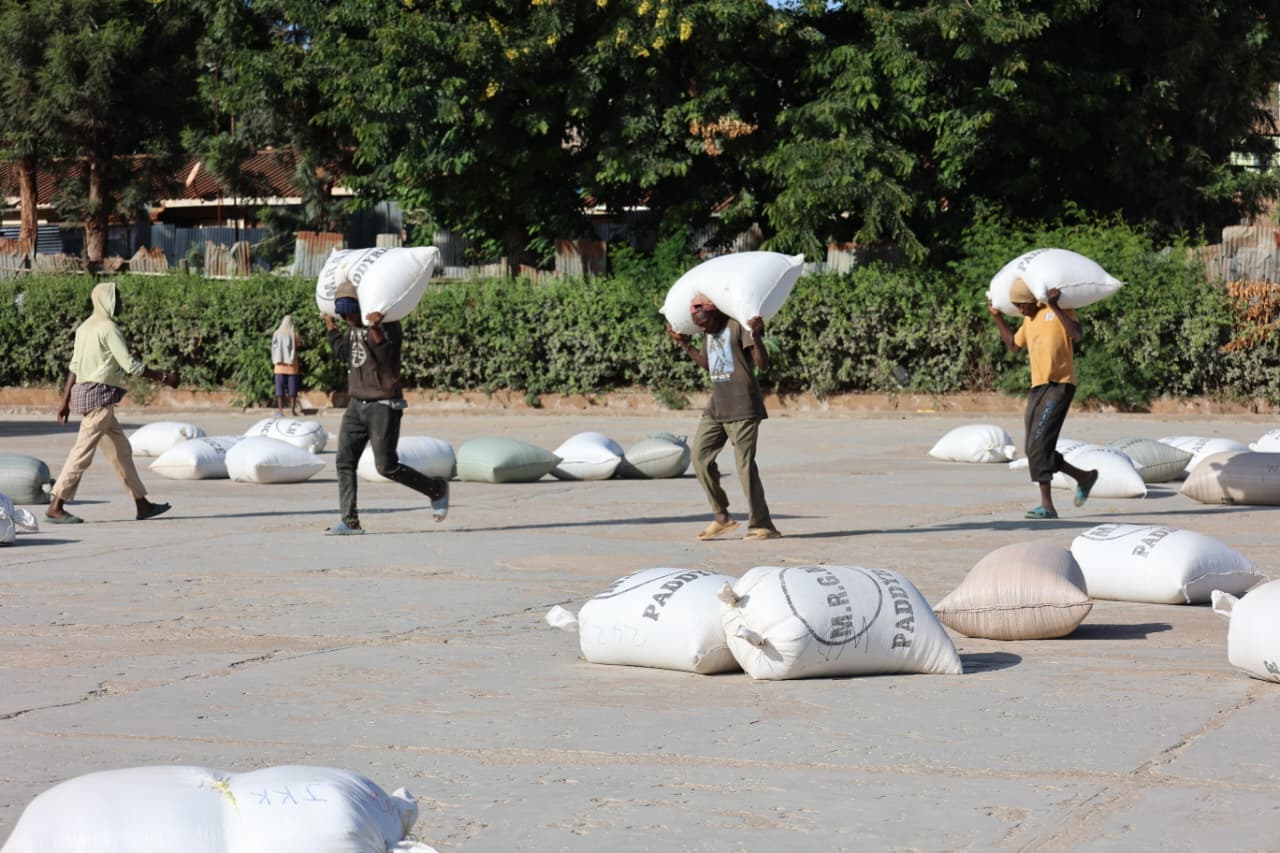
A protracted court fight over Kenya’s duty-free rice policy has taken a decisive new turn, with the High Court in Kerugoya issuing a structured, compliance-first framework aimed at protecting farmers while addressing food security and market stability.
In a ruling delivered on 29 January 2026 in Petition E009 of 2025, Justice Edward M. Muriithi set out a roadmap that does two things at once: forces the State to buy locally held rice more broadly than before, and permits further duty-free imports—but only in controlled phases to avoid market flooding.
From the ruling (Orders section), the court directed:
Nationwide mop-up within 30 days
The respondents are required, for 30 days, to undertake a mop-up exercise by purchasing locally produced and processed rice from farmers countrywide—not only through cooperatives or societies—at farm-gate and/or wholesale prices, with price setting to be guided by the market index and consultation processes referenced in the ruling.
Leave granted to import the balance—254,000 MT—but in three equal tranches
The court granted leave to implement Gazette Notice No. 10353 of 28 July 2025 by importing the balance of 254,000 MT duty-free in three equal tranches of 85,000 MT, phased to commence on 1 March 2026, 1 April 2026, and 1 May 2026.
This is materially different from earlier controversy that centred on whether duty-free importation was being expanded or revived through an amendment gazette notice. The new orders place importation on a court-controlled timetable and explicitly tie it to effective mop-up and market protection logic.
The ruling revisits the court’s earlier approach in August 2025: the State’s food-security duty and consumer affordability concerns on one hand, and farmers’ economic rights and livelihoods on the other. It is also explicit that bulk government buying cannot operate on retail prices and must be grounded in a wholesale logic that still treats farmers fairly.
The court records that government affidavits indicated significant duty-free import volumes by end-October 2025 and a comparatively modest mop-up from farmers, prompting renewed judicial concern that prior mop-up efforts were not broad enough—especially where purchasing was largely confined to societies and structured groups rather than the full farmer base.
This Kerugoya roadmap lands after weeks of intense scrutiny sparked by conflicting High Court orders on the same duty-free rice question—orders that created an enforcement trap for agencies at the Port of Mombasa and threatened to undermine confidence in court authority.
The new ruling signals an institutional attempt to restore coherence: importation is not banned outright, but it is disciplined—tied to a clear mop-up obligation and phased tranches that reduce the risk of a sudden supply shock that would crash local prices.
For rice farmers:
The most consequential shift is the court’s insistence on broader, inclusive mop-up—reaching beyond cooperatives and aligned groups. That expands who can benefit from the State’s buying programme and reduces the risk that significant stocks remain stranded in stores and farms while imported rice enters duty-free.
For consumers:
The court accepts that a demand–supply deficit must be addr flood the market” approach. The phased import model is designed to stabilise availability without triggering abrupt price collapse that harms domestic producers—while still guarding against spiralling prices from shortages.
For the Treasury/KRA enforcement chain:
The ruling offers a legally safer ing on shifting administrative instruments, the State now has a court-sanctioned import schedule under the original gazette framework of July 2025.
What remains acute—and likely to return to court—is the status of rice already detained at the port, and the n around whether any importation and clearance proceeded in contradiction of existing court orders before this structured roadmap was issued.
Public reporting has already documented the operational confusion created by the parallel orders. The new Kerugoya ruling does not erase the past. It reorganises the future.
The Kerugoya High Court has now delivered a pragmatic judicial formula for a politically and fiscally sensitive policy dispute:
Buy local rice first—nationwide, fairly, and within 30 days.
Then import the balance—254,000 MT duty-free, but only in three phased tranches from March to May 2026.
In effect, the court is attempting to prevent Kenya’s rice policy from being driven by abrupt executive instruments and litigation races—and to re-anchor it in a supervised, measurable compliance programme that protects both food security and farmer livelihoods.
Keep the conversation in one place—threads here stay linked to the story and in the forums.
Streamline Official
1 month ago
1) What does “mop-up” mean in this case? “Mop-up” is the State buying locally produced rice already in the market (stocks held by farmers, millers, traders, or distribution poi
Streamline Official
1 month ago
28 Jul 2025 — Gazette Notice No. 10353 issued, opening a duty-free import framework for Grade 1 milled white rice (the policy instrument later challenged in court). 19 Aug 2025 (Kerugoya,
Other hot threads
E-sports and Gaming Community in Kenya
Active 10 months ago
Popular Recreational Activities Across Counties
Active 10 months ago
The Role of Technology in Modern Agriculture (AgriTech)
Active 10 months ago
Investing in Youth Sports Development Programs
Active 10 months ago