We're loading the full news article for you. This includes the article content, images, author information, and related articles.
Ambassador Philip Thigo has positioned Kenya as a pivotal voice in global tech governance, advocating for evidence-based AI policies at the prestigious India AI Action Summit in New Delhi.
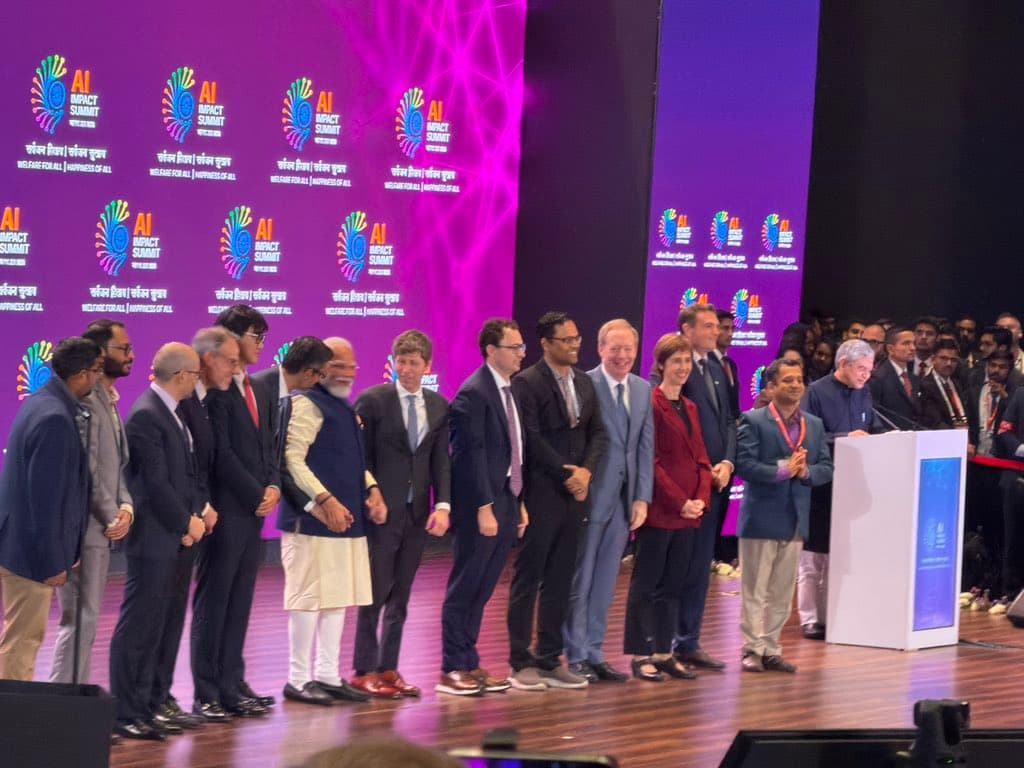
Kenya's Special Envoy on Technology, Ambassador Philip Thigo, has taken center stage in New Delhi, boldly urging the global community to transition from abstract ethical principles to actionable, truly measurable impact in the rapidly evolving realm of Artificial Intelligence.
As artificial intelligence fundamentally reshapes global economies at breakneck speed, the desperate need for robust, data-driven governance has never been more critically urgent. Thigo's public endorsement of the prestigious New Delhi Frontier AI Impact Commitments firmly places Kenya at the absolute forefront of this crucial international dialogue, ensuring that the Global South is not merely a passive consumer of technology, but an active, decisive architect of AI's future trajectory.
Speaking at the High-Level Segment of the highly anticipated India AI Action Summit, Ambassador Thigo delivered a compelling, pragmatic address focused heavily on accountability. The summit, drawing leading multinational technology corporations and senior government officials, served as a vital platform to synchronize global AI strategies. Thigo astutely observed that while the world has spent years debating the broad philosophical implications of machine learning, the technology itself has aggressively integrated into daily life, frequently outpacing the slow development of rigid regulatory frameworks.
“In a landscape moving significantly faster than most bureaucratic governance frameworks can track, this kind of unified alignment around measurable impact—not just vague, aspirational principles—is deeply meaningful,” Thigo stated to the assembly. This pivotal shift in perspective is essential for developing nations, particularly in East Africa, where AI presents both unprecedented developmental leapfrog opportunities and severe socioeconomic risks regarding labor displacement.
The Kenyan envoy strategically outlined four critical directions that must define the next phase of international AI policy. These pillars are designed to strictly quantify the technology's real-world footprint, moving the ongoing conversation from hypothetical capabilities to concrete statistical realities.
First, he emphasized the absolute necessity of deeply analyzing real-world AI usage at a massive scale. Second, he called for the collaborative building of highly anonymized, aggregate data sets to accurately map AI diffusion across varied global economies. Third, Thigo championed the grounding of future workforce and educational policy in hard, verifiable evidence rather than fearful assumptions. Finally, he stressed the creation of long-term longitudinal baselines to rigorously track technological adoption, economic opportunity, and societal impact over extended periods.
Kenya's highly visible participation at the India AI Summit is a strategic assertion of its status as the "Silicon Savannah." The country has aggressively positioned itself as Africa's premier technology hub, heavily investing in digital infrastructure and actively fostering a vibrant, innovative startup ecosystem. By aligning with India—a fellow developing powerhouse with a massive, tech-savvy population—Kenya is effectively helping to forge a powerful Global South coalition on digital governance.
The implications for the broader East African region are profoundly significant. As AI applications in critical sectors like precision agriculture, mobile healthcare diagnostics, and mobile financial services become increasingly prevalent, the urgent need for localized, culturally relevant data sets becomes paramount. Importing AI models trained exclusively on Western data risks perpetuating severe biases and delivering highly sub-optimal results for African end-users. Thigo's advocacy for measured, localized impact directly addresses this glaring technological disparity.
The ultimate goal of Kenya's diplomatic technology push is to ensure that the massive economic dividends of the AI revolution are equitably distributed. Ambassador Thigo's clear insistence on publishing regular statistical insights on AI usage aims to force a necessary reckoning within the tech industry. It fundamentally demands that corporations prove their tools are actively enhancing productivity and improving lives, rather than merely extracting localized data or displacing vulnerable workers.
As the summit boldly concluded, the clear message from Nairobi via New Delhi was unequivocal: the era of unregulated, unmeasured algorithmic experimentation must immediately end. For nations like Kenya, the stakes are far too high to rely on blind trust. Data-driven accountability is the only viable path forward in the complex age of machine intelligence.
“The crucial shift that matters is publishing true statistical insights—moving the global conversation from what AI should ideally do, to what it is actually doing to our productivity, our labor markets, and the very nature of human work itself.”
Keep the conversation in one place—threads here stay linked to the story and in the forums.
Sign in to start a discussion
Start a conversation about this story and keep it linked here.
Other hot threads
E-sports and Gaming Community in Kenya
Active 9 months ago
The Role of Technology in Modern Agriculture (AgriTech)
Active 9 months ago
Popular Recreational Activities Across Counties
Active 9 months ago
Investing in Youth Sports Development Programs
Active 9 months ago