We're loading the full news article for you. This includes the article content, images, author information, and related articles.
**Women constitute the vast majority of Kenya's agricultural workforce, yet systemic barriers have long suppressed their potential. Now, a new wave of female agri-preneurs and climate-smart initiatives are rewriting the script on food security and economic empowerment.**
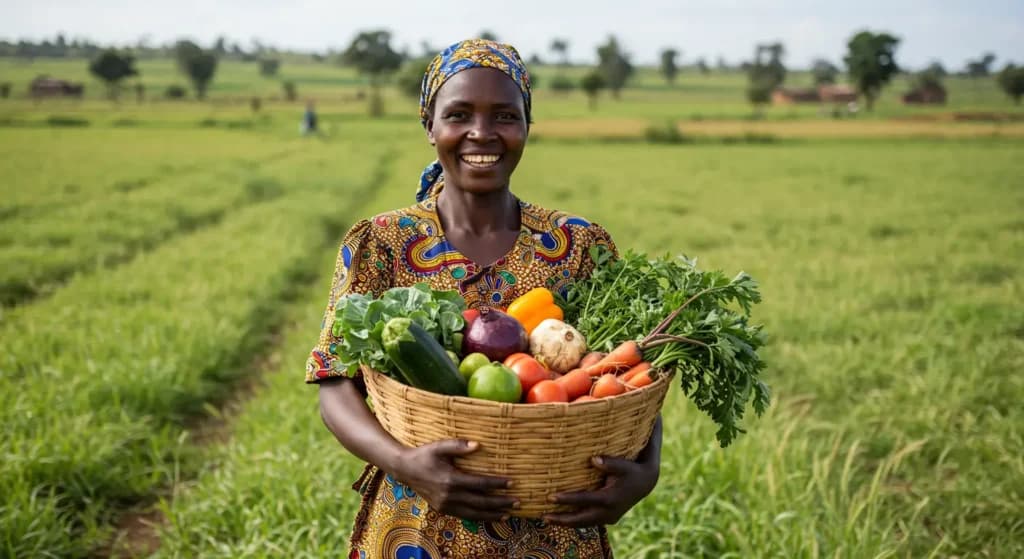
Women are the backbone of Kenya's agriculture, comprising up to 80% of the entire agricultural labor force and responsible for a staggering 70-80% of food production. Despite these figures, their contribution has been historically undervalued, hampered by deeply entrenched social norms and structural inequalities that limit their access to land, credit, and technology.
This disparity is not just a matter of social justice; it is a critical economic issue. The Food and Agriculture Organization (FAO) estimates that if women had the same access to productive resources as men, farm yields could increase by 20 to 30 percent. For Kenya, this could translate to a significant reduction in the number of people facing food insecurity, a figure that stood at 13.6 million as of August 2024.
One of the most significant barriers for women in agriculture is the lack of land ownership. While women provide the bulk of labor on farms, they own a fraction of the land. Traditional practices and inheritance laws often favor men, leaving women with insecure tenure and little incentive to make long-term investments in their farms. This systemic exclusion from land ownership perpetuates a cycle of low economic status and limits their ability to benefit from their hard work.
Despite these challenges, a new generation of Kenyan women is breaking barriers and transforming the agricultural landscape. From turning organic waste into fertilizer to empowering women in aquaculture, female entrepreneurs are blending technology, sustainability, and inclusivity to tackle issues like unemployment and malnutrition. Trailblazers like Joyce Waithira Rugano and Mathildah Amollo are not just running successful businesses; they are redefining what it means to be a farmer in the 21st century. Their innovative models are creating closed-loop systems that regenerate the soil, the economy, and the dignity of their communities.
The Kenyan government and various non-governmental organizations are also stepping in to support women in agriculture. Initiatives like the Youth and Women Empowerment in Modern Agriculture Project (Y-MAP) are providing training in agribusiness skills, modern equipment, and certified seeds to boost productivity and improve livelihoods. Furthermore, organizations like Action Against Hunger are implementing climate-smart agriculture projects to improve access to fresh produce and provide sustainable solutions for food security. These programs often include training in crop-growing techniques, pest management, and the selection of drought-resistant crops.
The path to gender equality in agriculture is fraught with challenges, but the tide is turning. As more women gain access to resources, training, and leadership positions, their impact on food security and economic growth will be undeniable. Empowering women in agriculture is not just about empowering individuals; it's about investing in a more prosperous and food-secure future for all Kenyans.
Keep the conversation in one place—threads here stay linked to the story and in the forums.
Sign in to start a discussion
Start a conversation about this story and keep it linked here.
Other hot threads
E-sports and Gaming Community in Kenya
Active 9 months ago
The Role of Technology in Modern Agriculture (AgriTech)
Active 9 months ago
Popular Recreational Activities Across Counties
Active 9 months ago
Investing in Youth Sports Development Programs
Active 9 months ago