We're loading the full news article for you. This includes the article content, images, author information, and related articles.
The federation bets on a residential academy model to turn 2011-born talents into the 2027 World Cup squad, promising full scholarships and a break from chaotic preparations.
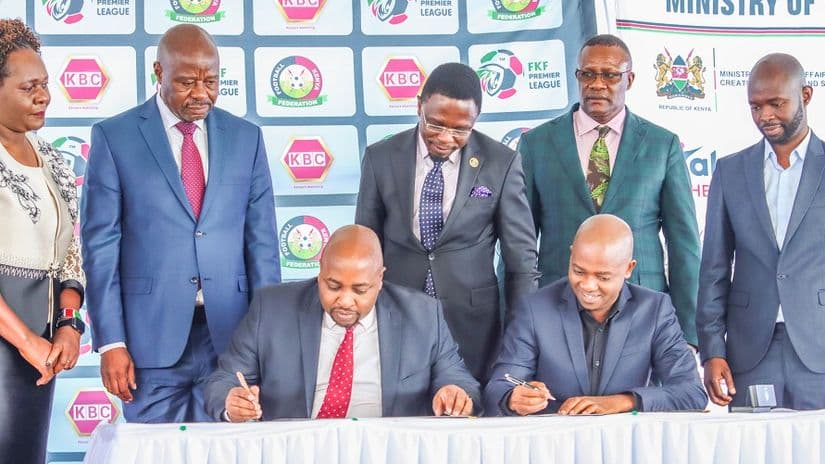
For decades, Kenya’s approach to youth football has been a cycle of panic: assembling squads days before tournaments, traveling by bus to Kampala, and returning home with excuses. That era, if Football Kenya Federation (FKF) President Hussein Mohammed is to be believed, ended this week.
In a move that signals a pivot from chaotic improvisation to calculated strategy, the FKF has signed a landmark two-year partnership with Acakoro Football Academy. The goal is audacious but specific: to build a squad capable of qualifying for the 2027 FIFA U17 World Cup in Qatar. The engine room for this ambition? A 25-acre residential facility in Homa Bay that officials are already comparing to France’s legendary Clairefontaine.
The deal, signed on December 9, is not a vague memorandum of understanding. It triggers an immediate, nationwide scouting operation targeting boys born in 2011. Starting this month, FKF and Acakoro scouts will comb through five regions to identify the country’s top 10 to 15 talents.
These chosen few will not just attend weekend camps. They will be relocated to Acakoro’s Homa Bay campus on full scholarships. This covers their education (aligned with the Competency-Based Curriculum), accommodation, nutrition, and elite daily training. For a Kenyan parent struggling with school fees, this is a golden ticket—a chance for their child to pursue a professional career without sacrificing their academic future.
Why Homa Bay? According to Acakoro Director Lukas Mott, the location offers a "calm, quiet, and serene environment" necessary for high-performance focus, shielding young players from the distractions of Nairobi. The facility is described as a "residential high-performance system," equipping players with sports science support, modern analytics, and a structured pathway that mirrors European academies.
"This is not simply a camp; it is a system, a structure, and a culture of excellence," Mohammed emphasized during the signing. "We have openly admitted that the performance of our youth national teams has not met expectations. Addressing this requires more than words."
The partnership comes at a critical time. Kenya recently failed to qualify for the U17 Africa Cup of Nations, a blow that highlighted the gap between raw talent and tactical readiness. Critics have long pointed out that while Kenya produces gifted individual players, it lacks the "assembly line" needed to churn out cohesive teams.
By integrating these players directly into the national U15 and U17 pathways, the FKF hopes to eliminate the "last-minute" culture. Instead of meeting teammates at the airport, these boys will live and train together for years, building the telepathic understanding seen in top West African and European sides.
"This partnership unlocks Kenya’s football potential," said Mott. "By combining education, elite training, and national structures, we are finally giving our young players a real chance to reach the world stage."
Keep the conversation in one place—threads here stay linked to the story and in the forums.
Sign in to start a discussion
Start a conversation about this story and keep it linked here.
Other hot threads
E-sports and Gaming Community in Kenya
Active 9 months ago
The Role of Technology in Modern Agriculture (AgriTech)
Active 9 months ago
Popular Recreational Activities Across Counties
Active 9 months ago
Investing in Youth Sports Development Programs
Active 9 months ago