We're loading the full news article for you. This includes the article content, images, author information, and related articles.
Kenyan students win the US-Kenya AI challenge with a maternal health platform, showcasing local innovation’s power to solve critical healthcare problems.
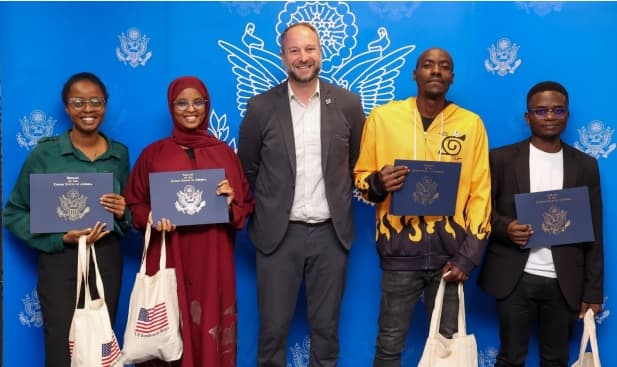
A team of Kenyan students has propelled the country onto the global technology stage after winning the prestigious US–Kenya AI Challenge, triumphing with an Artificial Intelligence platform designed to predict and prevent pregnancy complications in remote and underserved communities.
The innovation outperformed entries from across the world, earning international recognition for its potential to dramatically reduce maternal mortality—one of Kenya’s most persistent public health challenges. The victory is both a validation of the country’s “Silicon Savannah” credentials and a powerful reminder of what locally driven innovation can achieve.
At the heart of the winning solution is a simple but transformative idea: use AI to bridge the gap between rural mothers and timely medical intervention.
By analyzing basic, easily collected data—such as age, medical history, gestational milestones, and reported symptoms—the platform can flag high-risk pregnancies early, long before they escalate into life-threatening emergencies. The system is designed to function in low-resource settings, making it especially relevant for remote regions with limited access to specialists.
“We didn’t just want to write code,” the team’s lead developer said. “We wanted to rewrite the story of maternal health.”
Kenya has made progress in maternal care, but mortality rates remain stubbornly high in marginalized counties such as Mandera, Turkana, and parts of northern Rift Valley, where distance, understaffed facilities, and delayed referrals often prove fatal.
Health experts note that early detection is one of the most effective tools in reducing maternal deaths. By identifying risk early and prompting referrals or interventions, the students’ platform could save thousands of lives if deployed at scale.
The win comes with significant funding to scale the solution, alongside mentorship from leading US technology firms—support that could accelerate deployment across Kenya and, eventually, the wider region.
For the students, the recognition goes beyond prize money. It opens doors to partnerships with health institutions, county governments, and global health organizations eager for practical, data-driven solutions rooted in local realities.
The success underscores a larger truth: Kenyan youth are not just participating in the global tech economy—they are shaping it, applying cutting-edge tools to solve deeply African problems.
As debates continue about brain drain and youth unemployment, this victory offers a counter-narrative—one where talent, purpose, and opportunity converge.
From code to clinic, the message is clear: the future of African innovation is not coming.
It is already here—and it is saving lives.
Keep the conversation in one place—threads here stay linked to the story and in the forums.
Sign in to start a discussion
Start a conversation about this story and keep it linked here.
Other hot threads
E-sports and Gaming Community in Kenya
Active 9 months ago
The Role of Technology in Modern Agriculture (AgriTech)
Active 9 months ago
Popular Recreational Activities Across Counties
Active 9 months ago
Investing in Youth Sports Development Programs
Active 9 months ago



