We're loading the full news article for you. This includes the article content, images, author information, and related articles.
The Treasury's controversial decision to offload a fifteen percent stake in Safaricom to Vodacom for KES 244.5 billion is drawing heavy fire from economists who warn the state is trading a perpetual cash cow for fleeting financial relief.
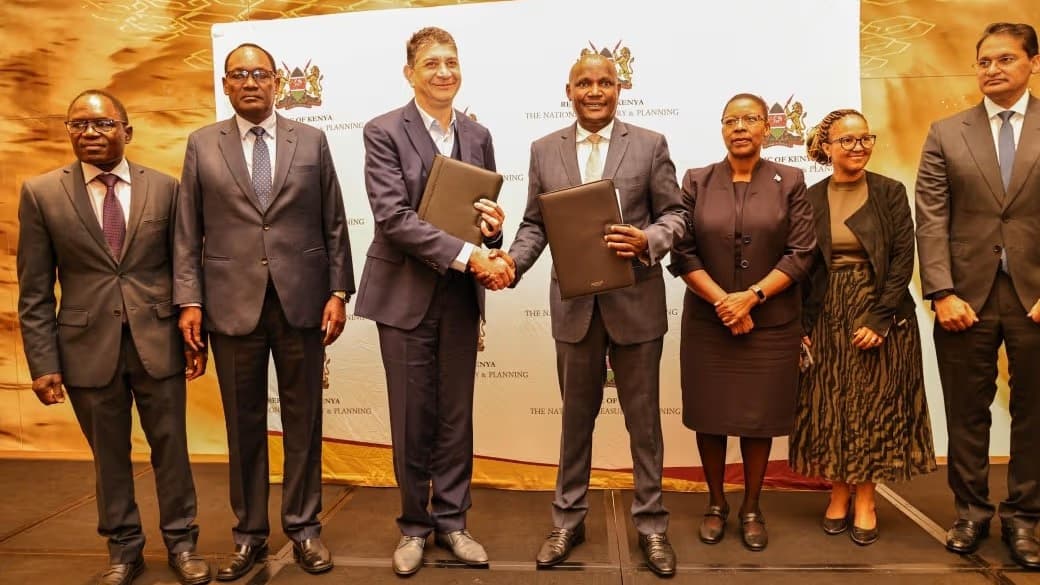
A monumental transfer of corporate power has been inked in Nairobi. The Kenyan government has surrendered majority control of East Africa's most profitable enterprise, selling off a massive chunk of its Safaricom holdings to South African telecom giant Vodacom.
Pitched as a masterstroke to fund the National Infrastructure Fund without incurring fresh foreign debt, the sale structurally alters Kenya's digital sovereignty. Critics argue this represents a catastrophic intertemporal fiscal error, exchanging high-yielding long-term dividends for a one-off liquidity injection.
Executing the cornerstone of its aggressive 2025 privatization strategy, the Kenyan Treasury finalized the transfer of 6.016 billion shares to the Vodafone/Vodacom consortium. The transaction was priced at KES 34 per share, representing a 23.6 percent premium over the company's recent six-month trading average on the Nairobi Securities Exchange (NSE). This premium valuation allowed the government to justify the timing of the sale, preventing accusations of offloading a premier national asset at a severe discount.
The financial mechanics of the deal generate a staggering immediate windfall. The share sale itself raises KES 204.3 billion. Furthermore, the agreement includes an upfront payment of KES 40.2 billion, representing the advance rights to future dividends on the government's retained 20 percent stake. Cumulatively, the exchequer secures approximately KES 244.5 billion (roughly $1.6 billion).
Following the execution of the sale, the corporate boardroom undergoes a radical realignment. The government's direct shareholding plummets from 35 percent to 20 percent. Conversely, Vodacom—which absorbed additional shares from its parent company Vodafone—elevates its ownership to 55 percent, thereby seizing outright majority control over the telecom behemoth. The remaining 25 percent continues to float publicly on the NSE.
While the immediate cash injection provides a desperate lifeline to a government suffocating under crippling debt servicing obligations, leading financial analysts view the transaction with profound skepticism. Economic commentator Jamlic Munyasya categorizes the sale as a fundamental policy error driven by short-termism.
Under the principles of the Boston Consulting Group matrix, Safaricom operates as the ultimate "cash cow" within the state's asset portfolio. It is a mature, dominant market leader that reliably generates massive free cash flows and annual dividends. Rational fiscal management dictates that such assets should be preserved to subsidize ongoing government expenditure and smooth out revenue cycles.
By swapping a highly productive asset for static infrastructure capital, the Treasury exposes the nation to severe future revenue volatility, effectively prioritizing the political optics of new projects over long-term economic sustainability.
Beyond the spreadsheets, the surrender of majority control presents a severe strategic and governance risk. Safaricom is not merely a telecommunications company; it is the central nervous system of the Kenyan economy. Through its ubiquitous M-Pesa platform, it drives financial inclusion, processes billions in daily transactions, and manages the nation's most sensitive digital infrastructure.
By ceding a controlling 55 percent stake to a foreign entity headquartered in Johannesburg, Nairobi inherently compromises its strategic policy control. Decisions regarding data sovereignty, pricing structures, technological expansion, and vital cybersecurity investments will now be heavily dictated by external corporate interests rather than domestic developmental agendas.
The Kenya Bankers Association and local dealer networks have voiced immense anxiety over this shift, petitioning parliament for protective measures. They argue that an asset of such profound national importance should have been offered to the domestic public to deepen local capital markets, rather than consolidated into the hands of a foreign multinational.
The government intends to funnel the KES 244.5 billion bounty into a newly established National Infrastructure Fund. This capital is earmarked for co-financing vital roads, power grids, and water systems without triggering the punitive conditions of the International Monetary Fund or returning to the punishing Eurobond markets.
The ultimate success of this privatization drive hinges entirely on execution. If the infrastructure projects catalyze massive economic growth, the gamble may be vindicated. However, if the funds are mismanaged or lost to systemic corruption, Kenya will have sold its crown jewel for nothing.
“We have swapped a high-income perpetual asset for low-income temporary relief, exposing the government to profound future revenue volatility,” Munyasya concluded, rendering a chilling verdict on the historic transaction.
Keep the conversation in one place—threads here stay linked to the story and in the forums.
Sign in to start a discussion
Start a conversation about this story and keep it linked here.
Other hot threads
E-sports and Gaming Community in Kenya
Active 9 months ago
The Role of Technology in Modern Agriculture (AgriTech)
Active 9 months ago
Popular Recreational Activities Across Counties
Active 9 months ago
Investing in Youth Sports Development Programs
Active 9 months ago



