We're loading the full news article for you. This includes the article content, images, author information, and related articles.
The planned maintenance on Tuesday, November 11, will affect key residential estates and institutions, highlighting ongoing efforts to upgrade an aging national grid amid rising electricity demand.
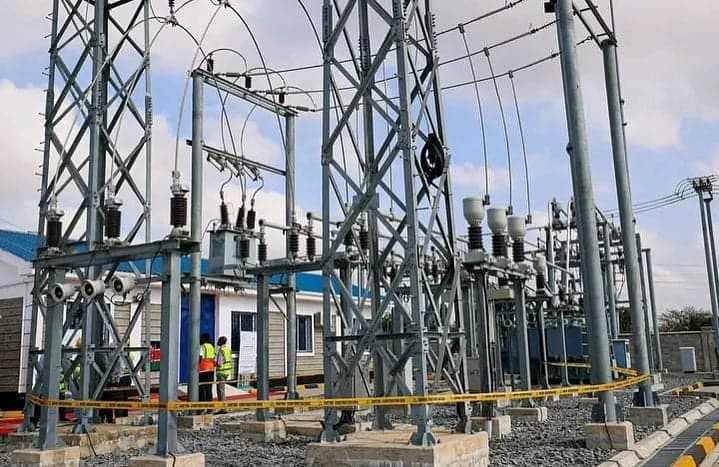
Kenya Power and Lighting Company (KPLC) has announced a scheduled power interruption for Tuesday, November 11, 2025, set to affect parts of Nairobi and Kirinyaga counties for eight hours. In a notice issued on Monday, November 10, 2025, the utility provider stated that the outage, running from 9:00 AM to 5:00 PM EAT, is necessary to facilitate routine network maintenance.
In Nairobi County, the maintenance will impact several areas within Lang'ata. The affected locations include the National Housing Corporation (NHC) Lang'ata, Southlands Estate, Langata Hospital, Akiba Estate, Civil Servants Langata, Rubia Estate, and Uhuru Gardens, along with adjacent customers. In the Mt. Kenya region, parts of Kirinyaga County will also be without power, specifically Gitwe Primary School, Gitwe Kiarura, and Kona Mbaya.
While Kenya Power frames these regular interruptions as essential for improving service reliability, the frequency of both planned and unplanned outages points to deeper systemic issues within Kenya's energy sector. The country is grappling with an aging power infrastructure that struggles to cope with rising electricity demand from a growing population and economy. This has created a fragile power system where demand often outstrips the available supply, particularly during peak evening hours.
In a significant acknowledgment of this crisis, President William Ruto confirmed in early November 2025 that Kenya is implementing deliberate daily power rationing, also known as load shedding. Speaking in Doha, Qatar, the President stated that between 5:00 PM and 10:00 PM EAT daily, Kenya Power is forced to cut supply to some areas to prevent a collapse of the national grid. This admission followed weeks of growing public frustration over patterned blackouts that had not been officially explained by the utility.
Kenya's peak electricity demand hit a record 2,412 megawatts in October 2025, surpassing the available generation capacity of approximately 2,316 megawatts. This deficit leaves the country with no reserve margin, making the grid vulnerable to failures.
The consequences of an unreliable power supply are significant for Kenya's economy. Frequent outages disrupt commerce and industry, which together account for over half of the country's electricity consumption. Small and medium-sized enterprises (SMEs) such as salons, cyber cafes, and welding workshops are disproportionately affected, often forced to close during blackouts or incur the high cost of running diesel generators. For larger manufacturers, unplanned outages can lead to damaged equipment and lost production, with some estimates suggesting these interruptions cost the sector billions of shillings annually.
Hospitals, schools, and other critical facilities are also forced to rely on expensive backup power systems. The interruptions disrupt daily life for millions of residents, affecting everything from home appliances to security systems. The persistent unreliability has led many businesses and wealthier households to invest in alternative power sources like solar, reducing their reliance on the national grid and impacting Kenya Power's revenue streams.
Addressing Kenya's energy deficit is critical for its economic ambitions. President Ruto has stated that the country needs a minimum of 10,000 megawatts to industrialize effectively, a significant increase from the current capacity. The government's strategy includes expanding generation capacity, with a focus on renewable sources like geothermal energy.
However, energy sector experts note that simply increasing generation is not enough. Substantial investment is required to upgrade and modernize the aging transmission and distribution network to reduce systemic losses and improve stability. Kenya Power's 2023-2028 strategic plan outlines initiatives to strengthen its competitive advantage, secure profitability, and improve power supply reliability through focused maintenance and leveraging technology. The success of these upgrades will be crucial in determining whether Kenya can provide the stable power supply needed to fuel its development goals and maintain investor confidence.
Keep the conversation in one place—threads here stay linked to the story and in the forums.
Sign in to start a discussion
Start a conversation about this story and keep it linked here.
Other hot threads
E-sports and Gaming Community in Kenya
Active 9 months ago
The Role of Technology in Modern Agriculture (AgriTech)
Active 9 months ago
Popular Recreational Activities Across Counties
Active 9 months ago
Investing in Youth Sports Development Programs
Active 9 months ago