We're loading the full news article for you. This includes the article content, images, author information, and related articles.
Amid rising fears of 'digital colonialism,' the State unveils non-negotiable protocols to shield citizen privacy in the new KES 208 billion partnership.

It is a classic standoff: the desperate need for funding versus the sacred right to privacy. Following a week of intense public outcry over the new multibillion-shilling health accord with the United States, the government has finally published the "guardrails" intended to keep Kenyan medical records out of foreign hands.
The controversy erupted immediately after President William Ruto and U.S. Secretary of State Marc Rubio signed the historic Health Cooperation Framework in Nairobi. While the deal promises an injection of $1.6 billion (approx. KES 208 billion) directly into Kenya’s health systems, critics have branded it a "wholesale surrender of sovereignty," fearing that the medical histories of millions of Kenyans—from HIV status to fertility struggles—would be open to American surveillance.
In a bid to quell the storm, the Ministry of Health has today released the specific operational rules that Washington must abide by. The message is clear: We will take the money, but our secrets stay here.
According to documents seen by Streamline News, the new framework shifts from the traditional NGO-led model to a Government-to-Government (G2G) partnership. However, this direct funding comes with strict conditions regarding data access.
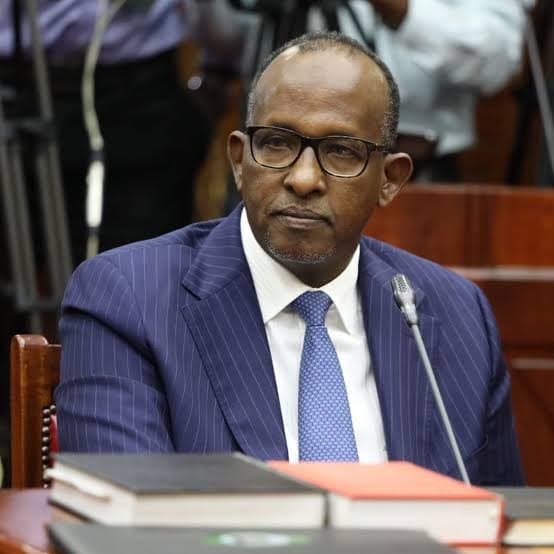
Health Cabinet Secretary Aden Duale emphasized that the agreement is bound by the Data Protection Act of 2019. The newly released guidelines stipulate:
While the privacy of digital records has dominated the headlines, a quieter but equally significant clause involves biological samples. Investigative sources indicate that the deal includes provisions for "pathogen sharing"—granting U.S. researchers access to viral samples for vaccine development.
This has raised eyebrows among sovereignty advocates. "It is not just about digital files," warned a senior analyst at a Nairobi-based rights NGO. "It is about biological assets. If a new variant is discovered in Kisumu, who owns the patent for the cure? This agreement needs to be explicit about intellectual property rights."
The Ministry has countered this by stating that Kenya retains "sole ownership" of all intellectual property derived from the partnership, though details on how this will be enforced remain scarce.
The shift in how the money flows is arguably the biggest story here. For decades, U.S. health aid (such as PEPFAR) bypassed the Kenyan government, flowing instead through international NGOs. This new deal routes the funds directly to state agencies like KEMSA and the Social Health Authority.
For the average Kenyan, this should mean better-equipped hospitals and more consistent drug supplies. However, it also places the burden of accountability squarely on the state. If funds disappear, there are no foreign NGOs to blame.
"This agreement does not exist in a vacuum," CS Duale noted in a press briefing. "It sits within Kenya's constitutional order. That standard is non-negotiable."
Keep the conversation in one place—threads here stay linked to the story and in the forums.
Sign in to start a discussion
Start a conversation about this story and keep it linked here.
Other hot threads
E-sports and Gaming Community in Kenya
Active 9 months ago
The Role of Technology in Modern Agriculture (AgriTech)
Active 9 months ago
Popular Recreational Activities Across Counties
Active 9 months ago
Investing in Youth Sports Development Programs
Active 9 months ago
Key figures and persons of interest featured in this article