We're loading the full news article for you. This includes the article content, images, author information, and related articles.
Ric Grenell exits as head of the Trump Kennedy Center amid controversy. Matt Floca takes over to oversee a KES 32.5 billion renovation starting this July.
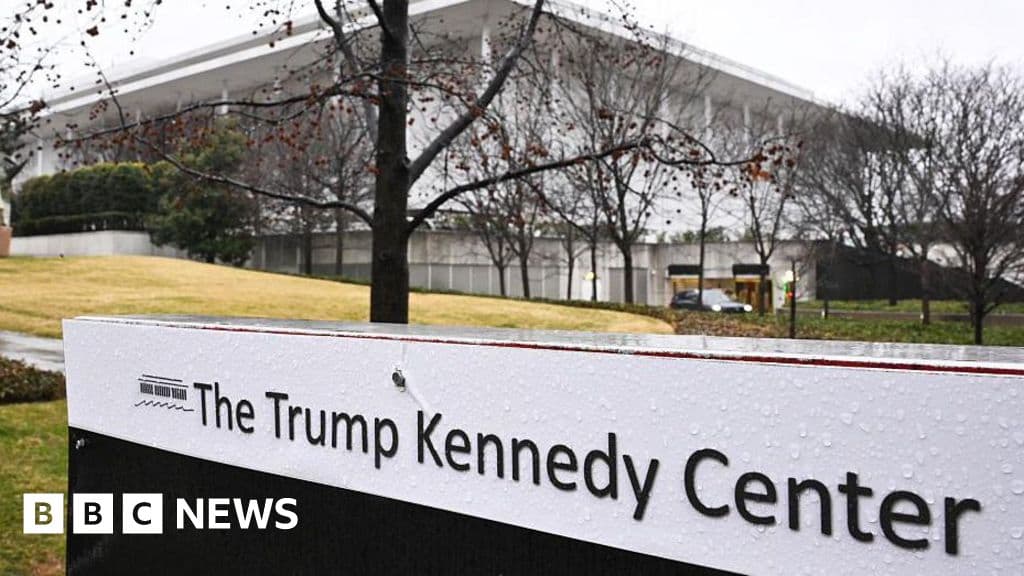
The Trump Kennedy Center is bracing for a profound operational pivot as Ric Grenell, the former acting Director of National Intelligence, announced his departure from the leadership of the performing arts institution. His exit, confirmed through a statement on the Truth Social platform, marks the conclusion of a volatile tenure defined by aggressive administrative restructuring, a significant exodus of established artistic talent, and a fundamental realignment of the center's institutional identity.
This leadership transition comes at a critical juncture for the Washington-based venue, which is scheduled to shutter operations this July for an extensive, two-year renovation project. The appointment of Matt Floca, the current vice president of facilities operations, signals a deliberate shift toward technical oversight as the administration prepares to deploy a budget exceeding $250 million (approximately KES 32.5 billion) to overhaul the physical infrastructure of the complex. With ticket sales struggling and internal morale reportedly low, the stake of this transition is nothing less than the future of one of America's most prestigious cultural institutions.
Ric Grenell's tenure was characterized by a rapid, top-down implementation of policies that alienated many of the center's long-standing institutional partners. Since the formal renaming of the site as the Trump Kennedy Center in February 2025, the organization has navigated a complex landscape of political pressure and budgetary reallocations. Supporters argue that Grenell provided the necessary hand to coordinate these disparate elements during a period of extreme turbulence, while critics maintain that his approach was fundamentally incompatible with the collaborative, non-partisan nature of a major arts venue.
The choice of Matt Floca as successor suggests a departure from political appointments. Floca, who arrived at the center in January 2024 during the prior administration, possesses a background rooted in construction management rather than arts advocacy or political maneuvering. His appointment is widely interpreted as a pragmatic decision, prioritizing the structural integrity of the pending renovation over ideological alignment. The center's board is currently reviewing his appointment, with expectations that his leadership will center on project management milestones rather than cultural programming.
The financial scale of the upcoming renovation reflects a broader commitment to redefining the physical space of the center. The allocation of funds serves as a primary driver of the changes observed over the past twelve months. Key data points surrounding the transition and the renovation plan include:
The scope of this investment, while framed as an upgrade, raises questions about the prioritization of physical infrastructure over artistic content. Economists and arts administrators have noted that such capital-intensive projects, when coupled with a decline in audience engagement, present a high-risk financial strategy for any performing arts organization, public or private.
The broader impact of this leadership shift extends beyond the borders of Washington. The politicization of arts institutions is a global phenomenon, often resulting in a cooling effect on creative expression. In Kenya, as in other parts of the world, cultural centers that become entangled in political maneuvering often see a decrease in international collaborations and a fracturing of their local audience base. The experience of the Trump Kennedy Center serves as a cautionary case study on the fragility of institutions when public trust is eroded by partisan alignment.
The exodus of artists, which has persisted throughout the last year, reflects a growing concern among the creative community regarding the protection of artistic freedom. When a national monument is branded with the identity of a sitting president, the perceived barrier to entry for diverse voices often increases. This trend, if left unaddressed, risks transforming the center into an echo chamber rather than a venue for broad cultural discourse. The challenge for Floca, therefore, is twofold: to manage a complex construction project and to stem the loss of the creative capital that gives the institution its relevance.
As the Trump Kennedy Center enters this period of darkness—both literal, due to the impending renovations, and figurative, due to the lack of clarity regarding the institution's future programming—the global arts community is watching closely. The success of this two-year project will likely be judged not by the architectural quality of the finished facility, but by the ability of the new leadership to rebuild the trust of the artistic community.
Whether the infusion of capital can compensate for the erosion of cultural legitimacy remains the central question of this transition. If the facility reopens in two years to a stage empty of the artists who once defined it, the price of the renovation may ultimately prove far higher than the $250 million (KES 32.5 billion) currently budgeted. The coming months will test whether the center can regain its status as a premier global stage or if it is destined to remain a site of political contestation.
Keep the conversation in one place—threads here stay linked to the story and in the forums.
Sign in to start a discussion
Start a conversation about this story and keep it linked here.
Other hot threads
E-sports and Gaming Community in Kenya
Active 10 months ago
Popular Recreational Activities Across Counties
Active 10 months ago
The Role of Technology in Modern Agriculture (AgriTech)
Active 10 months ago
Investing in Youth Sports Development Programs
Active 10 months ago



