We're loading the full news article for you. This includes the article content, images, author information, and related articles.
The government has tapped the nation's largest electricity producer to operate its first nuclear power plant, a monumental step towards securing Kenya's long-term energy needs for industrial growth.
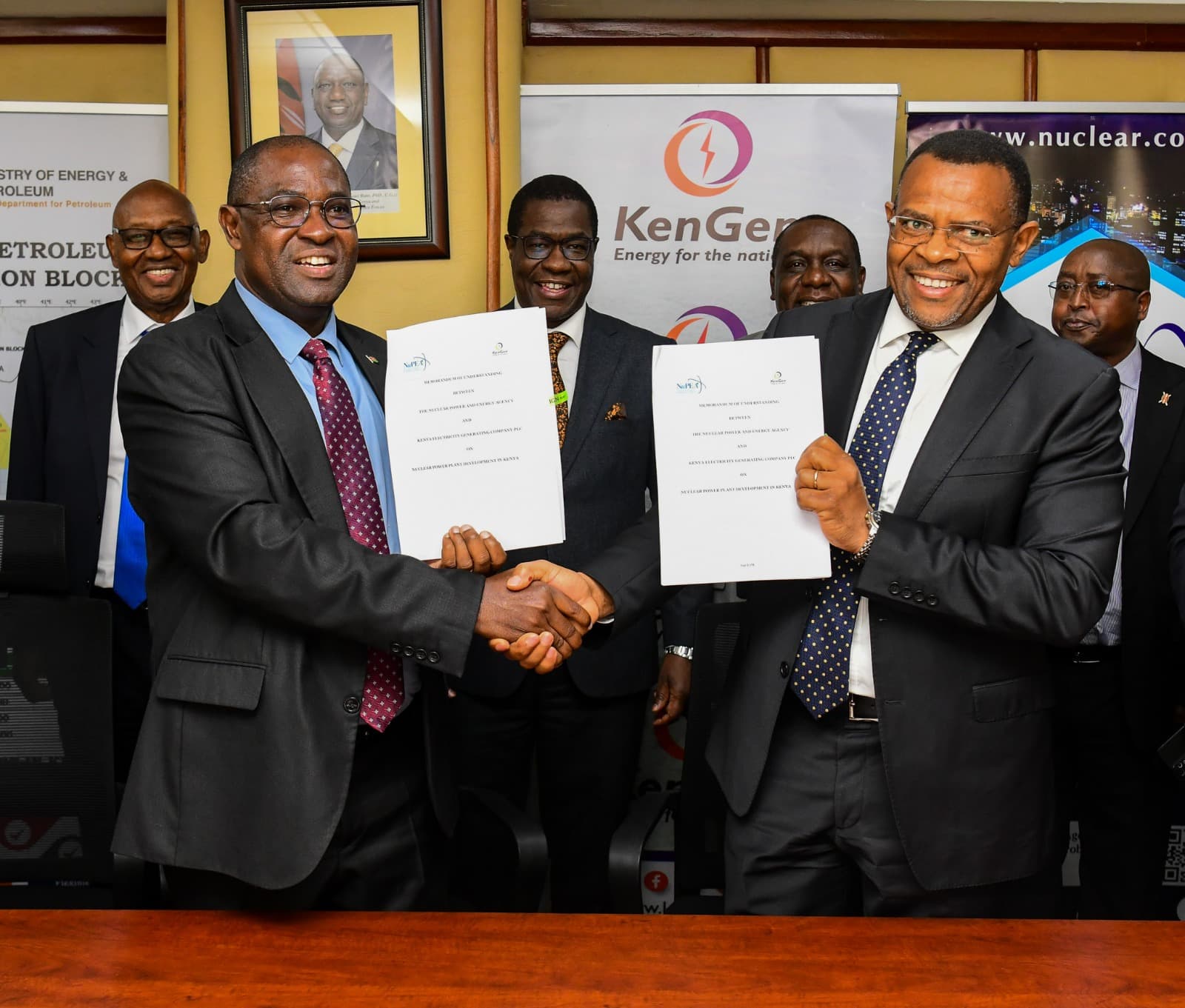
Kenya has officially designated the Kenya Electricity Generating Company (KenGen) as the owner and operator of the nation's inaugural nuclear power plant. This landmark decision places KenGen at the forefront of a strategic pivot to diversify the country's energy mix and power its industrial ambitions under the Vision 2030 blueprint.
The move is about securing a stable, high-capacity power source for a rapidly growing economy. Energy Cabinet Secretary Opiyo Wandayi emphasized that the decision anchors the nuclear program in proven technical hands and public trust, marking the dawn of Kenya's nuclear era. For the average Kenyan, this translates to a long-term strategy aimed at ensuring consistent electricity, crucial for both households and job-creating industries.
The planned facility is expected to start with a capacity of 1,000-2,000 megawatts, with ambitions to scale up significantly in later phases. While a definitive timeline pegs the first plant's operation for 2034, the project carries a formidable price tag, with estimates for a 1,000 MW plant ranging from KES 500 billion to KES 600 billion ($5-6 billion).
To steer this complex undertaking, KenGen will work hand-in-glove with the Nuclear Power and Energy Agency (NuPEA), the state body mandated with implementing Kenya's nuclear program. A Memorandum of Understanding has established a Joint Engagement Framework, which will oversee the critical groundwork required before construction can begin.
Key objectives of the joint framework include:
KenGen's leadership welcomed the immense responsibility. Board Chair Alfred Agoi noted the company's extensive experience in managing geothermal, hydro, and wind assets positions it uniquely to handle the complexities of a nuclear project. With an existing installed capacity of nearly 1,904 MW, KenGen already supplies over 60% of Kenya's electricity, the majority from renewable sources.
Managing Director Peter Njenga stated that nuclear energy offers a stable, low-carbon baseload option that is essential for powering manufacturing and digital industries around the clock. Unlike solar or wind, which can be intermittent, nuclear power provides a constant and reliable electricity supply, a critical ingredient for industrialization.
The journey, however, is not without its challenges. Public concerns over safety, waste management, and the high upfront costs will require transparent and sustained engagement from both KenGen and NuPEA. The selection of a final site, with coastal areas in Kilifi and Tana River previously under consideration, will be a particularly sensitive milestone.
As Kenya steps onto the global nuclear stage, this decision signals a clear, forward-looking strategy. The goal is not just to keep the lights on, but to power a future where Kenya is a newly-industrialized, middle-income nation.
Keep the conversation in one place—threads here stay linked to the story and in the forums.
Sign in to start a discussion
Start a conversation about this story and keep it linked here.
Other hot threads
E-sports and Gaming Community in Kenya
Active 9 months ago
The Role of Technology in Modern Agriculture (AgriTech)
Active 9 months ago
Popular Recreational Activities Across Counties
Active 9 months ago
Investing in Youth Sports Development Programs
Active 9 months ago



