We're loading the full news article for you. This includes the article content, images, author information, and related articles.
The charred remains of Gul Plaza stand as a grim monument to regulatory negligence, where locked exits and missing sprinklers turned a shopping trip into a mass grave.
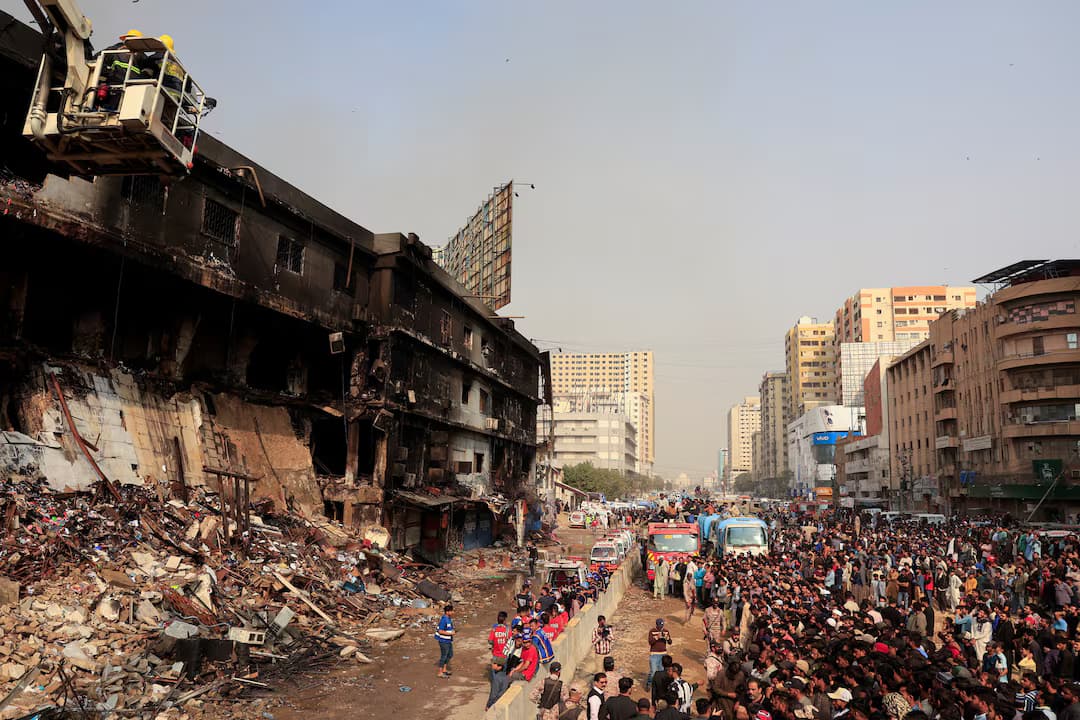
The smoke has cleared over Karachi’s Gul Plaza, but the stench of negligence remains. The death toll from the catastrophic fire that gutted the shopping complex has climbed to 67, with dozens still missing. What should have been a routine day of commerce turned into a slaughter because, once again, safety was sacrificed for profit.
The blaze, which raged for over 24 hours, exposed the crumbling infrastructure of Pakistan’s commercial capital. Firefighters battled not just the flames, but a city that has grown too fast, with narrow streets blocking engines and water hydrants that ran dry within minutes.
Survivors tell a harrowing tale of locked emergency exits and non-existent sprinkler systems. It is a story familiar to the Global South, from the factory fires of Bangladesh to the market infernos of Lagos. In the pursuit of rapid development, human life becomes the cheapest commodity.
"We call this an accident, but it is a crime scene," says local activist Farooq Sattar. "The building code exists on paper, but the inspectors exist on bribes."
As the funerals begin, the anger in Karachi is palpable. This was not an act of God; it was an act of man-made failure. And until the corrupt nexus of builders and bureaucrats is broken, Gul Plaza will not be the last pyre.
Keep the conversation in one place—threads here stay linked to the story and in the forums.
Sign in to start a discussion
Start a conversation about this story and keep it linked here.
Other hot threads
E-sports and Gaming Community in Kenya
Active 10 months ago
The Role of Technology in Modern Agriculture (AgriTech)
Active 10 months ago
Popular Recreational Activities Across Counties
Active 10 months ago
Investing in Youth Sports Development Programs
Active 10 months ago



