We're loading the full news article for you. This includes the article content, images, author information, and related articles.
The ECOWAS Court confronts Nigeria over 52 unenforced judgments, exposing a crisis of compliance that threatens the integrity of the West African judicial system.
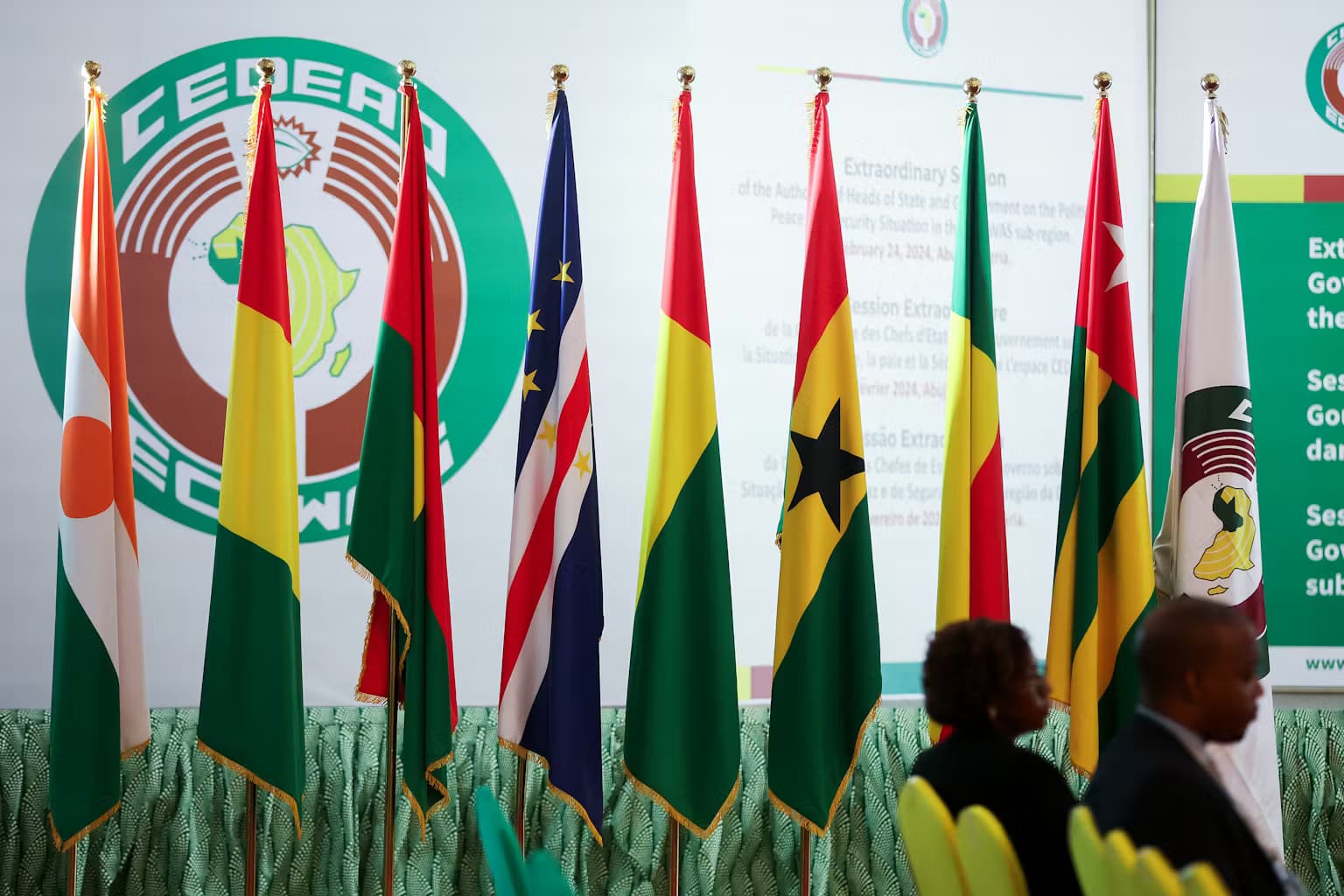
The gavel has come down hard on Nigeria, not in a courtroom, but in a diplomatic boardroom in Abuja. The ECOWAS Court of Justice has issued a stern rebuke to the regional giant, demanding immediate action on a staggering backlog of unenforced legal judgments.
Justice Ricardo Gonçalves, President of the ECOWAS Court, did not mince words during his high-stakes meeting with Nigerian officials. The revelation that 52 judgments remain pending execution is a damning indictment of the region's "big brother." It exposes a critical flaw in the West African integration project: the disconnect between supranational judicial authority and national political will. When the region's most powerful economy ignores the court, it emboldens smaller states to do the same, threatening the rule of law across the bloc.
The statistics presented are sobering. Out of 128 cases instituted against Nigeria since the court's inception, nearly half remain in legal limbo. These are not abstract files; they represent citizens, businesses, and communities denied justice despite winning their cases. The "judgment-related challenges" cited are a euphemism for a systemic failure of the Nigerian enforcement mechanism to honor its treaty obligations.
Bianca Odumegwu-Ojukwu, Nigeria's Minister of State for Foreign Affairs, found herself in the hot seat, pledging a renewed commitment to "constructive engagement." Her promise to establish an ECOWAS Club in educational institutions to boost awareness feels like a soft power solution to a hard power problem. The real test will be whether the Attorney General's office moves to domesticate these rulings.
This confrontation comes as ECOWAS celebrates its 50th anniversary, a milestone shadowed by the withdrawal of the Sahel alliance states. Nigeria’s compliance is now more than a legal duty; it is a political necessity to hold the fracturing bloc together. Justice Gonçalves’ visit is a clear warning: a community built on laws cannot survive if its members pick and choose which ones to obey.
As the delegation leaves Abuja, the ball is firmly in Nigeria's court. The "practical solutions" promised by the ministry must translate into bank transfers for victims and policy changes for institutions. Anything less is a mockery of the justice system.
Keep the conversation in one place—threads here stay linked to the story and in the forums.
Sign in to start a discussion
Start a conversation about this story and keep it linked here.
Other hot threads
E-sports and Gaming Community in Kenya
Active 9 months ago
The Role of Technology in Modern Agriculture (AgriTech)
Active 9 months ago
Popular Recreational Activities Across Counties
Active 9 months ago
Investing in Youth Sports Development Programs
Active 9 months ago