We're loading the full news article for you. This includes the article content, images, author information, and related articles.
The Kenyan Judiciary has officially invited the public to submit heartfelt tributes ahead of a solemn memorial sitting dedicated to honoring the legacy of Justice Mohamed Ibrahim.
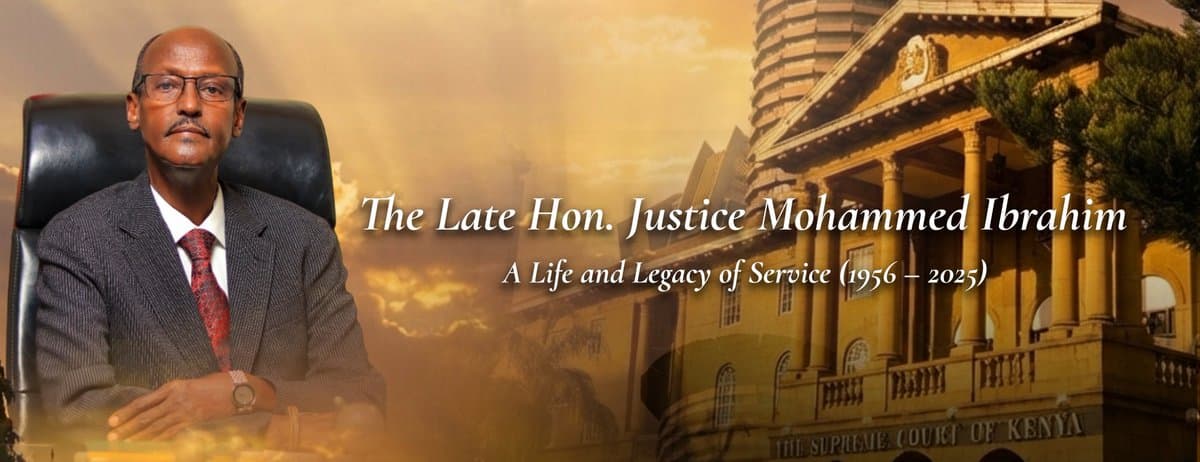
The Kenyan Judiciary has officially invited the public to submit heartfelt tributes ahead of a solemn memorial sitting dedicated to honoring the profound legal legacy of the late Supreme Court Justice Mohamed Ibrahim.
The corridors of the Kenyan Supreme Court are steeped in a profound, reflective somberness as the nation prepares to formally bid farewell to one of its most steadfast legal titans. The Judiciary has officially announced a special memorial sitting to honor the life, service, and enduring jurisprudential legacy of Justice Mohamed K. Ibrahim, who tragically passed away on December 17, 2025. In an unprecedented move that underscores his deep connection to the citizenry, the courts have opened a public portal, inviting Kenyans from all walks of life to submit their personal tributes and reflections.
Justice Ibrahim was not merely a judge; he was an institutional pillar. As an inaugural member of the Supreme Court bench established in the transformative wake of the 2010 Constitution, his tenure was synonymous with the turbulent, yet progressive, maturation of Kenya's apex court. His sudden demise has created a profound intellectual and moral void within the judicial system, marking the definitive end of a foundational era in Kenyan constitutionalism.
To truly understand the gravitas of Justice Ibrahim's contribution to the republic, one must look back to the dark days of authoritarianism. Long before he donned the crimson robes of the Supreme Court, he was a fearless advocate for human rights and political pluralism. His unwavering commitment to democratic principles led to his harrowing detention without trial during the height of the clamor for multiparty democracy in the early 1990s. This crucible of personal sacrifice imbued his later judicial pronouncements with a fierce, uncompromising defense of fundamental human liberties.
The upcoming memorial sitting will be an occasion of immense state protocol, attended by the highest echelons of the legal fraternity, political leadership, and civil society. It serves not only as a moment of collective mourning but also as a critical point of reflection on the future trajectory of the Supreme Court. The Judicial Service Commission (JSC) now faces the monumental task of identifying a successor capable of matching Ibrahim's formidable intellect, unimpeachable integrity, and historical perspective.
His absence will be acutely felt in the chambers where monumental decisions shaping the socio-economic destiny of the nation are forged. Justice Ibrahim's life story—from a detained political dissident to a highly revered Supreme Court judge—is intrinsically woven into the very fabric of Kenya's ongoing democratic experiment.
"He brought an irreplaceable human empathy and a profound historical consciousness to the bench that cannot be taught in any law school," reflected a senior constitutional lawyer based in Nairobi. "Justice Ibrahim didn't just interpret the law; he intimately understood the deep societal pain that necessitated its creation."
Keep the conversation in one place—threads here stay linked to the story and in the forums.
Sign in to start a discussion
Start a conversation about this story and keep it linked here.
Other hot threads
E-sports and Gaming Community in Kenya
Active 9 months ago
The Role of Technology in Modern Agriculture (AgriTech)
Active 9 months ago
Popular Recreational Activities Across Counties
Active 9 months ago
Investing in Youth Sports Development Programs
Active 9 months ago



