We're loading the full news article for you. This includes the article content, images, author information, and related articles.
A Japanese tech firm has launched a fully automated body-cleaning pod with a staggering price tag, sparking a global conversation on the future of luxury, technology, and basic human needs.
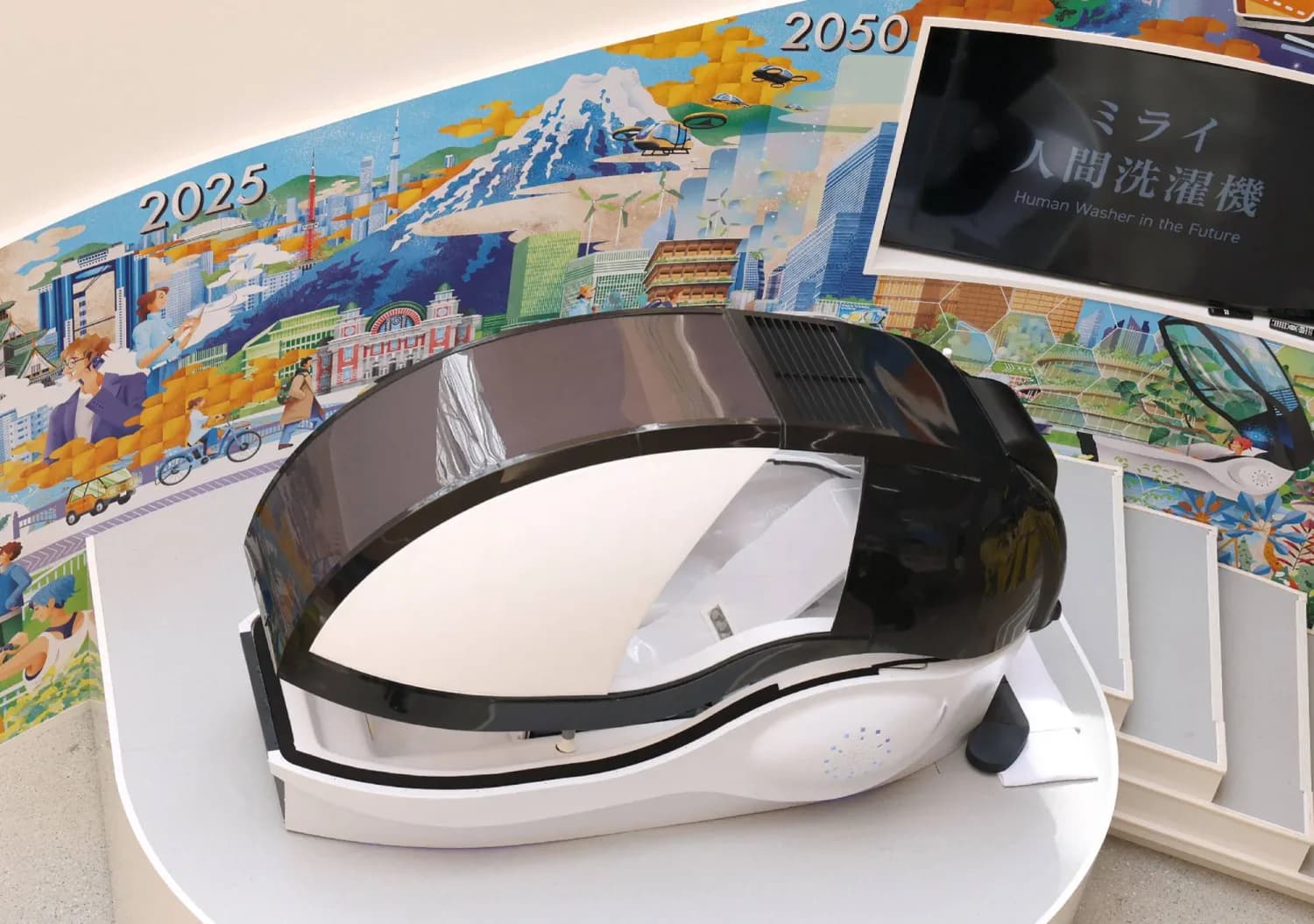
A Japanese company has begun selling a futuristic capsule that washes, rinses, and dries a person in 15 minutes, blending cutting-edge technology with a concept first imagined over 50 years ago.
For Kenya, the story is not just about a quirky invention; it is a stark illustration of a world grappling with vastly different priorities. The machine’s eye-watering price tag of 60 million yen, or approximately $385,000 (KES 49.7 million), throws into sharp relief the chasm between hyper-luxury and the daily struggle for essentials like clean water and sanitation faced by millions.
Developed by Osaka-based Science Co. Ltd., the device, dubbed the 'Mirai Ningen Sentakuki' (Future Human Washing Machine), was a major attraction at the Osaka-Kansai Expo. The machine uses ultra-fine microbubble technology to clean deep into skin pores, all while the user relaxes to calming music.
The technology is not entirely new. It is a modern revival of an idea first presented by Sanyo Electric at the 1970 Osaka Expo, which never reached the commercial market. This updated version, however, includes advanced features:
Production is currently limited to about 50 units, with the company targeting high-end hotels and retailers hoping to use the machine's novelty to attract customers.
While the innovation is remarkable, its cost is simply astronomical from a local perspective. The KES 49.7 million required to purchase one machine could fund numerous critical projects in Kenya. For instance, it could cover the cost of drilling and equipping several boreholes in arid and semi-arid counties, providing clean water to thousands of people. It could also build and stock a new community health clinic or fund hundreds of scholarships for bright students.
This contrast highlights a growing global divergence. As one part of the world pursues AI-driven, automated personal care that costs a fortune, another continues to battle challenges that have existed for centuries. The conversation sparked by Japan's human washing machine is therefore less about its technical wizardry and more about the future we are collectively choosing to build.
For now, Science Co. hopes the technology might one day be adapted for nursing care facilities, making bathing safer and less labor-intensive for the elderly. This potential application offers a bridge between extreme luxury and practical human service, a future that may one day hold relevance for all.
Keep the conversation in one place—threads here stay linked to the story and in the forums.
Sign in to start a discussion
Start a conversation about this story and keep it linked here.
Other hot threads
E-sports and Gaming Community in Kenya
Active 9 months ago
The Role of Technology in Modern Agriculture (AgriTech)
Active 9 months ago
Popular Recreational Activities Across Counties
Active 9 months ago
Investing in Youth Sports Development Programs
Active 9 months ago



