We're loading the full news article for you. This includes the article content, images, author information, and related articles.
Tehran has issued a chilling warning to the United Nations, vowing a "decisive and proportionate" military strike against all US bases and assets in the Middle East if Washington initiates unprovoked armed aggression.
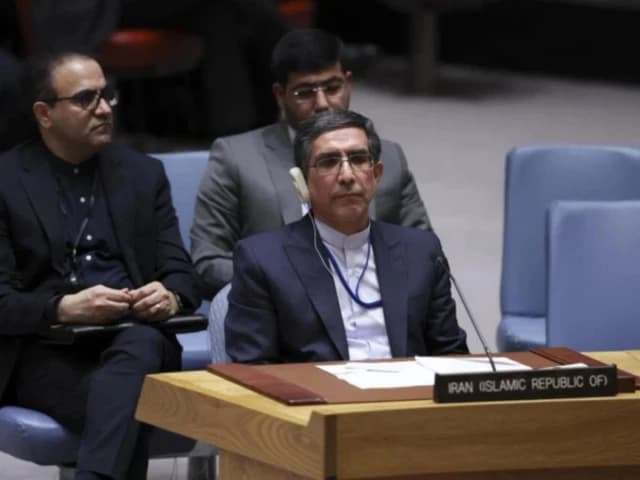
Tehran has issued a chilling warning to the United Nations, vowing a "decisive and proportionate" military strike against all US bases and assets in the Middle East if Washington initiates unprovoked armed aggression.
The geopolitical tripwire in the Middle East is perilously close to snapping. In a heavily worded letter dispatched to UN Secretary-General Antonio Guterres, the Islamic Republic of Iran has drawn an uncompromising red line against what it perceives as imminent American military hostility. This diplomatic maneuver is a direct, calculated response to President Donald Trump's recent ultimatum, demanding Tehran capitulate to a new nuclear arrangement within 10 to 15 days or face "really bad things."
For the global economy, and explicitly for import-reliant nations in East Africa like Kenya, the rhetoric echoing from the Strait of Hormuz is terrifying. Any kinetic escalation between US forces and the Iranian Revolutionary Guard would instantly choke global oil supply chains. A subsequent spike in international crude prices would obliterate local inflation targets, exponentially driving up the cost of fuel, electricity, and basic consumer goods across the African continent.
The communication from Iran's permanent mission to the UN is devoid of ambiguity. While explicitly stating that Tehran "did not want a war," the letter meticulously outlines the scope of Iranian retaliation should deterrence fail. The strategy promises that the consequences of an American first strike would not be confined to Iranian borders.
The letter boldly declares that in the exercise of self-defence, "all bases, facilities, and assets of the hostile force in the region would constitute legitimate targets." This places thousands of US service personnel stationed across allied Gulf nations directly in the crosshairs of Iran's formidable ballistic missile arsenal, significantly raising the cost of any pre-emptive American military action.
The current standoff is the culmination of rapidly accelerating pressure campaigns and massive military posturing. The core elements driving the region toward the precipice include:
Despite reports of "good talks" from the White House following meetings between US negotiators and Iranian Foreign Minister Abbas Araqchi, the chasm between the two adversaries appears insurmountable. Tehran insists that limiting its missile arsenal is an absolute red line, viewing it as the ultimate deterrent against regional adversaries.
As the clock ticks down on Trump's ultimatum, the international community is paralyzed. The United Nations finds itself relegated to the role of a helpless bystander, reduced to archiving declarations of intent for a war nobody claims to want, yet everyone is preparing to fight.
The Middle East is holding its breath; a single miscalculation now threatens to ignite a conflict that will scorch the global economy.
Keep the conversation in one place—threads here stay linked to the story and in the forums.
Sign in to start a discussion
Start a conversation about this story and keep it linked here.
Other hot threads
E-sports and Gaming Community in Kenya
Active 9 months ago
The Role of Technology in Modern Agriculture (AgriTech)
Active 9 months ago
Popular Recreational Activities Across Counties
Active 9 months ago
Investing in Youth Sports Development Programs
Active 9 months ago



