We're loading the full news article for you. This includes the article content, images, author information, and related articles.
Amidst blistering military assaults from the US and Israel, Iran has explicitly vowed to protect Chinese citizens, signaling a profound geopolitical realignment that will reshape foreign investment strategies in East Africa.
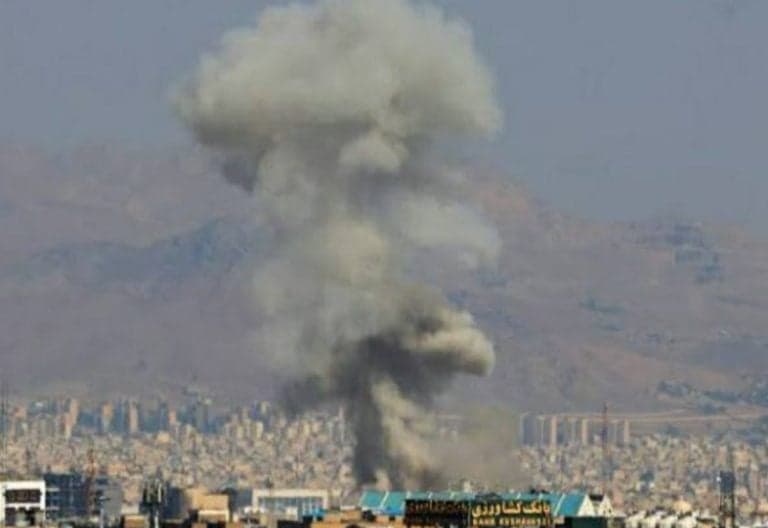
Amidst blistering military assaults from the US and Israel, Iran has explicitly vowed to protect Chinese citizens, signaling a profound geopolitical realignment that will reshape foreign investment strategies in East Africa.
As the conflict between the United States, Israel, and Iran escalates into a full-blown regional war, Tehran has made a calculated diplomatic maneuver by explicitly vowing to protect Chinese citizens within its borders. This high-level assurance highlights the complex web of international alliances that are being tested by the crisis.
For nations in East Africa, particularly Kenya, observing the dynamics between Middle Eastern powers and global superpowers like China provides crucial insights into the shifting geopolitical landscape. This realignment has direct implications for foreign investment, regional security, and the future of mega-infrastructure projects.
The Iranian Minister of Foreign Affairs, Abbas Araghchi, engaged in urgent consultations with senior members of China's central committee and his counterpart, Wang Yi. During these talks, Araghchi promised that Tehran would do its utmost to guarantee the safety and security of Chinese personnel and institutions operating in Iran.
This assurance is incredibly significant given China's substantial economic footprint in Iran, largely driven by the Belt and Road Initiative (BRI). Beijing relies heavily on Middle Eastern energy and views Iran as a critical strategic node. By prioritizing the safety of Chinese assets, Iran seeks to solidify its most important economic lifeline amidst crippling Western sanctions.
China's response to the crisis has been one of calculated concern. While Beijing has called for de-escalation, it has also sharply criticized Washington's aggressive posture. Araghchi emphasized to Wang Yi that the US had launched a war against Iran for the second time during their ongoing negotiations.
This narrative aligns perfectly with Beijing's broader critique of US hegemony. The strengthening of the Beijing-Tehran axis poses a significant challenge to US influence in the Middle East and complicates the global diplomatic response to the war, forcing developing nations to carefully weigh their allegiances.
The geopolitical maneuvering between China, the US, and Iran has direct, unavoidable consequences for Kenya. As a nation that balances massive infrastructure loans from China with vital security partnerships with the US, Kenya must navigate this conflict with extreme caution.
The ongoing war is accelerating a massive shift toward a multipolar world. As the US and Israel flex their military might, nations targeted by Western actions are increasingly coalescing around alternative power centers like China and Russia. This realignment forces regional players in Africa to re-evaluate their strategic partnerships.
"The Middle East is the anvil upon which the new global order is being forged; Kenya must watch closely, for the sparks from this conflict will inevitably reach our shores and dictate our economic future," remarked a geopolitical analyst at the University of Nairobi.
Keep the conversation in one place—threads here stay linked to the story and in the forums.
Sign in to start a discussion
Start a conversation about this story and keep it linked here.
Other hot threads
E-sports and Gaming Community in Kenya
Active 9 months ago
The Role of Technology in Modern Agriculture (AgriTech)
Active 9 months ago
Popular Recreational Activities Across Counties
Active 9 months ago
Investing in Youth Sports Development Programs
Active 9 months ago



