We're loading the full news article for you. This includes the article content, images, author information, and related articles.
As geopolitical tensions simmer, cyber warfare has become a primary, silent weapon. We examine the invisible conflict unfolding within Iran’s digital borders.
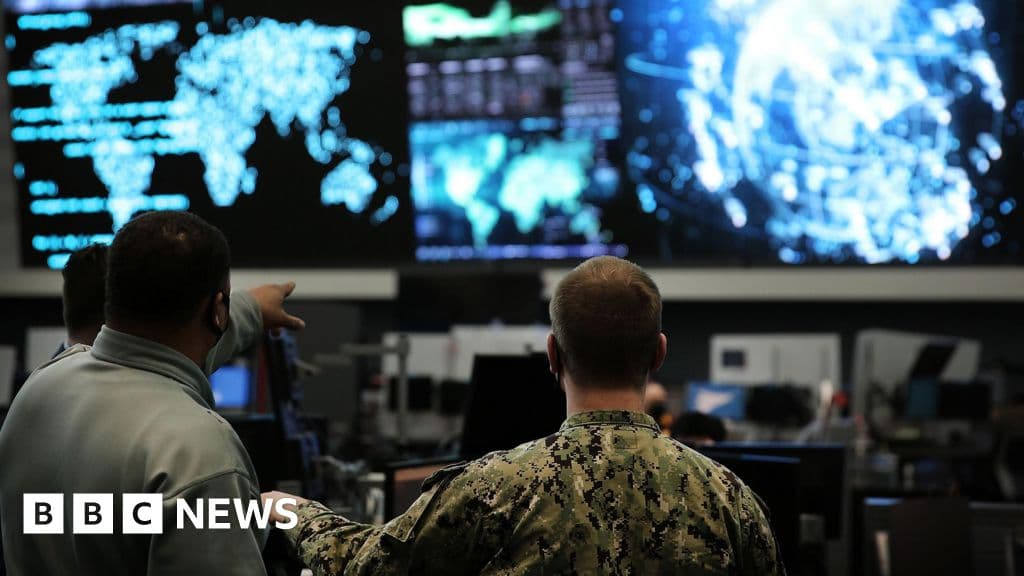
The public theater of modern conflict is dominated by the visual language of kinetic power. Across social media feeds, military commands routinely display the raw, tangible assets of warfare—sleek fighter jets roaring off carrier decks, precision-guided munitions being loaded, and naval fleets projecting strength in contested waters. These displays serve a dual purpose: they deter adversaries and reassure allies. Yet, beneath the visible surface of steel and fire, a silent, more persistent war is being waged in the digital shadows.
As geopolitical tensions between global powers and Iran intensify, the nature of engagement has fundamentally shifted from event-based skirmishes to a state of perpetual, low-intensity cyber confrontation. According to recent briefings from the United States Central Command, the operational theater now spans from the seabed to space and, crucially, to cyber-space. This transition to the digital domain is not merely a supplementary tactic it is now the foundational layer upon which modern strategic operations are built.
Modern military doctrine, as articulated by senior defense officials, emphasizes the concept of pre-positioning. This is not a new tactical approach, but its application in the cyber domain has reached unprecedented levels of complexity. Before a single physical strike is authorized, networks are infiltrated, backdoors are installed, and data is exfiltrated to map out the adversary's critical infrastructure. This preparation process can span months or even years, turning the target's own infrastructure into a vulnerability.
The Pentagon's focus on what it describes as the target set suggests that the goal of cyber operations is twofold: intelligence gathering and the capability to disrupt. By infiltrating industrial control systems, defense networks, and communication grids, military planners ensure that when—or if—a kinetic escalation occurs, they possess the ability to paralyze the adversary's decision-making process before a single projectile is fired.
For a reader in Nairobi, thousands of kilometers from the command centers in Washington or Tehran, the implications of this digital arms race are not abstract. Kenya has rapidly transformed into a digital-first economy, with mobile financial services and the government's ambitious Digital Superhighway project forming the backbone of the nation's stability. As the global landscape of cyber warfare becomes more aggressive, the barrier between state-level conflict and domestic civilian infrastructure is blurring.
Economists and cybersecurity experts at the University of Nairobi warn that the tools developed for high-stakes geopolitical conflicts do not stay contained within borders. Once an advanced cyber-weapon or a method for exploiting critical infrastructure is developed, the code often leaks or is reverse-engineered by non-state actors, criminal syndicates, or rogue smaller states. For a country like Kenya, which is increasingly digitizing its healthcare, education, and banking sectors, the spillover of such sophisticated cyber-weaponry poses a direct, systemic risk.
Perhaps the most challenging aspect of this shadow war is the lack of a clear international legal framework. While the Geneva Conventions provide explicit guidelines for the conduct of traditional warfare—governing the treatment of prisoners, the distinction between combatants and civilians, and the proportionality of force—there is no equivalent consensus for cyber-warfare. The ambiguity of the digital domain allows nations to operate in a gray zone where acts of aggression are masked as espionage or routine technical failures.
When a power grid in a foreign nation suffers a mysterious, unexplained failure, or when financial networks experience systemic latency, attribution is notoriously difficult. This creates a dangerous precedent: nations can inflict significant economic and social damage on their rivals without triggering the automatic mechanisms of conventional military retaliation. This lack of accountability creates a volatility that can escalate into a larger, unpredictable crisis, as neither side is operating with a clear understanding of the other's red lines.
The era of declaring war with a formal statement or a unified campaign is effectively over. In its place, we have entered an epoch of permanent, invisible conflict. The challenge for the international community is to establish norms that can survive this digital environment. Without such guardrails, the risk remains that a minor miscalculation in the cyber domain—a line of code deployed a second too early or aimed at the wrong target—could spark a kinetic conflict that no one truly intended to start. The front line is no longer a trench or a border it is the very code that runs our modern world.
Keep the conversation in one place—threads here stay linked to the story and in the forums.
Sign in to start a discussion
Start a conversation about this story and keep it linked here.
Other hot threads
E-sports and Gaming Community in Kenya
Active 9 months ago
The Role of Technology in Modern Agriculture (AgriTech)
Active 9 months ago
Popular Recreational Activities Across Counties
Active 9 months ago
Investing in Youth Sports Development Programs
Active 9 months ago



