We're loading the full news article for you. This includes the article content, images, author information, and related articles.
Detectives recover over 100 fake number plates in a residential raid, exposing the sophisticated machinery behind Nairobi’s car theft epidemic.
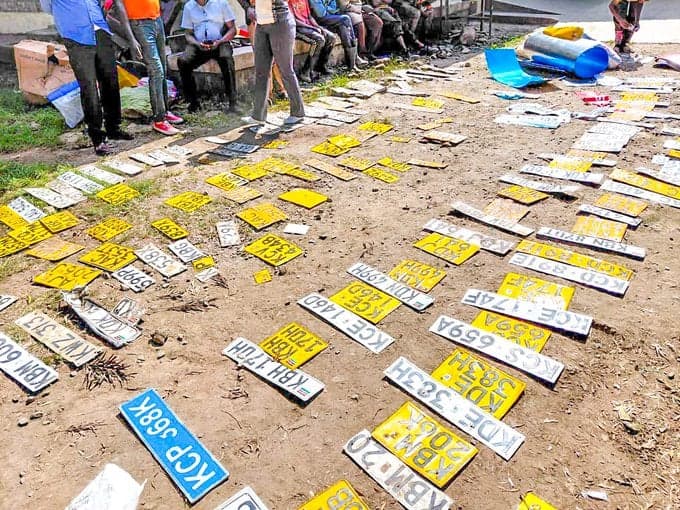
In the quiet corners of Kariobangi South, behind the doors of an unassuming residential house, a factory was running full tilt. It wasn’t producing goods for the market, but identities for stolen cars. On Friday, a multi-agency police team shattered that operation, uncovering a sprawling cache of over 100 assorted motor vehicle registration plates that has sent shockwaves through Nairobi’s transport sector.
The raid, executed by officers from Buruburu and Dandora police stations, peeled back the layers of a sophisticated syndicate that has likely kept hundreds of stolen vehicles on Kenyan roads, hiding in plain sight under the guise of legitimate registration.
Acting on a tip-off from vigilant members of the public, officers stormed the premises on December 5, finding what investigators are calling a "cloning hub." The suspect, who managed to escape moments before the dragnet closed, had turned the house into a fully functioning production line for vehicle identification materials.
The inventory of seized items paints a chilling picture of the syndicate's capabilities:
"This was not an amateur operation," a source close to the investigation noted. "They had the reflective sheets, the frames, and the chassis stickers. They could effectively 'rebirth' a stolen vehicle in a matter of hours."
For the average Kenyan motorist, this bust is a double-edged sword. It is a victory for law enforcement, but it reveals the terrifying ease with which criminals can duplicate a car's identity. In Nairobi, "cloning" involves forging the number plates of a legitimate car and slapping them onto a stolen vehicle of the same make and color.
The result? An innocent owner in Westlands might receive speeding tickets for a car driven by criminals in Thika. Worse, if the cloned car is used in a robbery, the legitimate owner becomes the prime suspect.
The National Police Service (NPS) confirmed that the recovered materials have been secured as exhibits for forensic analysis. "The National Police Service commends the vigilance of the officers, and notes that the cooperation of members of the public contributed to this successful operation," the NPS stated on Saturday.
While the factory has been dismantled, the mastermind remains at large. Detectives have launched a manhunt for the main suspect, whose identity is known to the police but has been withheld to protect the integrity of the investigation.
Security analysts warn that this raid, while significant, is likely just one node in a larger network. The demand for fake plates is driven by a thriving black market for stolen parts and vehicles, an industry that costs the Kenyan economy billions of shillings annually.
As the festive season approaches—a period historically notorious for a spike in carjackings—police are urging car buyers to exercise extreme caution. Verification of details with the National Transport and Safety Authority (NTSA) is no longer just a formality; it is a necessity.
"If the deal looks too good, or the paperwork feels rushed," warned a senior officer involved in the operation, "walk away. You might be buying a crime scene."
Keep the conversation in one place—threads here stay linked to the story and in the forums.
Sign in to start a discussion
Start a conversation about this story and keep it linked here.
Other hot threads
E-sports and Gaming Community in Kenya
Active 9 months ago
The Role of Technology in Modern Agriculture (AgriTech)
Active 9 months ago
Popular Recreational Activities Across Counties
Active 9 months ago
Investing in Youth Sports Development Programs
Active 9 months ago



