We're loading the full news article for you. This includes the article content, images, author information, and related articles.
A devastating fire at a Daejeon car parts plant has claimed eleven lives, raising urgent questions about South Korea's industrial safety protocols.
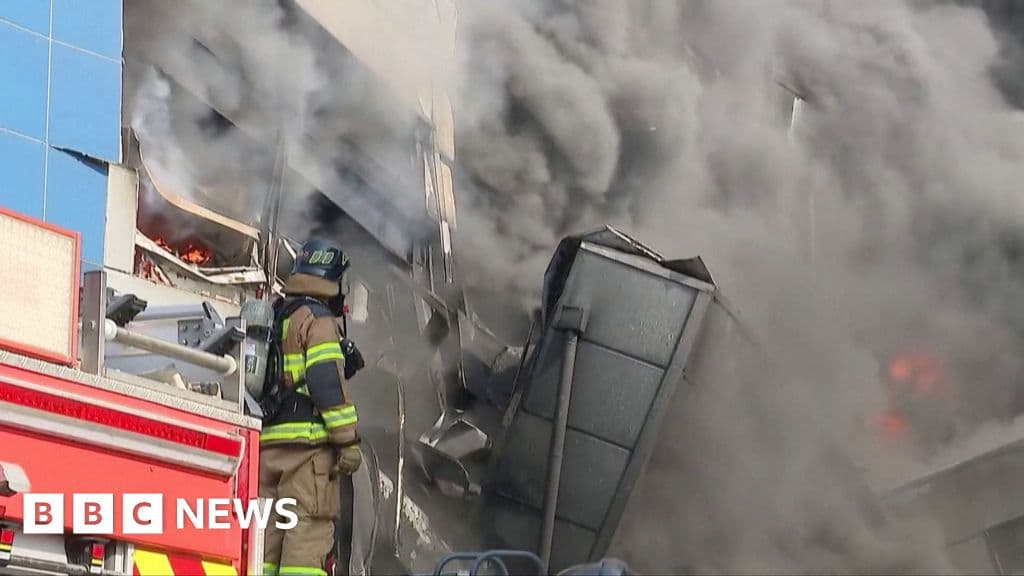
Thick, acrid smoke swallowed the horizon in Daejeon on Friday morning, signaling a catastrophe that has claimed at least eleven lives and left dozens more injured in a horrific industrial blaze. As emergency responders continue to sift through the charred skeletal remains of the car parts facility, a chilling question hangs over the global manufacturing sector: how can advanced industrial hubs remain so critically vulnerable to sudden, catastrophic fires?
For the residents of Daejeon, the sudden loss is personal and immediate, but the implications of this tragedy stretch far beyond South Korean borders. In an era of tightly coupled global supply chains, an automotive parts factory in central South Korea is a vital node in a network that spans continents, including to the bustling workshops and assembly lines of Nairobi. This incident serves as a stark, human-cost reminder of the volatility inherent in modern high-intensity manufacturing.
The fire broke out during a routine morning shift, rapidly escalating into an inferno that overwhelmed existing fire suppression systems. Eyewitness accounts describe a series of rapid, successive explosions that suggested the presence of highly volatile industrial chemicals, likely solvents or synthetic polymers used in automotive interior components. Firefighting units struggled for hours to gain control as the intensity of the heat caused structural collapses, complicating rescue operations and trapping several workers inside the facility.
While official investigations into the cause are in their infancy, industrial safety experts point to a recurring pattern in automated manufacturing environments. The push for efficiency and 24/7 production cycles often leads to overcrowding in manufacturing zones, where hazardous materials are stored in close proximity to high-heat equipment. The following factors represent the most critical risks in modern, high-density manufacturing hubs:
South Korea is a cornerstone of the global automotive supply chain, producing critical electrical, engine, and structural components used by major manufacturers worldwide. A sudden, violent disruption at a hub like the one in Daejeon triggers an immediate ripple effect. For Kenyan importers and automotive assemblers, the incident is not merely news from a distant land it is a signal of potential supply instability.
Kenya's automotive sector, which has been working to revitalize local assembly capabilities, remains heavily dependent on the steady flow of high-quality imported components from East Asia. Disasters of this magnitude can lead to immediate price volatility in the short term, as global markets react to the potential shortage of critical components. Economists at the Nairobi Securities Exchange have repeatedly noted that industrial disruptions in Asia often manifest as inflationary pressures on local spare parts and assembly costs within weeks.
This tragedy in Daejeon forces a uncomfortable reflection on industrial safety standards globally. While South Korea possesses some of the most sophisticated manufacturing technology on the planet, this fire demonstrates that high-tech prowess does not guarantee total safety. It highlights a universal challenge: as factories become more efficient and automated, the complexity of managing fire risk grows exponentially.
For developing industrial sectors, such as those expanding in Kenya's Special Economic Zones, the lesson is clear: infrastructure investment must prioritize fire suppression and safety protocols as highly as production output. The cost of modern fire-resilient architecture, sophisticated sensor-based early warning systems, and rigorous, mandatory evacuation drills is a fraction of the human and economic cost of a single industrial fire.
As the recovery effort continues in Daejeon, the international community awaits the results of the official inquiry. Will this be remembered as an unfortunate accident of manufacturing, or will it be the catalyst for a global re-evaluation of how we manage the inherent dangers of the modern industrial age? The eleven lives lost are a stark, tragic reminder that the cost of production is measured in more than just currency it is measured in the safety of those on the front lines of global commerce.
Keep the conversation in one place—threads here stay linked to the story and in the forums.
Sign in to start a discussion
Start a conversation about this story and keep it linked here.
Other hot threads
E-sports and Gaming Community in Kenya
Active 10 months ago
Popular Recreational Activities Across Counties
Active 10 months ago
The Role of Technology in Modern Agriculture (AgriTech)
Active 10 months ago
Investing in Youth Sports Development Programs
Active 10 months ago


