We're loading the full news article for you. This includes the article content, images, author information, and related articles.
In a massive social experiment, 12 Indian states are transferring cash directly to women, sparking a global debate on the value of unpaid care.
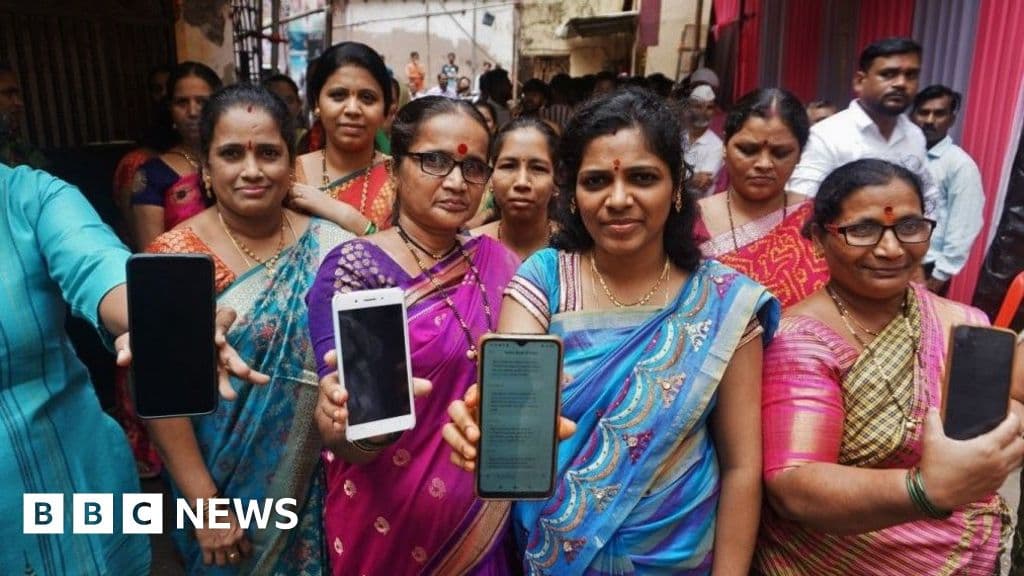
In the dusty heart of Madhya Pradesh, Premila Bhalavi receives a notification on her phone that changes the rhythm of her month: a deposit, not from a boss, but from the state. She has no formal employment, yet the government pays her a steady stipend simply for existing as a woman who manages a home.
Bhalavi is one of 118 million women across India participating in one of the world’s largest, yet quietest, social experiments: acknowledging that keeping a household running is labor worthy of pay. While the monthly sum of 1,500 rupees (approx. KES 2,300) may seem modest to an outsider, for Bhalavi, it represents a lifeline covering medicines, vegetables, and her son's school fees.
"The money covers medicines, vegetables and my son's school fees," Bhalavi noted, describing a newfound sense of control that transcends the monetary value. This shift from subsidizing commodities to trusting women with hard cash marks a pivotal moment in development economics.
India has long relied on a welfare model built on subsidizing grain, fuel, and rural employment. However, the administration has stumbled into a more radical approach: unconditional cash transfers (UCTs). This policy targets an electorate that is too large to ignore and a workforce that bears the crushing, often invisible, burden of unpaid care.
Prabha Kotiswaran, a professor of law and social justice at King's College London, emphasized the magnitude of this shift. speaking to the BBC, she observed, "The unconditional cash transfers signal a significant expansion of Indian states' welfare regimes in favour of women."
The logistics are staggering. With over 300 million Indian women now holding bank accounts, the government can bypass bureaucratic middlemen. The transfers generally range from 1,000 to 2,500 rupees (approx. KES 1,550 to KES 3,900) per month. While this represents only 5-12% of a typical household's income, its regularity offers a buffer against economic shocks.
For Kenyan policymakers and citizens, India's experiment offers a provocative case study. Much like the Inua Jamii program locally, which supports the elderly and vulnerable, these transfers inject liquidity directly into the rural economy. However, the Indian model specifically targets women of working age, validating domestic labor in a way few nations have dared to try.
Critics might argue that these sums are tokenistic, but the spending patterns suggest otherwise. Women are using these funds to purchase gold—a traditional store of value—or small comforts, asserting a financial identity distinct from their husbands or fathers. It turns the concept of the "allowance" on its head, transforming it into a right rather than a favor.
As the developing world grapples with the post-pandemic care economy, India offers a clear lesson: sometimes the most effective development strategy is simply trusting women with cash.
Keep the conversation in one place—threads here stay linked to the story and in the forums.
Sign in to start a discussion
Start a conversation about this story and keep it linked here.
Other hot threads
E-sports and Gaming Community in Kenya
Active 9 months ago
The Role of Technology in Modern Agriculture (AgriTech)
Active 9 months ago
Popular Recreational Activities Across Counties
Active 9 months ago
Investing in Youth Sports Development Programs
Active 9 months ago



