We're loading the full news article for you. This includes the article content, images, author information, and related articles.
The Majority Leader promises a record-breaking turnout for the President, but amidst economic jitters and local rivalries, can the ‘Kiambu machine’ deliver on such a high-stakes guarantee?
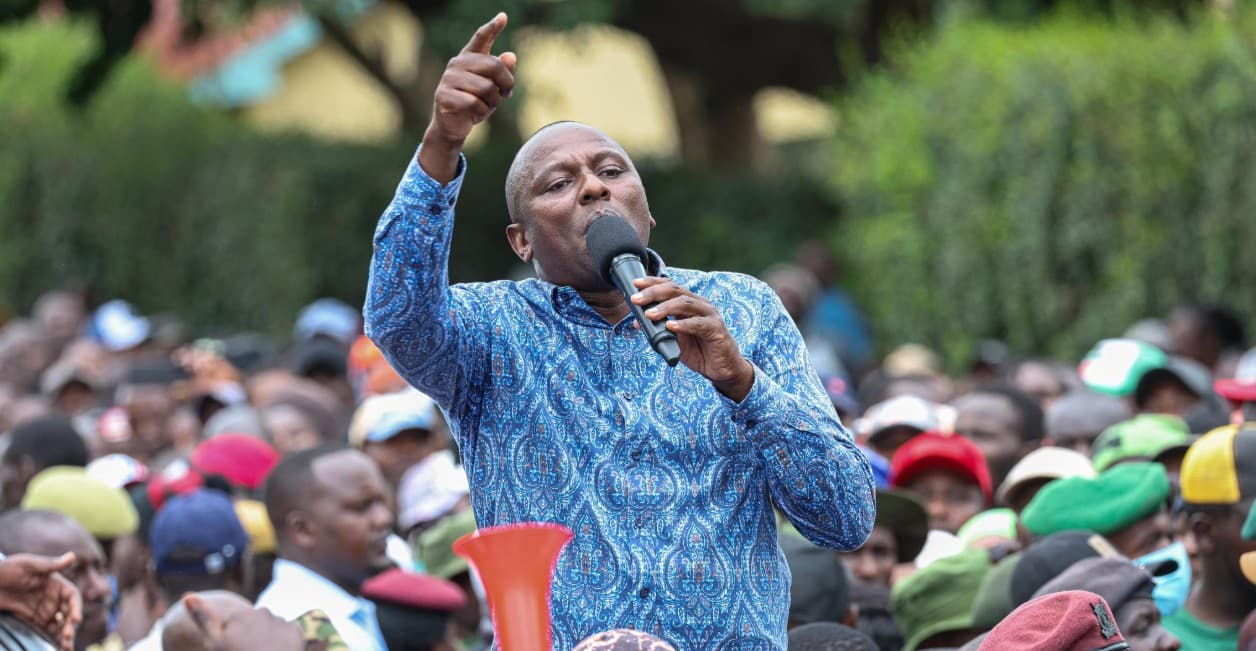
GATUNDU NORTH — In the high-octane theater of Kenyan politics, few statements are as loaded as a guarantee of votes. On Sunday, National Assembly Majority Leader Kimani Ichung’wah did not just promise support; he staked his political capital on a specific, quantifiable outcome. Speaking at the Africa Inland Pentecostal Church Assembly (AIPCA) in Gatundu North, Ichung’wah declared that Kiambu County would deliver more votes to President William Ruto in 2027 than any other region in the republic—a direct challenge to the President’s own Rift Valley stronghold.
“Your Excellency, I want to assure you that even in 2027, Kiambu County will give you more votes than any other region in the country,” Ichung’wah asserted, flanked by the President and Governor Kimani Wamatangi. For the seasoned observer, this was not merely a loyalty pledge; it was a strategic move to cement the mountain’s centrality in the ruling coalition’s future.
The significance of this pledge cannot be overstated. Kiambu is a vote-rich juggernaut, with over 1.2 million registered voters—a figure that often tips the national scale. By promising to outdo all other regions, Ichung’wah is effectively telling the President: "Your political survival depends on us."
However, this assurance comes at a time when political analysts warn of "voter fatigue" in the Mt. Kenya region. Critics have pointed to the rising cost of living and delayed returns on agricultural reforms as potential wedges between the administration and the grassroots. Ichung’wah, however, dismissed these concerns, framing the region’s loyalty as a response to tangible development.
While the tarmac spreads, the question on the streets of Thika and Ruiru remains: How does this translate to the household budget? The "First World" rhetoric contrasts sharply with the daily struggles of the average resident facing high fuel prices and school fees. The President, perhaps sensing this disconnect, sought to lower the political temperature during the service.
“Hiyo kazi yote ninafanya sio kutafuta kura (All this work I am doing is not to seek votes),” President Ruto told the congregation, insisting his mission was transformation, not just re-election. “Votes will come later, and God will decide.” It was a classic pivot—focusing on delivery to deflect from the premature electioneering that often irritates a weary electorate.
Beneath the surface of unity, local tensions simmered. The service saw Governor Wamatangi and other local leaders sharing the podium, a visual representation of a unity that is often tested behind closed doors. Observers noted that Ichung’wah’s prominence at the event signals his growing role as the President’s primary broker in the region, potentially eclipsing other local kingpins.
As the 2027 cycle inches closer, the pressure is now on Ichung’wah to convert these bold words into ballot papers. If Kiambu is to indeed surpass the Rift Valley’s numbers, it will require more than road projects; it will need a convincing economic narrative that resonates with the coffee farmer in Githunguri and the trader in Kikuyu market.
“Promises are the currency of politics,” noted a local political analyst attending the service. “But in Kiambu, the exchange rate is determined by what people can feel in their pockets, not just what they see on the highway.”
Keep the conversation in one place—threads here stay linked to the story and in the forums.
Sign in to start a discussion
Start a conversation about this story and keep it linked here.
Other hot threads
E-sports and Gaming Community in Kenya
Active 9 months ago
The Role of Technology in Modern Agriculture (AgriTech)
Active 9 months ago
Popular Recreational Activities Across Counties
Active 9 months ago
Investing in Youth Sports Development Programs
Active 9 months ago



