We're loading the full news article for you. This includes the article content, images, author information, and related articles.
The escalating conflict in the Middle East has rattled global markets, testing Dubai's longstanding reputation as an economic sanctuary amidst missile threats and regional instability.
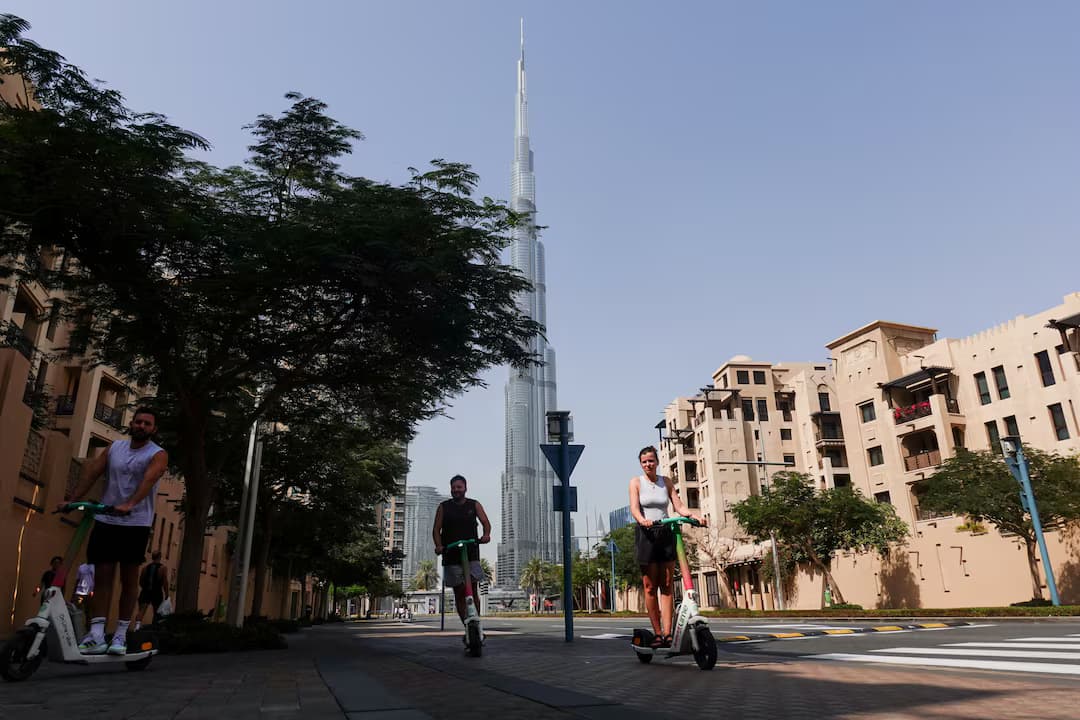
For decades, the gleaming skyscrapers and bustling financial districts of Dubai have served as the ultimate safe haven in a chronically volatile region. Today, that carefully curated status is facing an existential stress test as geopolitical warfare rapidly closes in on the Gulf.
The unprecedented escalation of hostilities between Iran, the United States, and Israel has sent shockwaves through the United Arab Emirates. With stock markets tumbling, maritime insurers cancelling war risk cover in the Gulf, and regional flights grounded, the tangible reality of war is piercing the Dubai bubble. For Kenyan expatriates, global investors, and international trading conglomerates, the reassessment of Dubai’s absolute security represents a seismic shift in global economic strategy.
The architecture of Dubai’s economy is entirely predicated on stability, neutrality, and unrestricted global connectivity. It has thrived by positioning itself as the Switzerland of the Middle East—a place where capital can park safely regardless of the geopolitical infernos raging in neighbouring nations. The recent barrage of retaliatory strikes and drone interceptions in Kuwait and Saudi Arabia has fundamentally altered this risk calculus.
Financial markets have reacted with characteristic ruthlessness to the spreading conflict. The UAE’s stock markets experienced immediate contractions, reflecting widespread investor anxiety over the proximity of the hostilities. Crucially, the closure of vital shipping lanes and the cancellation of maritime insurance policies threaten the logistical lifeblood of the Emirate, which relies heavily on unhindered access to the Strait of Hormuz.
The disruption to regional energy flows has been immediate and severe, with Brent crude prices spiking and global brands temporarily shutting down their Middle Eastern retail operations. The psychological impact on residents and foreign investors watching neighbouring landmarks targeted by missiles cannot be overstated. Reassurances from state authorities, while necessary, struggle to counter the visceral reality of militarised airspace.
The aviation sector, a cornerstone of Dubai’s economic model via the Emirates airline super-hub, is acutely vulnerable. Insurance gaps have left airlines exposed as the conflict widens, forcing extensive re-routing and widespread cancellations. If Dubai International Airport loses its status as the world’s most reliable transit node, the cascading economic damage across the tourism and hospitality sectors will be catastrophic.
For Kenya, the tremors in Dubai are felt intimately. The Emirate hosts a massive contingent of Kenyan expatriates working across all sectors, from elite financial services to essential hospitality and security roles. The remittances generated by this workforce are a vital pillar of the Kenyan economy. Any prolonged economic contraction in Dubai directly threatens the livelihoods of thousands of Kenyan families heavily reliant on these Gulf incomes.
Furthermore, Dubai operates as the primary commercial conduit for Kenyan traders sourcing electronics, textiles, and manufactured goods from Asia. If the logistical corridors into the UAE are compromised or rendered prohibitively expensive due to insurance premiums, the cost of imported goods in Nairobi and Mombasa will surge. This supply chain disruption risks exacerbating domestic inflation in East Africa.
Investors are now forced to factor a severe "geopolitical risk premium" into their Middle Eastern investment theses. The long-term impact on the Gulf expected by analysts is a pivot away from taking Dubai’s security for granted. Capital is notoriously cowardly; if the perception solidifies that the Emirate can no longer guarantee absolute safety from regional fallout, foreign direct investment could swiftly redirect to alternative global hubs.
The leadership in Dubai now faces an unprecedented diplomatic and economic balancing act. They must project unshakeable confidence and operational continuity while navigating a theatre of war over which they have limited control. The resilience of its infrastructure and the agility of its financial regulators will determine whether Dubai emerges from this crisis with its safe-haven status bruised or fundamentally broken.
The true cost of conflict is not just measured in munitions, but in the sudden, terrifying evaporation of commercial certainty.
Keep the conversation in one place—threads here stay linked to the story and in the forums.
Sign in to start a discussion
Start a conversation about this story and keep it linked here.
Other hot threads
E-sports and Gaming Community in Kenya
Active 9 months ago
The Role of Technology in Modern Agriculture (AgriTech)
Active 9 months ago
Popular Recreational Activities Across Counties
Active 9 months ago
Investing in Youth Sports Development Programs
Active 9 months ago