We're loading the full news article for you. This includes the article content, images, author information, and related articles.
A silent revolution is buzzing through the mangroves of the Tana Delta, where traditional honey hunters are transforming into commercial conservationists.
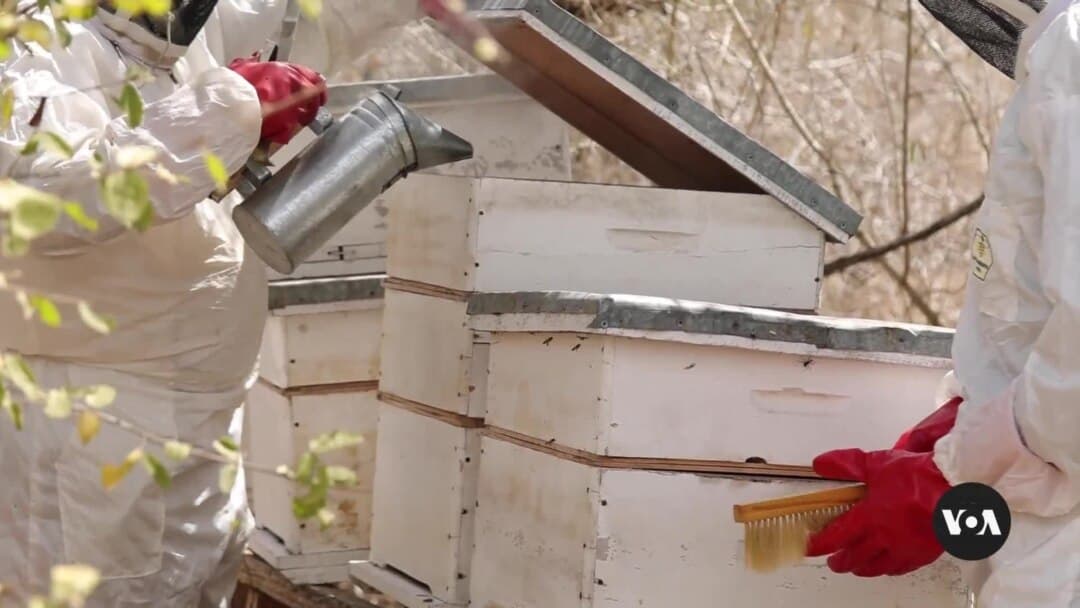
A silent revolution is buzzing through the mangroves and arid plains of the Tana Delta, where traditional honey hunters are transforming into commercial conservationists, securing their livelihoods while saving one of Kenya's most fragile ecosystems.
In the sweltering heat of the Tana Delta, a profound shift is underway. For generations, the Pokomo and Orma communities have viewed the dense thickets and mangrove forests not just as a source of fuel, but as a pantry. Honey hunting was a rugged, often destructive affair—hives were raided, trees were felled, and colonies were burned to drive away the bees. It was a practice of immediate extraction with little thought for tomorrow. Today, however, the smoke has cleared, replaced by the methodical hum of modern apiaries. This is not merely an agricultural shift; it is a climate resilience strategy that is rewriting the economic destiny of families in Tana River County.
The catalyst for this transformation has been a strategic partnership between Nature Kenya and African Beekeepers Limited (ABL), anchored in the ambitious "Tana Green Heart" initiative. The premise was simple but radical: demonstrate that a live bee is infinitely more valuable than a dead one. Traditional methods yielded impure honey and decimated bee populations, critical pollinators for the Delta's biodiversity. By introducing modern Langstroth hives and training locals in sustainable apiary management, the initiative has turned honey into a "green gold."
Residents of Marafa in Chara are now harvesting high-grade honey that meets international standards. "We used to burn the hives, killing thousands of bees just for a few liters of smoky honey," admits a local elder. "Now, we harvest three times a year, the bees survive, and the money is in the bank." This shift from subsistence hunting to commercial production is vital. With the Tana Delta facing increasing pressure from climate change—erratic rains and prolonged droughts—diversifying income sources is no longer a luxury; it is a survival imperative.
The economic logic of the project is irrefutable. Traditional honey fetched low prices due to ash and brood contamination. The new, centrifugally extracted honey commands premium prices in Nairobi and beyond.
What makes this story truly compelling is the intersection of commerce and conservation. The Tana Delta is a designated Ramsar site, a wetland of international importance. It is under siege from unsustainable charcoal burning and overgrazing. Beekeeping offers a powerful counter-narrative. To produce premium honey, one needs healthy vegetation. The community now has a vested financial interest in protecting the forests they once degraded. Every acre of preserved acacia or mangrove forest is now seen as a "bee pasture."
Nature Kenya's data indicates that areas with active bee conservation groups are seeing a reduction in illegal logging. The bees act as biological sentinels; their health reflects the health of the ecosystem. By monetizing the standing forest through honey production, the project has achieved what decades of regulation failed to do: it has made conservation profitable.
This initiative resonates deeply with the broader Kenyan narrative of resilience. As the country grapples with the aftershocks of the severe droughts of recent years, the Tana Delta model offers a blueprint for the Arid and Semi-Arid Lands (ASALs). It proves that with the right technology transfer and market linkages, marginalized communities can leapfrog from subsistence to agro-processing. The involvement of the private sector, through ABL, ensures sustainability beyond the lifespan of donor funding.
The vision is now to scale. With over 300 farmers already trained and hundreds of hives colonized, the foundation is laid. The ultimate goal is to brand "Tana Delta Honey" as a Geographic Indication (GI) product, much like Kitui honey, giving it a unique market identity. As the sun sets over the Tana River, it no longer sets on a dying ecosystem, but on a landscape buzzing with the promise of a sweeter, more sustainable future.
"We are not just keeping bees," says Mary, a newly trained apiarist in Chara. "The bees are keeping us. They are paying for our future."
Keep the conversation in one place—threads here stay linked to the story and in the forums.
Sign in to start a discussion
Start a conversation about this story and keep it linked here.
Other hot threads
E-sports and Gaming Community in Kenya
Active 9 months ago
The Role of Technology in Modern Agriculture (AgriTech)
Active 9 months ago
Popular Recreational Activities Across Counties
Active 9 months ago
Investing in Youth Sports Development Programs
Active 9 months ago



