We're loading the full news article for you. This includes the article content, images, author information, and related articles.
The government has issued a final warning to hospitals rejecting patients, threatening to revoke licenses as a Sh15.4 billion payout is released.

In the quiet sterile corridors of hospitals across Kenya, a silent war is being waged—not with medicine, but with bureaucratic leverage. As the Social Health Authority (SHA) attempts to solidify its presence in the national healthcare ecosystem, the government has issued a sharp ultimatum to service providers: prioritize patient care, or risk losing the right to operate entirely.
This latest escalation comes as the government released a Sh15.4 billion disbursement to health facilities, intended to settle mounting arrears and stabilize the provision of medical services. Yet, for many Kenyans navigating the transition from the old National Hospital Insurance Fund (NHIF) to the SHA, the promise of universal coverage remains obstructed by digital outages and payment disputes, leaving patients stranded at the critical moment of need.
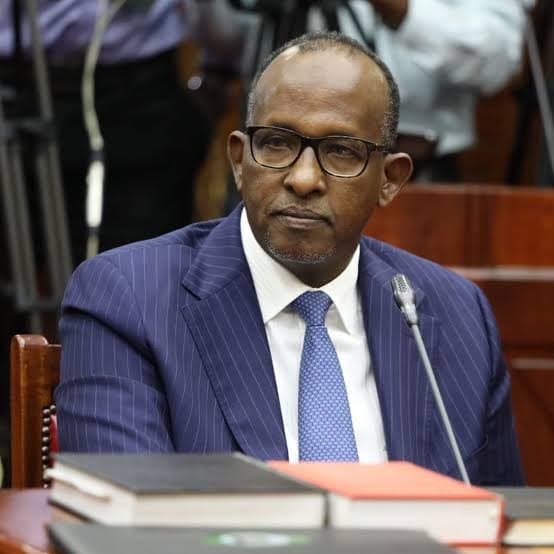
Health Cabinet Secretary Aden Duale has made the government's position unequivocally clear: healthcare facilities that deny treatment to citizens, citing either system downtime or delayed payments, are in direct violation of the constitution. Addressing the growing reports of patients being turned away, the Cabinet Secretary emphasized that the state’s patience with such practices has reached its limit. The directive serves as a warning that is both administrative and existential for the providers involved.
According to the Ministry, the government is no longer willing to accept technical glitches as a valid excuse for the denial of life-saving services. Facilities that persist in prioritizing billing over patients now face the threat of immediate suspension from the SHA portal—effectively cutting them off from state revenue—and the ultimate sanction: the revocation of their operating licenses. This aggressive stance underscores the government's recognition that the success of the Universal Health Coverage (UHC) agenda depends entirely on public trust, which is rapidly eroding as facilities clash with the new payment architecture.
The injection of Sh15.4 billion into the health sector is a significant, albeit reactive, attempt to address the liquidity crisis crippling private and public hospitals alike. Data from the Ministry reveals that Sh4.1 billion of this total is specifically ring-fenced to clear a portion of the long-standing arrears that have plagued the sector since the transition to SHA began. For hospitals, which have operated on thin margins while awaiting claims processing, this cash injection is vital to keep essential supplies, such as oxygen and pharmaceuticals, in stock.
However, the release of these funds is accompanied by a new level of scrutiny. The government has signaled that payment is no longer a blank check. The Ministry is implementing intensified audits of claims to combat what officials describe as the prevalence of fictitious billing and system-wide fraud. The logic is that while the government provides the capital, it demands transparency in return. Hospitals are now expected to reconcile their books with a system that is still finding its digital footing, a process that continues to create friction between facility administrators and state accountants.
The operational reality for many health facilities remains dire. Administrators argue that they are trapped in a catch-22: they are required by law to provide services, yet the digital infrastructure supporting the SHA is frequently unresponsive. When the portal goes down, claims cannot be verified, authorizations are delayed, and hospitals are forced to make a difficult choice: treat the patient at a financial loss or turn them away and risk regulatory ire.
For the average patient, these institutional struggles translate into hours of waiting at hospital reception desks, clutching registration documents, only to be told that the system is unreachable. This digital paralysis is not merely an inconvenience it is a structural barrier that is effectively rationing healthcare by technology. The government’s move to deploy 367 officers to the counties is an acknowledgment of this failure, an attempt to bridge the gap between policy and the erratic reality of digital health management.
Beyond the spreadsheets and the threats of revocation, the crisis is defined by the human experience of the Kenyan patient. In Nairobi, as in rural counties, families are reporting that even with the new coverage model, the out-of-pocket costs remain unexpectedly high because facilities, anticipating further delays in SHA payments, have begun to demand cash up-front or scale back on services covered by the scheme. This defensive posture by hospitals is a rational response to the financial uncertainty of the SHA, but it is a response that systematically marginalizes the most vulnerable citizens who rely on state insurance for their primary survival.
The government maintains that the transition is a necessary evolution, pointing to the millions of Kenyans who have been registered under the new authority. Yet, the disconnect remains palpable. As long as the digital infrastructure remains prone to downtime and the payment cycle remains plagued by verification backlogs, the threat of license revocation will likely remain a blunt instrument—one that may force compliance in the short term but fails to address the underlying mechanics of a system in transition.
Ultimately, the stability of the Kenyan healthcare sector will not be secured by warnings alone. It will be determined by whether the state can build a digital architecture that functions as reliably as the hospitals are now being mandated to do. Until then, the patients, caught in the crossfire of this regulatory standoff, remain the true measure of whether the SHA succeeds or fails.
Keep the conversation in one place—threads here stay linked to the story and in the forums.
Sign in to start a discussion
Start a conversation about this story and keep it linked here.
Other hot threads
E-sports and Gaming Community in Kenya
Active 9 months ago
The Role of Technology in Modern Agriculture (AgriTech)
Active 9 months ago
Popular Recreational Activities Across Counties
Active 9 months ago
Investing in Youth Sports Development Programs
Active 9 months ago
Key figures and persons of interest featured in this article