We're loading the full news article for you. This includes the article content, images, author information, and related articles.
Washington escalates enforcement against Tehran and Caracas, sending ripples through global energy markets that could reach Kenyan pumps.
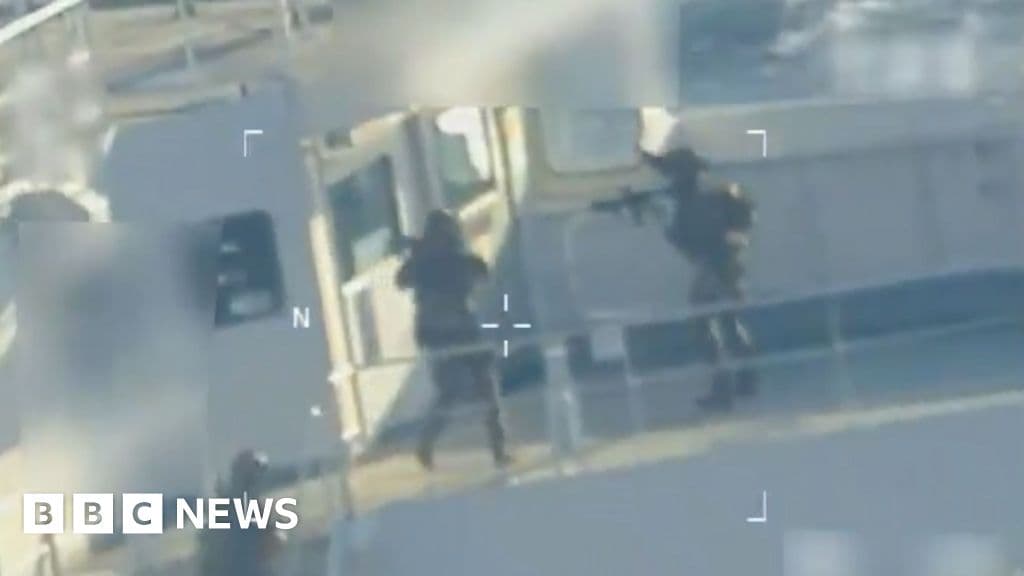
In a dramatic display of maritime force, the United States military has intercepted and seized a massive oil tanker off the coast of Venezuela, signaling a sharp escalation in Washington's crackdown on illicit energy trade. The operation, captured in high-definition footage released early Thursday, showcases a renewed determination to enforce sanctions that have long been evaded by a shadow network of vessels.
The seizure, confirmed by US Attorney General Pam Bondi, targets what officials describe as a critical node in the "ghost fleet" network moving sanctioned crude from Venezuela and Iran. For nations like Kenya, dependent on stable global fuel prices, this geopolitical muscle-flexing raises immediate concerns about supply chain disruptions and potential price volatility at the pump.
The footage, shared by the Department of Justice, offers a rare glimpse into the mechanics of maritime interdiction. It depicts US military assets approaching the vessel in international waters, a move legal experts suggest is aimed at dismantling the financial lifelines of the Venezuelan and Iranian regimes. Attorney General Bondi explicitly stated that the tanker was being used to transport sanctioned oil, linking the cargo directly to Tehran and Caracas.
While specific details regarding the volume of the seizure remain under wraps, standard tankers of this class can carry upwards of 2 million barrels of crude. At current market rates, such a haul could be valued at over $140 million (approx. KES 18.2 billion)—a massive financial blow to the sanctioned entities involved.
Key elements of the operation include:
While the seizure occurred thousands of miles away in the Caribbean, the economic tremors are likely to be felt in Nairobi. Global oil markets are notoriously sensitive to geopolitical friction. When supply lines are threatened—or when major powers signal a tougher stance on enforcement—speculation often drives prices upward.
Energy analysts warn that if this seizure represents the beginning of a sustained campaign against the Iranian-Venezuelan oil axis, the global supply cushion could shrink. For the Kenyan consumer, already navigating the complexities of the Energy and Petroleum Regulatory Authority (EPRA) pricing reviews, any spike in global crude benchmarks translates directly to higher costs for transport, electricity, and basic goods.
"This is not just about American foreign policy; it is about the stability of the global energy grid," noted a Nairobi-based energy consultant. "If the 'grey market' oil is removed from the system abruptly, legitimate suppliers have to fill the gap, and that competition drives up the price per barrel."
As the tanker is towed to a US port for processing, the message to global markets is unequivocal: the era of looking the other way is over, and the cost of doing business with sanctioned regimes just went up.
Keep the conversation in one place—threads here stay linked to the story and in the forums.
Sign in to start a discussion
Start a conversation about this story and keep it linked here.
Other hot threads
E-sports and Gaming Community in Kenya
Active 9 months ago
The Role of Technology in Modern Agriculture (AgriTech)
Active 9 months ago
Popular Recreational Activities Across Counties
Active 9 months ago
Investing in Youth Sports Development Programs
Active 9 months ago