We're loading the full news article for you. This includes the article content, images, author information, and related articles.
A highly anticipated graphics card delivery turns into a cautionary tale of logistics fraud, leaving a customer battling a retail giant for over KES 150,000.
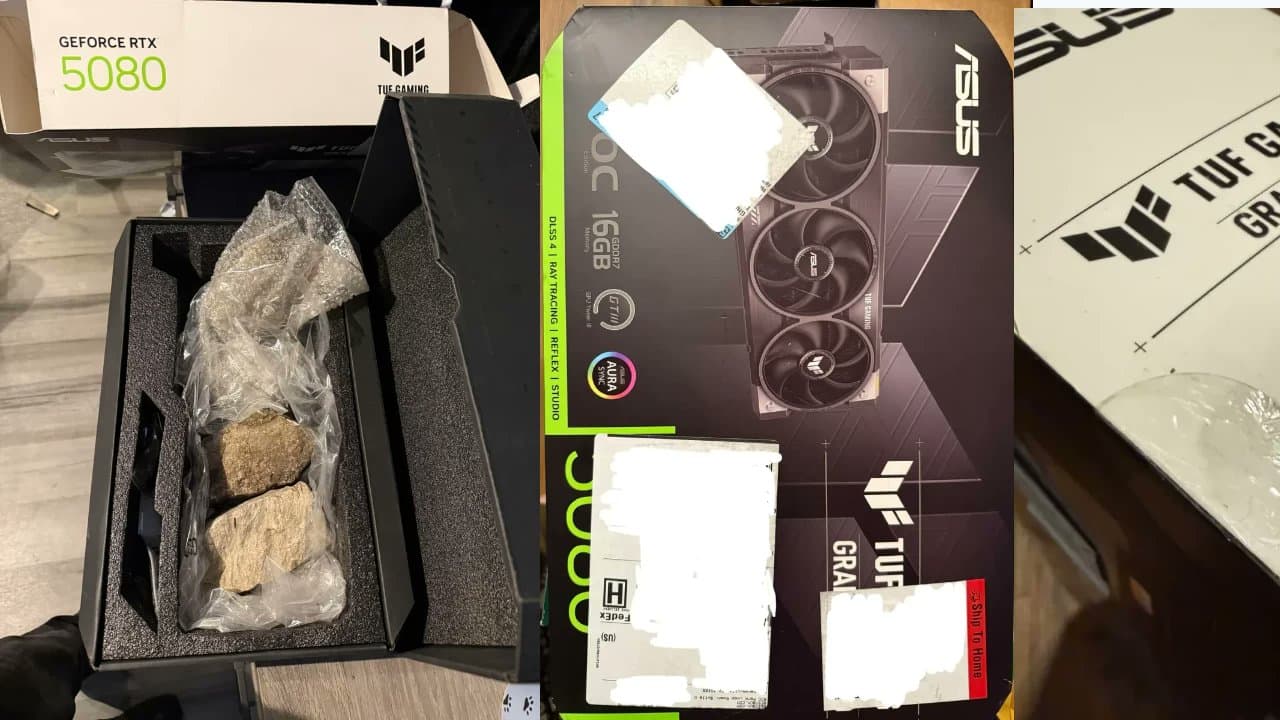
The ritual of unboxing a high-end graphics card is usually a moment of triumph, but for one unlucky enthusiast, tearing open the seal revealed not silicon, but a heavy, mocking collection of rocks.
The incident, involving a coveted ASUS TUF RTX 5080 valued at $1,200 (approx. KES 156,000), highlights a growing global plague of supply chain theft that threatens anyone ordering high-value electronics for delivery. For the buyer, a Reddit user known as "GnarDead," the excitement of upgrading their rig dissolved instantly into a consumer protection nightmare.
According to the user's detailed account, the package arrived with subtle signs of tampering—a red flag often missed in the rush of excitement. Instead of the sleek, triple-fan architecture of the RTX 5080, the anti-static bag contained jagged stones, weighted to mimic the heft of the GPU.
This specific model, the ASUS TUF Gaming GeForce RTX 5080, is a premium component. In the Kenyan market, where duties and shipping fees apply, replacing such a unit would cost a local enthusiast upwards of KES 200,000. The sheer value of the item makes it a prime target for sophisticated theft rings operating within logistics centers.
The situation escalated from theft to insult when the customer contacted the retailer, Best Buy. Despite the evident fraud, the retailer's response was cold. GnarDead reported that after an internal "investigation," Best Buy refused both a refund and a replacement.
This refusal has ignited a firestorm in the tech community. Veteran builders and industry observers have noted a disturbing trend:
While this theft occurred in the United States, it sends a chilling signal to the Nairobi tech community. Many local gamers and professionals rely on shipping forwarders to import hardware from US retailers like Best Buy or Amazon to bypass local markups.
If a major retailer refuses to refund a domestic US customer, a Kenyan buyer using a third-party shipping service would face nearly insurmountable odds in reclaiming their money. The chain of custody becomes murky, allowing retailers to claim the theft occurred during international transit.
As digital commerce expands, the burden of proof is shifting uncomfortably onto the consumer, turning every high-value delivery into a high-stakes gamble where the house—or in this case, the logistics thief—too often wins.
Keep the conversation in one place—threads here stay linked to the story and in the forums.
Sign in to start a discussion
Start a conversation about this story and keep it linked here.
Other hot threads
E-sports and Gaming Community in Kenya
Active 9 months ago
The Role of Technology in Modern Agriculture (AgriTech)
Active 9 months ago
Popular Recreational Activities Across Counties
Active 9 months ago
Investing in Youth Sports Development Programs
Active 9 months ago



