We're loading the full news article for you. This includes the article content, images, author information, and related articles.
In a rain-soaked stalemate that keeps Group C wide open, Uganda and Tanzania share the spoils—but the scars of a stoppage-time miss will linger long after the final whistle.
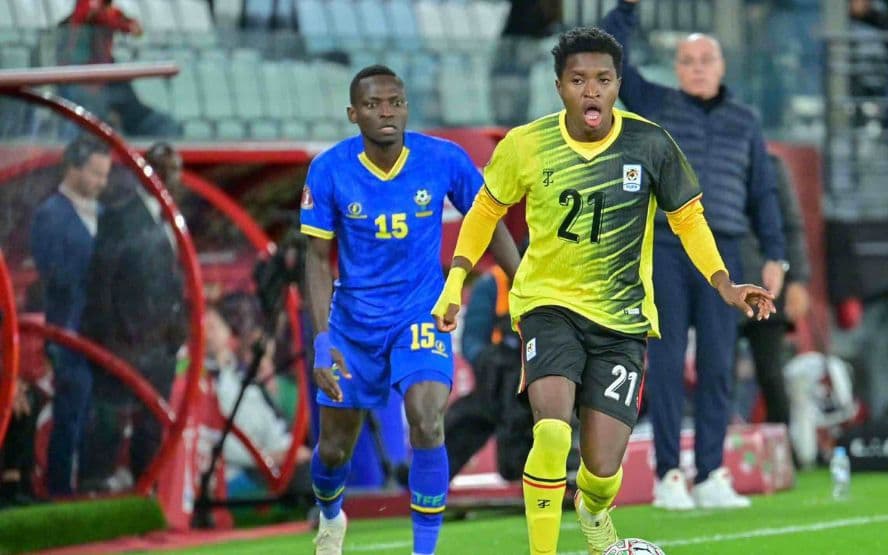
It was the kind of moment that defines careers, frozen in the torrential rain of Rabat. With the clock ticking past the 90th minute and the score locked at 1-1, Allan Okello stood over the penalty spot, the weight of a nation resting on his shoulders. A clap of thunder rattled the Stade El Barid, mirroring the storm brewing in the hearts of millions of Ugandans watching back home. Then, silence. The 25-year-old playmaker, usually so assured, leaned back and sent the ball sailing into the Moroccan night, high over the crossbar. The final whistle moments later confirmed the cruelest of draws.
For the Uganda Cranes, this was not just a point gained; it was two points agonizingly lost. The 1-1 result against their eternal rivals, the Tanzania Taifa Stars, leaves both East African nations teetering on the brink of elimination from the 2025 Africa Cup of Nations (AFCON). With only one point each from two matches, their survival now hinges on a miraculous final matchday. For the Kenyan observer, watching our neighbors battle was a stark reminder of the grit required as we prepare to co-host the 2027 edition alongside them.
The match, billed as a battle for regional supremacy, lived up to the hype despite the difficult conditions. Tanzania, desperate to break a 10-match winless streak at AFCON finals, drew first blood in the 58th minute. Veteran forward Simon Msuva, who plays his club football in Iraq, calmly converted a penalty after Uganda’s Baba Alhassan was penalized for a handball in the box. It was a moment of composure that briefly silenced the Ugandan contingent.
But the Cranes, showing the resilience that has become their hallmark under Belgian coach Paul Put, refused to fold. Ten minutes from time, substitute Uche Ikpeazu—who plies his trade for St Johnstone in Scotland—powered home a header from a Denis Omedi cross to restore parity. The momentum had shifted, and when Tanzania’s Haji Mnoga brought down James Bogere in the box deep into stoppage time, victory seemed inevitable. Until it wasn’t.
The aftermath was a study in contrast. While the Tanzanians breathed a collective sigh of relief, the Ugandan camp was despondent. Coach Paul Put did not mince words in his post-match assessment. "I have a very bad feeling because I think we didn't deserve this draw," he noted, his frustration palpable. "That is very, very painful, but that is also football."
For Okello, a player dubbed 'Star Boy' in Kampala, the miss is a bitter pill. He had been the architect of Uganda's best moments in the first half, testing Tanzanian goalkeeper Foba Zuberi and linking play with intelligence. To have his performance defined by a single error is the brutal nature of elite sport. "It is not a moment that requires judgment. It requires humanity," wrote Daily Nation analyst Andrew Mwanguhya, emphasizing the psychological toll on the young midfielder.
Why does a draw in Rabat matter to a shopkeeper in Nairobi or a farmer in Eldoret? Because the fortunes of our neighbors are inextricably linked to our own sporting economy. As co-hosts for AFCON 2027, the performance of Uganda and Tanzania serves as a barometer for the region's readiness to compete with the continent's giants. A strong showing here builds the brand of East African football, attracting investment and interest that spills over borders.
Moreover, the result leaves the qualification mathematics perilously complex. Both teams must now win their final group games—Uganda against heavyweights Nigeria, and Tanzania against Tunisia—to have any realistic chance of reaching the knockout stages. It is a tall order, but as the drama in Rabat proved, football follows no script.
"We wanted our first win at the Africa Cup of Nations and I am very sorry for all the Tanzanian people," Tanzania coach Miguel Angel Gamondi admitted, capturing the mood of a region that feels it is always *almost* there. As the dust settles, the message to our neighbors is clear: the margin between heroism and heartbreak is often just twelve yards.
Keep the conversation in one place—threads here stay linked to the story and in the forums.
Sign in to start a discussion
Start a conversation about this story and keep it linked here.
Other hot threads
E-sports and Gaming Community in Kenya
Active 9 months ago
The Role of Technology in Modern Agriculture (AgriTech)
Active 9 months ago
Popular Recreational Activities Across Counties
Active 9 months ago
Investing in Youth Sports Development Programs
Active 9 months ago