We're loading the full news article for you. This includes the article content, images, author information, and related articles.
Carrying only flowers and flags, families of youth killed in recent protests demand a face-to-face meeting with President Ruto, seeking justice and an end to a year of painful silence.
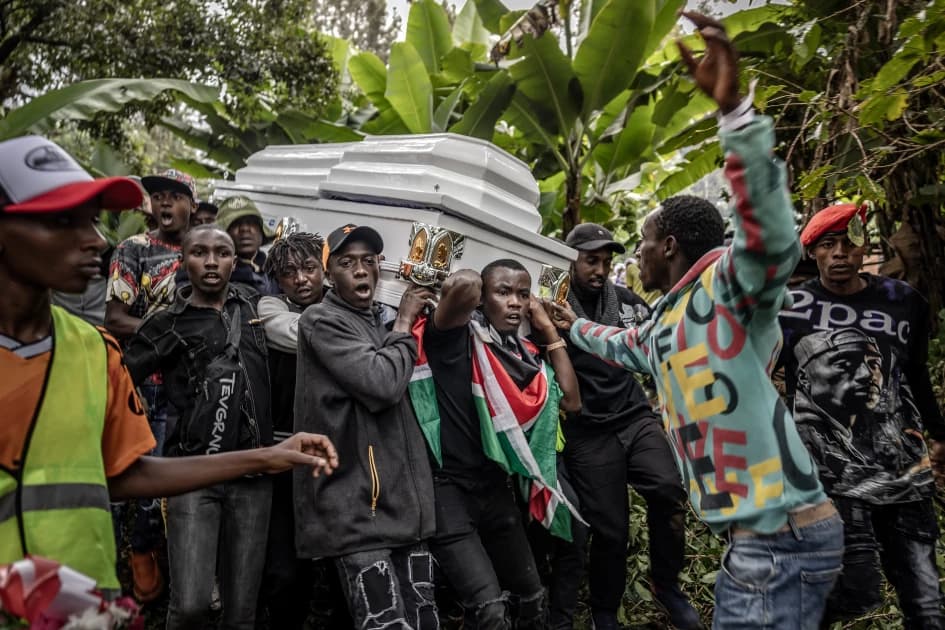
With the quiet dignity of profound loss, families of young Kenyans killed during the 2024 and 2025 anti-government protests are marching to the gates of State House today, seeking an audience with President William Ruto. Their procession, which began at Nairobi's Jeevanjee Gardens, is not a protest but a plea—a solemn journey armed only with flowers and national flags to demand answers for their children's deaths.
This march crystallizes the anguish of hundreds of families whose lives were shattered by the violent crackdowns on the youth-led 'Gen Z' protests. They argue that despite presidential promises, a painful silence from the government has been the only response to their calls for justice. The timing, just before Christmas, is a deliberate, poignant reminder of the empty chairs at their family tables.
The core of the families' grievance is the stark lack of accountability. More than 547 days after Rex Masai became one of the first documented fatalities, shot on June 20, 2024, not a single police officer has been successfully prosecuted for the protest-related deaths. This inaction persists even after President Ruto announced a framework in August 2025 to offer reparations to victims of police violence. However, a High Court decision later halted the government's compensation panel, ruling it unconstitutional and affirming that the mandate lies with independent bodies like the Kenya National Commission on Human Rights (KNCHR).
The Independent Policing Oversight Authority (IPOA) has reported investigating dozens of deaths, but progress is agonizingly slow. The inquest into Rex Masai's death, for example, has been fraught with delays and accusations from the National Police Service itself that IPOA's probe was “incomplete and lackadaisical,” creating a public spectacle of institutional infighting while justice for victims hangs in the balance.
Disturbing forensic evidence amplifies the families' cry for justice. A report by the Independent Medico-Legal Unit (IMLU) noted that three out of every five extrajudicial killings involved victims being shot from behind, suggesting they were fleeing and posed no threat. Kelvin Simba, whose brother Mike Brian Kasaine was killed, has been a vocal advocate for the families, emphasizing these findings as clear evidence of unlawful force.
The protests that led to these deaths were initially ignited by economic despair. The controversial Finance Bills of 2024 and 2025 became a flashpoint for a generation grappling with a dire economic reality. Kenya's youth unemployment rate stands at a staggering 67%, with over a million young people entering a saturated job market each year. This economic anxiety is compounded by a high cost of living, which has stretched household budgets to their breaking point.
Human rights organizations have documented the heavy toll of the state's response to these frustrations. Groups like KNCHR and Amnesty International report that over 125 people have been killed in protest-related violence between June 2024 and July 2025. While the government's official figures are lower, the sheer scale of the loss of life has been widely condemned. The government has previously defended the police's actions, with senior officials warning that attempts to breach protected areas like State House would be met with firm resistance. Interior Cabinet Secretary Kipchumba Murkomen stated in June 2025 that the government was open to dialogue with the families but warned political actors against orchestrating violence. However, no official statement has been released regarding today's specific march.
The families have been clear in their communication to the police: their march is a peaceful appeal guaranteed under Article 37 of the Constitution. They have requested a police escort to ensure their safety. “This is not a protest but a plea for justice, and we trust that the police will not harass, assault, or arrest grieving parents and siblings seeking to meet the President,” their notice stated.
As they walk toward the highest office in the land, these families carry the weight of a nation's unresolved grief. Their demand is simple and profoundly human: to be seen, to be heard, and to be assured that their children's lives mattered. The question now is whether the doors of State House, and the ears of its occupant, will be open to their plea.
Keep the conversation in one place—threads here stay linked to the story and in the forums.
Sign in to start a discussion
Start a conversation about this story and keep it linked here.
Other hot threads
E-sports and Gaming Community in Kenya
Active 9 months ago
The Role of Technology in Modern Agriculture (AgriTech)
Active 9 months ago
Popular Recreational Activities Across Counties
Active 9 months ago
Investing in Youth Sports Development Programs
Active 9 months ago
Key figures and persons of interest featured in this article