We're loading the full news article for you. This includes the article content, images, author information, and related articles.
As Chinese and Dutch titans pour billions into Aragón’s wind-swept plains, the link between renewable grids and industrial growth offers a stark blueprint for Nairobi’s manufacturing ambitions.
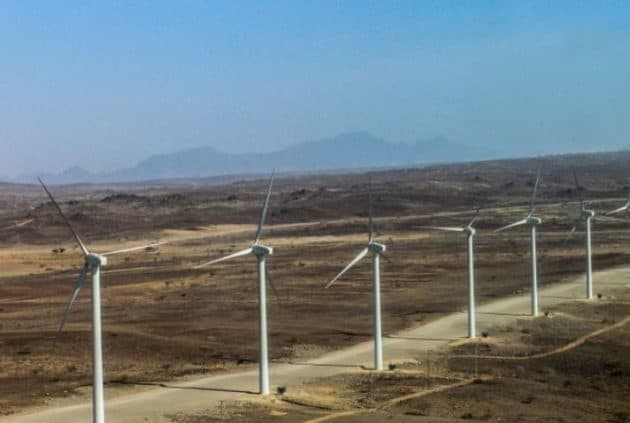
NAIROBI — On the windswept edge of Figueruelas, a solitary turbine is doing more than just generating power—it is anchoring a massive industrial revolution that signals a shifting global economic tide.
This sleepy Spanish municipality has just secured a staggering €4.1 billion (approx. KES 620 billion) investment for an electric vehicle battery plant, proving that in the modern economy, cheap, clean energy is the ultimate magnet for foreign capital.
The deal, a joint venture between Chinese battery behemoth CATL and automotive giant Stellantis, will see the construction of a gigafactory capable of powering hundreds of thousands of electric vehicles. For Kenya, a nation that already boasts a greener grid than Spain, the development serves as both a validation of renewable energy strategies and a frustrating reminder of untapped industrial potential.
Work has already begun on the facility in north-eastern Spain, a region chosen explicitly for its natural resources. Yao Jing, China’s ambassador to Spain, termed the project “one of the biggest Chinese investments Europe has ever seen.”
But it was Luis Bertol Moreno, the town’s mayor, who pinpointed the decisive factor. It wasn't just tax breaks or labor costs; it was the wind.
“We’re in Aragón, where there’s wind all year round, there are lots of hours of sunshine, and we are surrounded by wind turbines and solar panels,” Moreno noted. “Those energy sources will be crucial in generating electricity for the new factory.”
The factory is a vindication of Spain’s aggressive energy transition. In 2017, renewables contributed just a third of the country's electricity. By 2024, that figure had surged to nearly 57%, creating a stable, low-carbon ecosystem attractive to manufacturers under pressure to decarbonize their supply chains.
For policymakers in Nairobi, the lesson from Aragón is sharp. Kenya is already an energy superpower in the renewable space. While Spain celebrates hitting 57% green generation, Kenya routinely surpasses 90%, driven by the geothermal giants of Olkaria and the gales of Lake Turkana.
Yet, despite this massive green advantage, Kenya has struggled to attract manufacturing investments of the scale seen in Figueruelas. The disparity highlights a critical gap: having the power is not enough; it must be packaged with infrastructure and policy stability to lure global titans.
Analysts suggest that for Kenya to turn its geothermal steam into manufacturing steam, it must replicate the Aragón model: creating dedicated industrial zones where green energy is directly linked to production facilities, bypassing grid instability and offering competitive tariffs.
As the turbines spin in Figueruelas, they send a silent message to the world: the future of manufacturing belongs to those who can guarantee green power. Kenya has the power; the race is now on to build the factories.
Keep the conversation in one place—threads here stay linked to the story and in the forums.
Sign in to start a discussion
Start a conversation about this story and keep it linked here.
Other hot threads
E-sports and Gaming Community in Kenya
Active 9 months ago
The Role of Technology in Modern Agriculture (AgriTech)
Active 9 months ago
Popular Recreational Activities Across Counties
Active 9 months ago
Investing in Youth Sports Development Programs
Active 9 months ago