We're loading the full news article for you. This includes the article content, images, author information, and related articles.
Kenya’s target to plant 15 billion trees faces collapse as low survival rates and funding cuts expose the gap between political ambition and environmental reality.
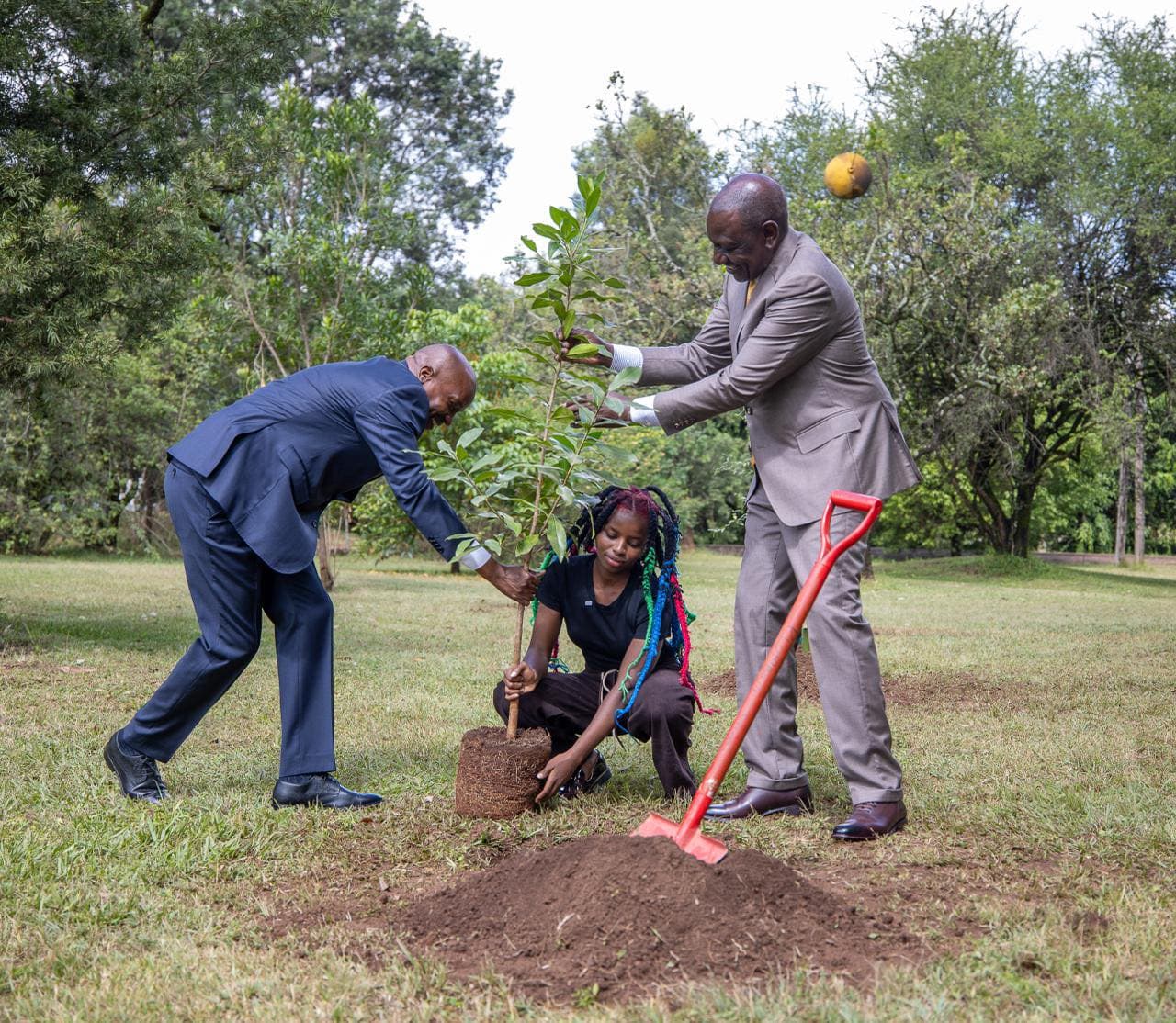
The numbers are dazzling, but the reality on the ground is withering. Kenya’s ambitious crusade to plant 15 billion trees by 2032 is facing a critical reality check as "survival gaps" threaten to turn a green revolution into a brown disappointment.
President William Ruto’s flagship environmental initiative is faltering under the weight of its own ambition. While government officials, including Environment CS Deborah Barasa, trumpet the planting of over one billion trees as a "milestone," environmentalists and auditors are asking the uncomfortable question: How many are still alive? The disparity between trees planted and trees growing has exposed a systemic failure in aftercare, tracking, and financing that could derail the entire project.
The mathematics of the project require a planting rate of approximately 4.1 million trees every single day to hit the 2032 target.Current data suggests the government is lagging significantly behind this pace. More worryingly, the "survival gap"—the percentage of seedlings that die due to drought, neglect, or browsing animals—remains unquantified but is feared to be high. We are effectively planting forests on paper while the ground remains bare.
Recent reports indicate that the State Department of Forestry saw its budget slashed from KES 13.5 billion to KES 12.08 billion, with the lion's share consumed by recurrent expenditure rather than development. Without money for fencing, watering, and monitoring, the initiative is reduced to a series of PR photo-ops for politicians who vanish as soon as the cameras stop clicking.
The stakes could not be higher. With climate change accelerating desertification in Northern Kenya, the 15 billion tree target is not a luxury; it is a survival mechanism. However, a tree that dies a week after planting absorbs no carbon and protects no soil.
As the clock ticks towards 2032, the government must shift focus from the spectacle of planting to the grit of growing. Unless the survival gap is closed, Kenya risks reaching the finish line with a ledger full of statistics and a landscape still gasping for shade.
Keep the conversation in one place—threads here stay linked to the story and in the forums.
Sign in to start a discussion
Start a conversation about this story and keep it linked here.
Other hot threads
E-sports and Gaming Community in Kenya
Active 9 months ago
The Role of Technology in Modern Agriculture (AgriTech)
Active 9 months ago
Popular Recreational Activities Across Counties
Active 9 months ago
Investing in Youth Sports Development Programs
Active 9 months ago
Key figures and persons of interest featured in this article