We're loading the full news article for you. This includes the article content, images, author information, and related articles.
Government launches an urgent investigation into the deaths and burial of nine street-connected children at Lang’ata Cemetery, exposing systemic neglect and a surge in fatalities.
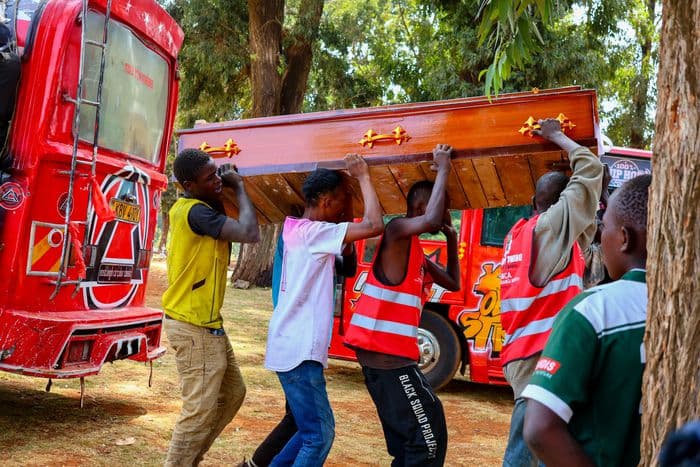
A grim discovery at Lang’ata Cemetery has forced the government into action, peeling back the layers of a tragedy that has been unfolding in the shadows of Nairobi. Cabinet Secretary Hanna Cheptumo has ordered an immediate probe into the burial of nine bodies, suspected to be street-connected children, whose deaths have sparked a national outcry over neglect and impunity.
The narrative is harrowing. These are not just statistics; they are the forgotten sons and daughters of the city, whose lives were extinguished by pneumonia, starvation, and mob justice, and whose bodies lay unclaimed in mortuaries for months. The revelation that 15 street children have died in recent weeks—deaths that were quietly managed until civil society groups raised the alarm—exposes a systemic failure of the state’s duty of care to its most vulnerable citizens.
The investigation, led by the Ministry of Gender, Culture, and Children Services, aims to establish the identities, ages, and causes of death of the victims. But the preliminary findings are already damning. Autopsies reveal a pattern of suffering that is medieval in its cruelty: lungs filled with fluid from untreated infections, bellies empty from chronic hunger, and bones broken by the mob’s "justice."
The involvement of the Street Families Rehabilitation Trust Fund (SFRTF) is a critical, if belated, step. For too long, the "rehabilitation" of street families has been a bureaucratic fiction, while the reality on the ground is a daily battle for survival against the elements, the police, and a society that has learned to look away. The burial of these nine bodies, facilitated by well-wishers rather than the state, is a final indignity that the government can no longer ignore.
This probe must be more than a paperwork exercise. It must be a reckoning. The reduction of the street population from 46,000 to 18,000, as claimed by official census data, means nothing if those who remain are dying of starvation in the capital city. As the investigators dig into the files at City Mortuary and Mama Lucy Hospital, they are not just looking for causes of death; they are documenting a crime scene where the weapon was indifference.
For the nine souls now resting at Lang’ata, justice comes too late. But for the survivors still sleeping on the cold pavements of Nairobi, this investigation is a matter of life and death. The state has been caught sleeping on the job, and the price has been paid in the lives of children.
Keep the conversation in one place—threads here stay linked to the story and in the forums.
Sign in to start a discussion
Start a conversation about this story and keep it linked here.
Other hot threads
E-sports and Gaming Community in Kenya
Active 9 months ago
The Role of Technology in Modern Agriculture (AgriTech)
Active 9 months ago
Popular Recreational Activities Across Counties
Active 9 months ago
Investing in Youth Sports Development Programs
Active 9 months ago



