We're loading the full news article for you. This includes the article content, images, author information, and related articles.
Oxford and Harvard retain top spots in the 2026 medical school rankings, highlighting a widening gap between Western innovation and African research capacity.
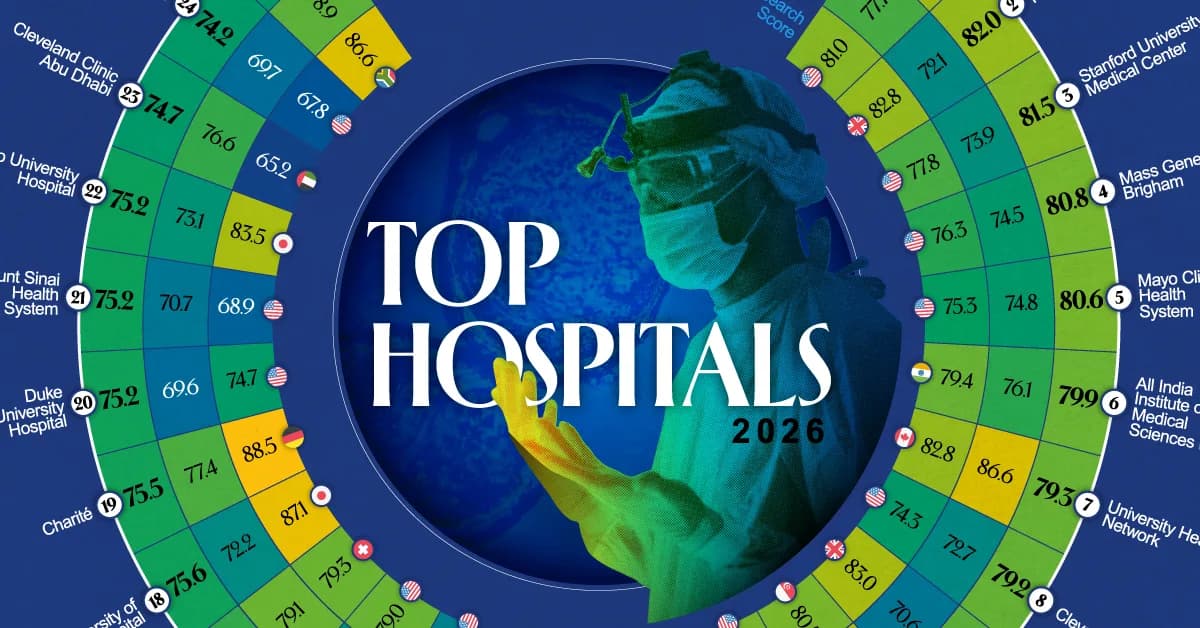
The 2026 Times Higher Education (THE) World University Rankings for Medicine have been released, confirming the unshakeable dominance of Western institutions in medical education. The University of Oxford and Harvard University continue to set the global gold standard, leaving African institutions with a steep mountain to climb.
The rankings, which assess universities on teaching, research environment, and international outlook, serve as the definitive barometer for medical excellence. For students and policymakers in the Global South, the results are a sobering reminder of the "knowledge gap." While the West cements its lead in cutting-edge genomic research and clinical innovation, universities in developing nations are fighting to barely stay on the list, hampered by funding deficits and brain drain.
This year’s list highlights a shift towards institutions that integrate physical sciences with clinical practice. The California Institute of Technology (Caltech) and Stanford University have posted impressive gains, driven by their heavy investment in biotech and AI-driven diagnostics. The message is clear: the future of medicine is digital, and the universities that master this convergence are the ones leading the pack.
The top tier remains an exclusive club. The University of Oxford retains its crown, largely due to its unparalleled clinical research output and industry partnerships. Across the Atlantic, Harvard University and the Massachusetts Institute of Technology (MIT) dominate the research citation metrics. These institutions operate with budgets that dwarf the entire higher education allocations of many African countries.
In Europe, the Karolinska Institutet in Sweden and Imperial College London continue to punch above their weight, offering world-class training that attracts the best minds from across the globe. Their success is built on a model of deep specialization and international collaboration, a blueprint that is proving difficult to replicate in resource-constrained environments.
For Kenya and the wider continent, the rankings are a mixed bag. The University of Nairobi (UoN) remains the flagship, but its positioning in the 1201+ band underscores the systemic challenges facing African academia. Despite producing world-class clinicians, local universities suffer from poor research infrastructure and a lack of global faculty exchange programs.
The implications of this divide are profound. As the world moves towards personalized medicine, African universities risk becoming consumers rather than creators of medical knowledge. Education experts warn that without a massive injection of state funding and a strategic pivot to research-based learning, the continent will continue to lose its brightest young doctors to the very institutions dominating these rankings.
"We are competing with hands tied behind our backs," says a senior lecturer at UoN. "Until we prioritize research funding, these rankings will always be a mirror showing us how far behind we have fallen."
Keep the conversation in one place—threads here stay linked to the story and in the forums.
Sign in to start a discussion
Start a conversation about this story and keep it linked here.
Other hot threads
E-sports and Gaming Community in Kenya
Active 9 months ago
The Role of Technology in Modern Agriculture (AgriTech)
Active 9 months ago
Popular Recreational Activities Across Counties
Active 9 months ago
Investing in Youth Sports Development Programs
Active 9 months ago



