We're loading the full news article for you. This includes the article content, images, author information, and related articles.
A 23-acre plot in Karen, entangled in a 21-year legal battle and allegations of forged documents, has drained Sh1.5 billion from public coffers for a non-existent medical centre, with the new Social Health Authority now poised to spend millions more.

A phantom hospital project on a bitterly disputed 23-acre piece of land in Karen has cost Kenyan taxpayers more than Sh1.5 billion in payments to consultants for work that never began. The deal, originating over two decades ago, is a convoluted saga of forged documents, questionable payments, and a court case that has outlasted governments, leaving a trail of unanswered questions now inherited by the new Social Health Authority (SHA).
The heart of the matter is a prime property, LR No 24968/2, which has consumed vast sums of public money without a single brick being laid. This empty plot, now valued at approximately Sh1.5 billion, represents a stark failure in public finance management, funneling money meant for healthcare into a project paralyzed by ownership disputes from its inception.
The story begins in April 2002, when the board of the now-defunct National Hospital Insurance Fund (NHIF) approved the purchase of the 9.25-hectare plot from a company named Kaskazi Limited for Sh93.7 million. The vision was to construct a state-of-the-art "Medical Resource Centre." However, red flags were apparent from the outset, as the acquisition was reportedly done without a competitive tender or the necessary approval from the National Treasury.
Soon after the purchase, the ownership of the land was challenged, sparking a legal battle that continues to this day. One of the main claimants, Peter David Leparakwo, alleges he inherited the land in 1982 from a white settler as a token of appreciation for his labour. This claim threw the entire project into legal jeopardy. Despite the ongoing court case, which should have halted any development, a torrent of public funds was unleashed.
Between 2007 and 2018, as lawyers argued in court, the NHIF disbursed an astonishing Sh1.5 billion to various firms for consultancy services. These payments were for architectural designs, drawings, and quantity surveying for a hospital that could not legally be built. The Auditor General's report for the year ended June 30, 2023, flagged the Sh1.5 billion work-in-progress as “doubtful,” noting there had been “no construction since acquisition.”
The Directorate of Criminal Investigations (DCI) has since pressed charges against Mr. Leparakwo and Fredrick Kimemia Kimani, a director of Cirtex Kenya Limited, alleging a conspiracy to defraud the NHIF. The charges include 20 counts of forgery, involving documents such as a 1982 colonial-era allocation letter, a certificate of title, a deed plan, and even KRA PIN certificates. The original title deed is now being held by the DCI as evidence.
The Social Health Authority (SHA), which replaced the scandal-plagued NHIF, has inherited this toxic asset. Instead of focusing on recovering the lost funds, the new authority is planning fresh expenditure on the contested land. SHA Chief Executive Officer, Dr. Mercy Mwangangi, recently informed a parliamentary committee that the authority has budgeted Sh50 million to fence the property.
This proposed spending has raised alarm among lawmakers for several reasons:
During the same committee hearing, it was revealed that the SHA had spent Sh91 million in legal fees to recover only Sh13.9 million in other matters, an expenditure questioned by the Auditor-General. Parliamentary committees have repeatedly called for investigations by the Ethics and Anti-Corruption Commission (EACC) into the project's procurement irregularities, but progress has been slow.
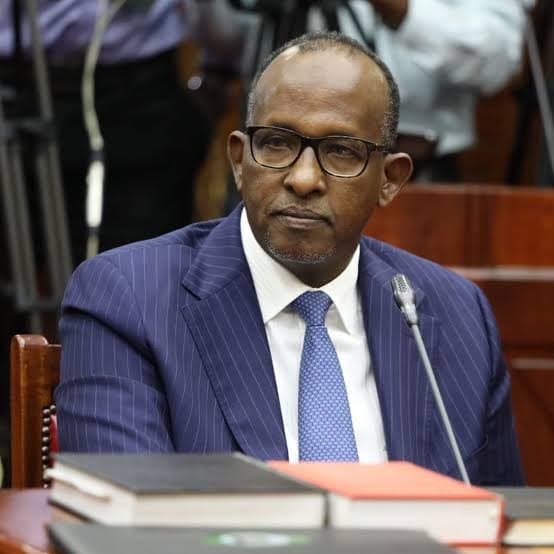
While Health Cabinet Secretary Aden Duale has spoken forcefully about cracking down on fraud within the broader SHA system, his specific actions on this long-standing Karen land issue remain unclear. The continued allocation of funds to this disputed property raises serious questions about the government's commitment to safeguarding public resources. For the Kenyan taxpayer, this ghost project is a costly monument to impunity, a hole in the ground that continues to drain millions that could build actual hospitals and provide real care.
Keep the conversation in one place—threads here stay linked to the story and in the forums.
Sign in to start a discussion
Start a conversation about this story and keep it linked here.
Other hot threads
E-sports and Gaming Community in Kenya
Active 9 months ago
The Role of Technology in Modern Agriculture (AgriTech)
Active 9 months ago
Popular Recreational Activities Across Counties
Active 9 months ago
Investing in Youth Sports Development Programs
Active 9 months ago
Key figures and persons of interest featured in this article