We're loading the full news article for you. This includes the article content, images, author information, and related articles.
German Chancellor Friedrich Merz has strongly warned about severe trade imbalances during his first official visit to Beijing, signalling a tougher European stance.
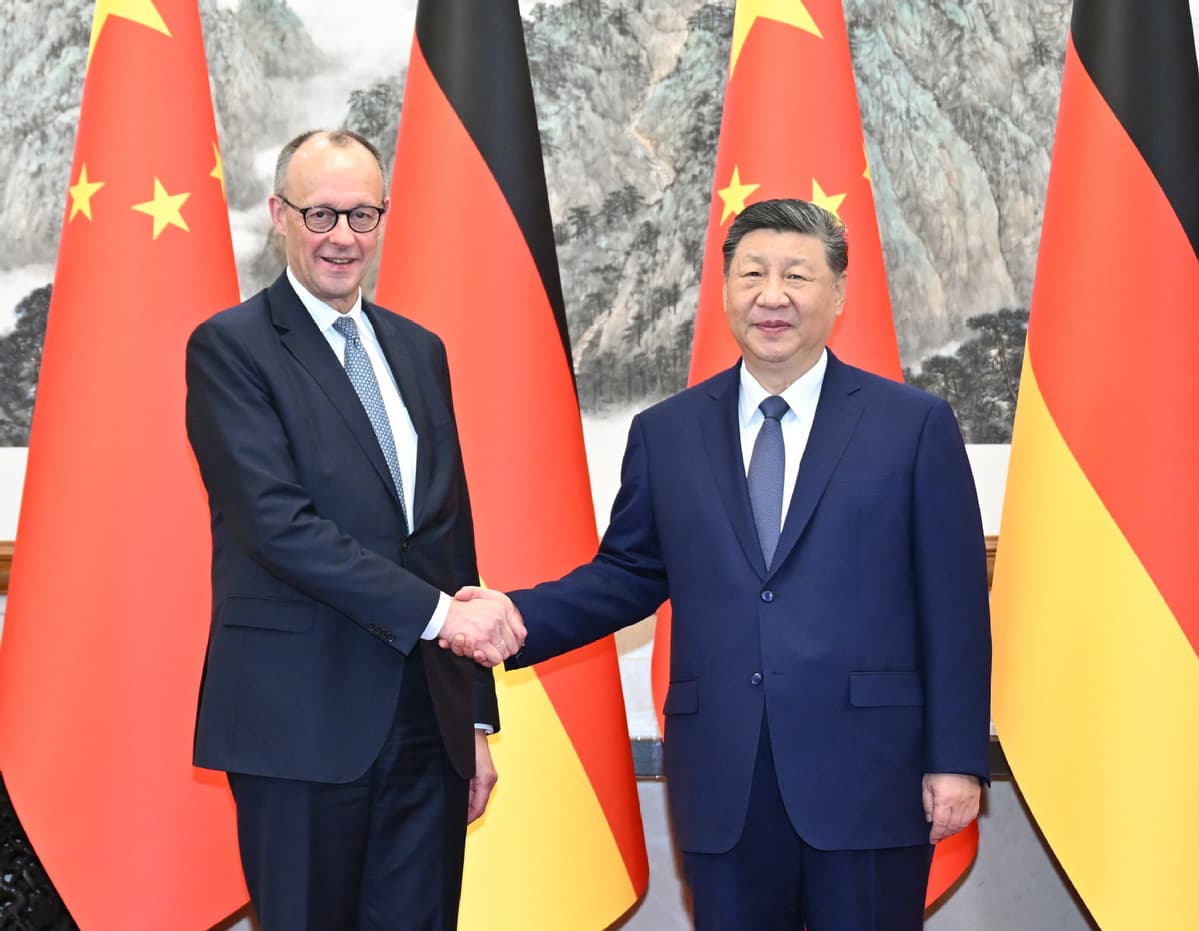
German Chancellor Friedrich Merz has strongly warned about severe trade imbalances during his first official visit to Beijing, signalling a tougher European stance.
In a high-stakes diplomatic tightrope walk, the German Chancellor has officially touched down in Beijing, carrying a portfolio heavy with economic grievances and a mandate to recalibrate a historically lucrative but increasingly lopsided partnership. The visit marks his first foray into the heart of the Asian economic powerhouse since taking office.
This visit comes at a pivotal juncture for global economics, where the traditional engines of European industry are sputtering under the immense pressure of state-subsidised Chinese manufacturing. As electric vehicles and cheap green technologies flood Western markets, leaders are being forced to pivot from cooperative engagement to protective assertion. For emerging markets like Kenya, watching these titans clash offers a stark preview of impending global supply chain realignments.
The core of the Chancellor's message was delivered with uncharacteristic bluntness for a visiting dignitary. He pointedly called out Beijing's strategy of heavily subsidising domestic producers, a tactic that has allowed Chinese firms to artificially lower prices and outcompete European manufacturers on the global stage. The German industrial sector, once the undisputed king of automotive engineering, is currently shedding thousands of jobs as it struggles through a remarkably bumpy transition to electric vehicles—a domain where China has rapidly established absolute dominance.
German business groups, representing the backbone of Europe's largest economy, had heavily lobbied Merz ahead of the trip. They demanded a clear, unequivocal signal to the Chinese leadership regarding fair competition, intellectual property protection, and stringent export controls. The Chancellor echoed these sentiments, noting that while the relationship between the two nations presents vast opportunities, it concurrently entails monumental risks that can no longer be ignored or glossed over in pursuit of short-term quarterly profits.
Diplomatically, the scene in Beijing painted a picture of modern geopolitical dissonance. On one hand, the German delegation is actively seeking greater investment, securing massive orders for Airbus, and demanding expanded market access for its exporters. On the other hand, the Chancellor stood before the Chinese leadership and publicly enumerated the systemic failures and unfair practices embedded within Beijing's economic model. He highlighted the issue of an undervalued currency and demanded security in the supply of critical minerals, which are essential for the ongoing green transition.
The Chinese response, as expected, was one of stoic reaffirmation. Behind closed doors, however, the message was undoubtedly received. Europe lacks the sheer economic force to unilaterally threaten crippling tariffs in the manner of the United States, leaving it reliant on the capital of moral superiority and the persistent demand for a level playing field.
For observers in East Africa, particularly in Nairobi, this high-level spat is far from an abstract European problem. Kenya is intimately familiar with the realities of Chinese trade imbalances. The massive infrastructural debt incurred over the last decade, coupled with a market flooded by inexpensive Chinese imports, has historically stifled local manufacturing. If Europe successfully pressures China into altering its export strategies, the ripple effects will definitively reach the port of Mombasa.
Furthermore, as Europe attempts to "de-risk" and decouple specific critical supply chains from China, nations like Kenya—rich in untapped potential and strategically located—could find themselves the beneficiaries of renewed European industrial investment. The shifting of global manufacturing hubs could present unprecedented opportunities for the Kenyan economy, provided the local policy framework is agile enough to capture the incoming capital.
Ultimately, the Chancellor's visit underscores a fundamental shift in the global economic world order. The era of unconditional economic engagement with China has definitively ended, replaced by a cautious, transactional realism. The balancing act between protecting domestic industries and maintaining access to the world's second-largest market will define European politics for the next decade.
"We want to further strengthen our partnership, but we will, of course, relentlessly protect our core economic interests," the Chancellor stated, encapsulating the complex new reality of international commerce.
Keep the conversation in one place—threads here stay linked to the story and in the forums.
Sign in to start a discussion
Start a conversation about this story and keep it linked here.
Other hot threads
E-sports and Gaming Community in Kenya
Active 9 months ago
The Role of Technology in Modern Agriculture (AgriTech)
Active 9 months ago
Popular Recreational Activities Across Counties
Active 9 months ago
Investing in Youth Sports Development Programs
Active 9 months ago