We're loading the full news article for you. This includes the article content, images, author information, and related articles.
With the initial truce holding by a thread, the US-backed plan faces its toughest test: disarming Hamas and defining Gaza’s new borders. Here’s what the high-stakes diplomacy means for global stability—and the Kenyan economy.
The guns in Gaza have largely fallen silent, but the silence is heavy with dread. As Israeli Prime Minister Benjamin Netanyahu and Hamas leaders signal readiness to enter "Phase Two" of the US-led peace blueprint, the reality on the ground suggests a conflict transforming rather than ending. For the first time in two years, a permanent ceasefire is on the table, yet it hinges on a contentious new border—the so-called "Yellow Line"—and a demand for disarmament that Hamas is unlikely to accept without a fight.
This is the "nut graf" moment for the world, and for Kenya. Why does a line in the Gaza sand matter in Nairobi? Because a collapse of this deal threatens to reignite a regional war that has already choked the Red Sea trade route, kept global oil prices volatile, and by extension, held the Kenyan Shilling hostage. If Phase Two fails, the economic aftershocks will be felt from the pump stations of Mombasa to the matatus of Kisumu.
While diplomats in Washington and Doha speak of progress, the situation in Gaza is defined by a new reality: the "Yellow Line." Israeli military officials have described this as a "forward defensive line" inside Gaza, effectively carving out a buffer zone that Israel intends to hold indefinitely. Prime Minister Netanyahu, speaking alongside visiting German Chancellor Friedrich Merz on Sunday, warned that this next phase would be "more difficult" than the first.
"We have operational control over extensive parts of the Gaza Strip and we will remain on those defense lines," an Israeli military official stated, cementing fears among Palestinians that the occupation is becoming permanent under the guise of security.
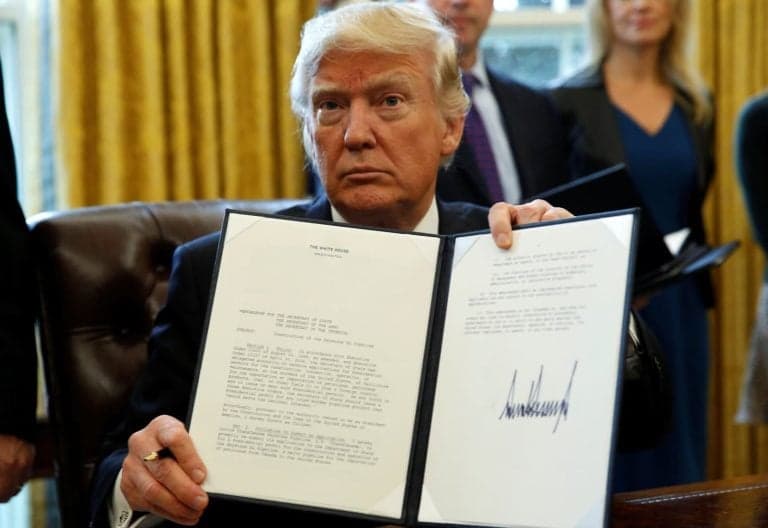
Hamas, for its part, is playing a complex game. Senior official Basem Naim noted that while the group is ready to discuss "freezing or storing" its weapons, it vehemently rejects any international force with a mandate to operate on Palestinian soil. The US blueprint, reportedly championed by President Donald Trump, envisions an "International Board of Peace" to oversee a technocratic Palestinian government—a proposal that sounds promising in a boardroom but faces fierce resistance in the rubble of Jabaliya.
The core of Phase Two is the disarmament of Hamas—a goal Netanyahu has called non-negotiable. In exchange, Israel is expected to withdraw its troops, though the "Yellow Line" suggests this withdrawal will be partial at best. The plan also calls for the return of the remains of the last Israeli hostage, Ran Gvili, a police officer killed in the October 7 attacks.
President Trump’s involvement has added a layer of unpredictability. Having pressured both sides to accept the deal, his administration is now pushing for a "Board of Peace" to manage Gaza’s reconstruction—a project estimated to cost billions of dollars (hundreds of billions of Kenya Shillings). For Kenya, a staunch ally of the West with deep ties to the region, the success of this plan is critical. A stabilized Middle East means stabilized fuel prices, which have been a thorn in the side of the Ruto administration’s economic recovery agenda.
It is easy to view the carnage in Gaza as a distant tragedy, but in a globalized economy, distance is an illusion. The instability in the Middle East has been a primary driver of supply chain disruptions in the Red Sea, forcing ships to take longer routes and driving up the cost of imports—costs that are passed directly to the Kenyan consumer.
If Phase Two succeeds, we could see a normalization of shipping routes and a potential dip in global crude oil prices. If it fails, and the region explodes into a wider conflict involving Iran, analysts warn that oil could spike, putting renewed pressure on the Kenya Shilling (KES) against the dollar. As families in Nairobi budget for the holidays, the diplomatic tightrope walk in Jerusalem has a direct line to their wallets.
"We are almost there," Netanyahu said of the deal. But in the Middle East, "almost" is a dangerous place to be. As the world watches the Yellow Line, the question remains: Is this the beginning of peace, or just the drawing of new battle lines?
Keep the conversation in one place—threads here stay linked to the story and in the forums.
Sign in to start a discussion
Start a conversation about this story and keep it linked here.
Other hot threads
E-sports and Gaming Community in Kenya
Active 9 months ago
The Role of Technology in Modern Agriculture (AgriTech)
Active 9 months ago
Popular Recreational Activities Across Counties
Active 9 months ago
Investing in Youth Sports Development Programs
Active 9 months ago



