We're loading the full news article for you. This includes the article content, images, author information, and related articles.
After decades of exclusion, a new policy promises scholarships, land titles, and health cover for Kenya’s marginalized. But with a history of broken promises, will the billions reach the grassroots?
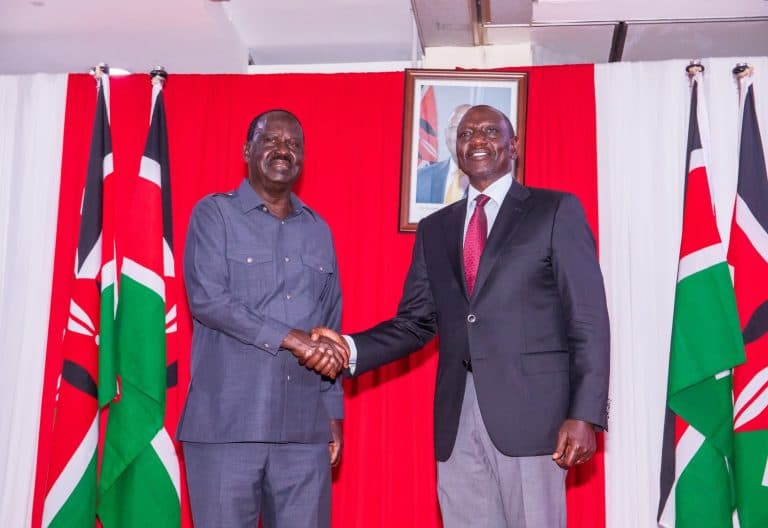
For fifteen years, Article 56 of the Constitution—promising affirmative action for minorities—has largely remained a paper tiger. But this week, the State moved to give it teeth. In a historic pivot at State House, President William Ruto unveiled the National Policy on Ethnic Minorities and Marginalised Communities (2025–2035), backed by a war chest of over KES 700 million in immediate funding. It is arguably the most significant attempt since independence to stitch the country’s forgotten fringes into the national fabric.
The policy, launched to coincide with International Minority Rights Day, is not just administrative; it is an admission of systemic failure. By operationalizing the Ethnic Minorities and Marginalised Communities Bill, 2025, the government is effectively acknowledging that the “trickle-down” of national development has evaporated long before reaching the Ogiek in the Mau or the El Molo on the shores of Turkana. The plan proposes a radical shift from passive aid to active inclusion, anchored in law rather than political goodwill.
At the heart of the initiative is hard cash aimed at the great equalizer: education. The President announced a KES 500 million National Minority Scholarship Programme specifically designed for learners from indigent minority households. This is a direct lifeline for families where school fees often compete with the need for food.
Additionally, the Ministry of Education has been directed to ring-fence KES 200 million annually for an Education Infrastructure Fund. This capital will target the physical decay in marginalized zones—building classrooms in areas where students still learn under trees. “The place of minorities in our nation will no longer be determined by the whims of individuals,” President Ruto declared, framing the funding as a right, not a favor.
Beyond cash, the policy strikes at the most emotive issue in Kenya: land. For pastoralists and hunter-gatherers, land is not just an asset; it is identity. The new framework mandates the fast-tracking of community land titles and the creation of a digital registry to protect ancestral territories. Crucially, it enforces the principle of “Free, Prior, and Informed Consent” (FPIC), meaning the State or private investors can no longer annex community land for “development” without explicit local approval.
However, the applause is tempered by a history of defiance. The Kenya National Commission on Human Rights (KNCHR) welcomed the move but issued a sharp reminder of the “implementation deficit.” Despite the fanfare, the government has yet to fully honor landmark court rulings, such as the African Court’s decision on the Ogiek community’s rights to the Mau Forest.
“The implementation deficit remains a serious concern,” the KNCHR noted in a statement, warning that without obeying existing court orders, new policies could suffer the same fate as old ones. The skepticism is valid; in December 2024, the UN Committee on the Elimination of Racial Discrimination flagged Kenya for failing to act on previous recommendations regarding structural discrimination.
As the dust settles on the launch, the real test begins. For the pastoralist in Mandera or the forest dweller in Nakuru, the success of this plan won't be measured by the eloquence of the policy document, but by the arrival of the scholarship cheque and the security of the title deed. As Salah Maalim Alio, a land executive from Mandera, observed in a commentary on the plan, this is “a recognition of Kenya’s unfinished nationhood.” The challenge now is to finish it.
Keep the conversation in one place—threads here stay linked to the story and in the forums.
Sign in to start a discussion
Start a conversation about this story and keep it linked here.
Other hot threads
E-sports and Gaming Community in Kenya
Active 9 months ago
The Role of Technology in Modern Agriculture (AgriTech)
Active 9 months ago
Popular Recreational Activities Across Counties
Active 9 months ago
Investing in Youth Sports Development Programs
Active 9 months ago



